
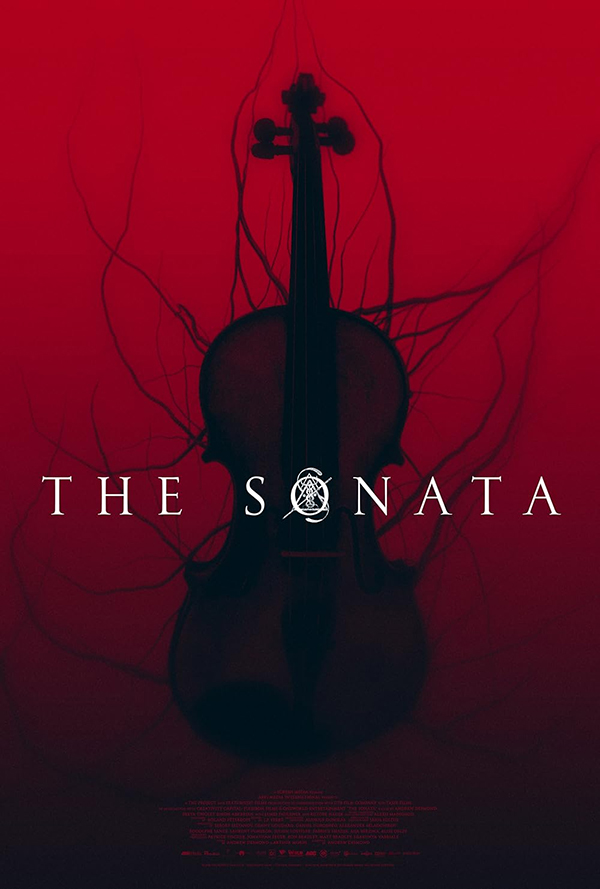
The Sonata (2018)

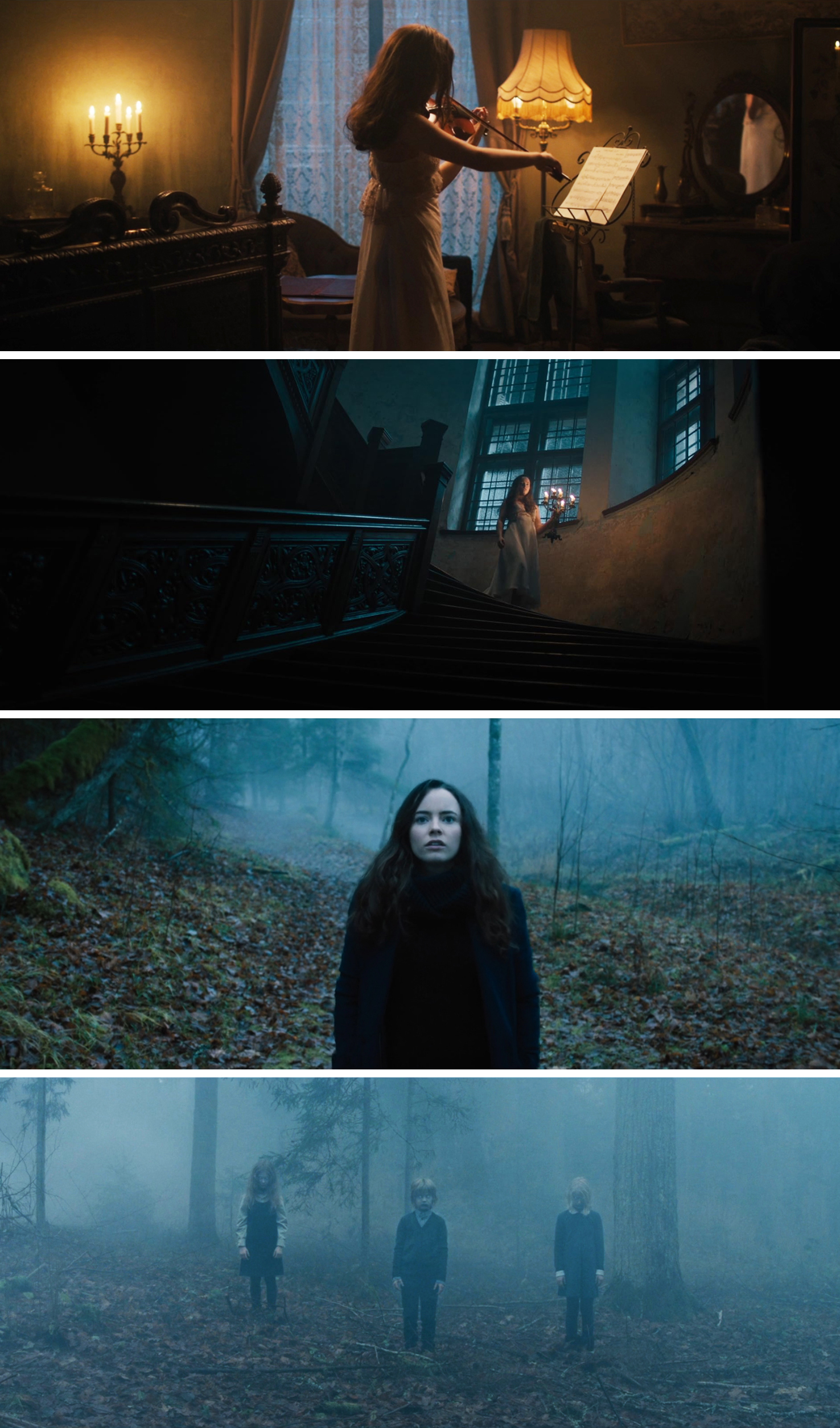
The SonataRose is a young and very talented violinist, but she’s also a bit of a loner. Charles, her agent and manager, has been taking care of her and functioned more or less as a parental figure ever since Rose’s mother died when Rose was only sixteen. When it comes to her father, who is none other than world famous composer Richard Marlowe, she has never personally known him as he abandoned his family and became a recluse shortly after Rose was born. And now the guy is dead, which to the news Rose at first gives a whatever, I’m busy attitude. Who can really blame her, though, the man was basically nothing but a stranger she never met. Rose has still inherited his mansion which is located in France, and she decides to go there in the small hopes of maybe finding out something about why he decided to leave his own family all those years ago.


Once there, in the gloomy and desolate mansion, she finds some sheet music for the sonata her father had been working on for the last twenty-or-so years. She sends a sample of it to Charles, who is immediately intrigued and sees potential for wealth and fortune. The final piece of a famous composer! Once he starts digging, he finds that Richard had been a member of some satanic cult who believed that music could be used for summoning the Antichrist himself. And Rose starts experiencing strange things around the mansion…


The Sonata is a supernatural horror thriller from 2018, directed by Andrew Desmond from a screenplay by Desmond and Arthur Morin. It also stars Rutger Hauer in a smaller role, and this was his final film before his death the following year. The film was shot almost entirely in Latvia, in the 19th century Cesvaine Palace.


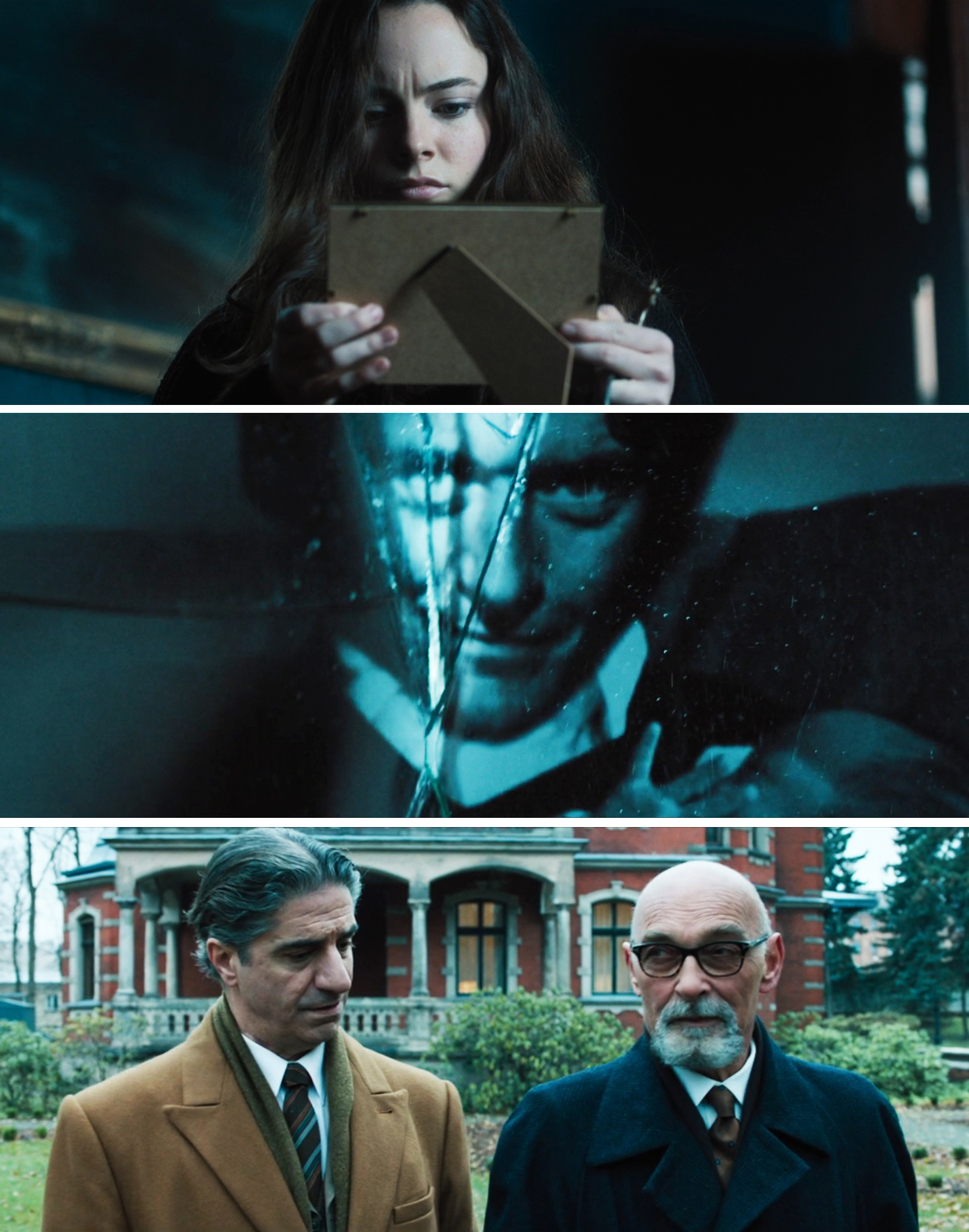
This is one of those supernatural movies where you get a good amount of that misty, gothic atmosphere. It’s never really venturing into any real scares, but it’s always giving off that certain spooky vibe. The movie starts off from Richard Marlowe’s perspective (played by the late Rutger Hauer), filmed in a pretty interesting POV style where we witness an act of self-immolation. So, we already know that some weird, spooky shit is going on here. And yes, it does play out the rest of the film as a straight-forward supernatural mystery thriller, with a satanic cult, mysterious disappearances, and of course several paranormal incidents. Just like in The Ninth Gate, the mystery unfolds through cryptic esoteric symbols, hidden messages in artwork and the solving of puzzles in order to unlock some dark, demonic forces.


The music, of course, also plays a significant role here. The ficitional Op. 54 Rose Sonata was composed, orchestrated and conducted by Alexis Maingaud, and performed by solo violinist Olivier Leclerc with the Orchestre National d’Île-de-France. With much of the movie’s concept relying on some unfinished evil sonata, it would be expected that the music here would add to the overall feeling of the film. And it certainly helps with providing the perfect setting for the story.


While never bringing much new do the table, The Sonata is a pretty fine gothic supernatural mystery thriller which delivers mostly on a spooky atmosphere, a nice location, and of course a lot of violin playing.
 

The Sonata The Sonata


Director: Andrew Desmond
Writers: Andrew Desmond, Arthur Morin
Country & year: France/UK/Latvia, 2018
Actors: Freya Tingley, Simon Abkarian, James Faulkner, Rutger Hauer, Catherine Schaub-Abkarian, Matt Barber, Christopher Brand
IMDb: https://www.imdb.com/title/tt7149066/


 

Vanja Ghoul


Let Us Prey (2014)

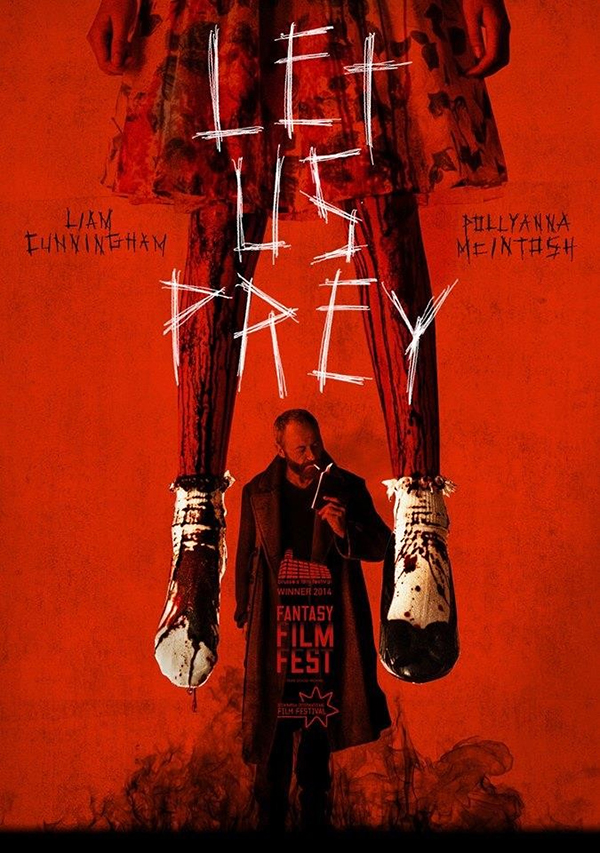
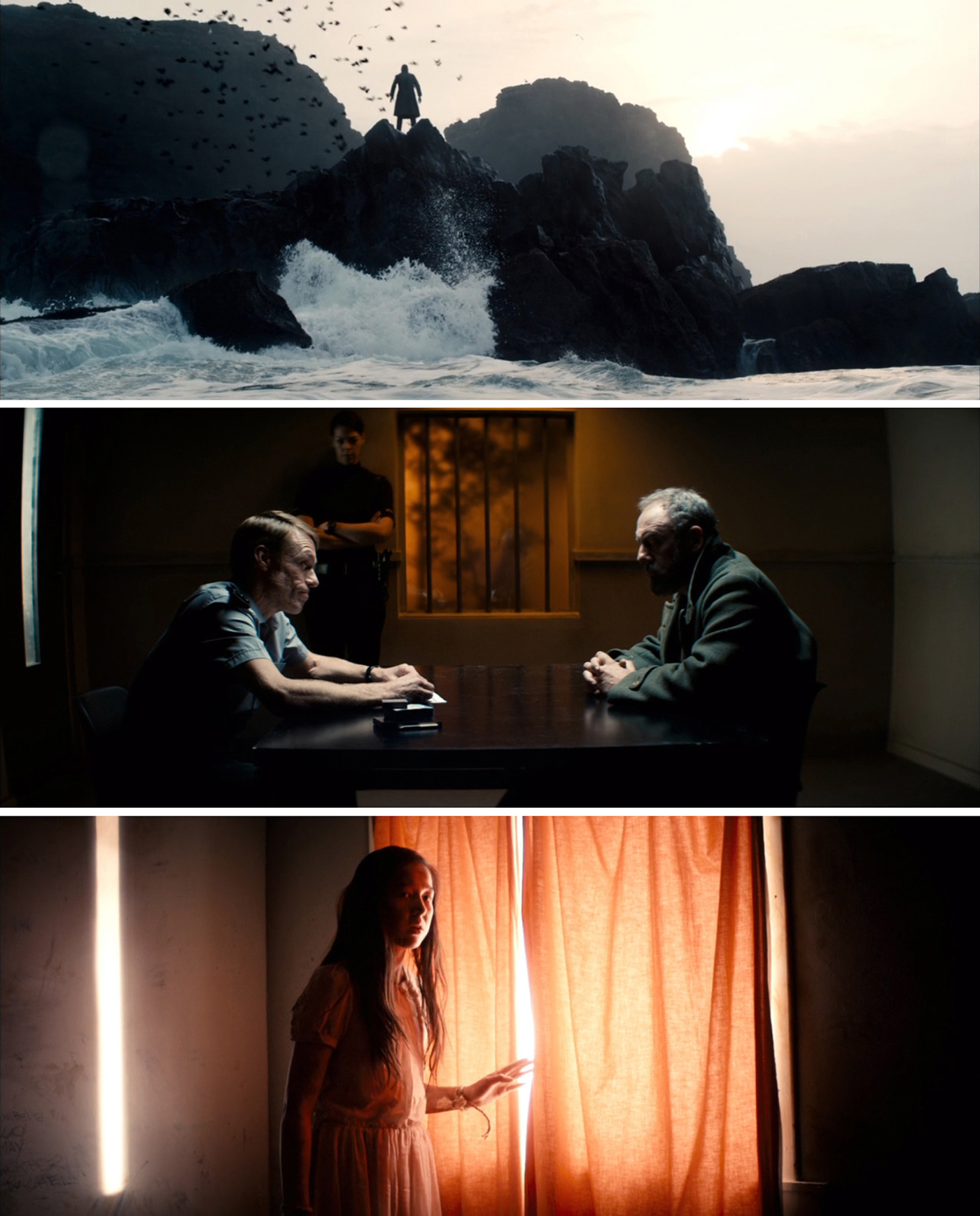
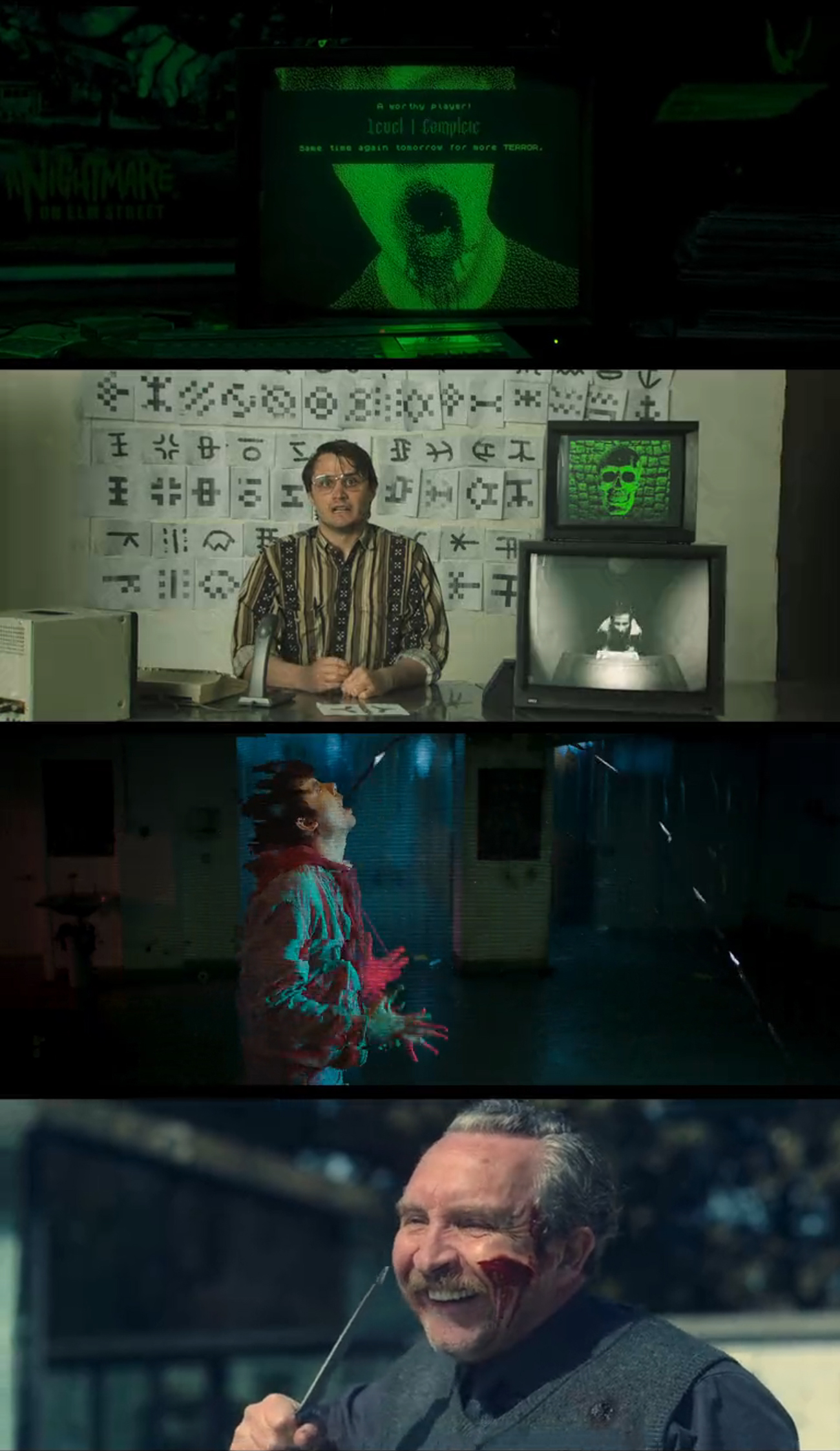
Let Us PreyWe’re in a small town in Scotland, where rookie police constable Rachel Heggie is on patrol. Suddenly she witnesses a car strike some mysterious man in a trenchcoat, who seemingly disappears after getting hit. The driver of the car, Francis Caesar Sargison, is a familiar face to the police so Heggie is quick to arrest him. After she brings him into the police station, Sgt Jim Macready charges Caesar for reckless driving. So in a cell he goes, where there’s already another guy who is in for beating his wife. Now, the only thing Heggie needs to do, is finding the mystery man wearing a trenchcoat (and no, it’s not Castiel, but this could have easily belonged somewhere in the Supernatural universe) and she radios two other police officers for the task. It appears his disappearing act wasn’t too solid, as they quickly locate him and brings him in for questioning. He’s covered in scratches, goes by the name Six, and carries a notebook with a list of names. Soon, it becomes apparent that this mysterious dude is on a mission, and the names in his notebook are from people who have committed horrible acts and not done anything to atone for them. And it is also soon revealed that nearly everyone in the police station have dark secrets of their own…it’s not only the ones behind bars that are the bad guys…


Let Us Prey is a supernatural horror film from 2014, directed by Brian O’Malley (who also directed The Lodgers from 2017) and co-written with Fiona Watson and David Cairns. And if you’re in for something fun, gory and supernatural this might just be right up your alley! While you become aware very early in the movie that you’re watching one of those pray for your sins kind of story, it does so with a bit of almost cartoonish glee by giving us a bunch of characters that truly deserves it. The characters are all interesting enough, where he have the protagonist Heggie who is struggling with something from her past, and is pretty much the only likable character among the bunch, except from perhaps Six himself. The others are…mostly a bunch of horrible a-holes. They’re all having a history of violence and wrongdoings, and we’re certainly looking forward to see them finally pay for their misdeeds.


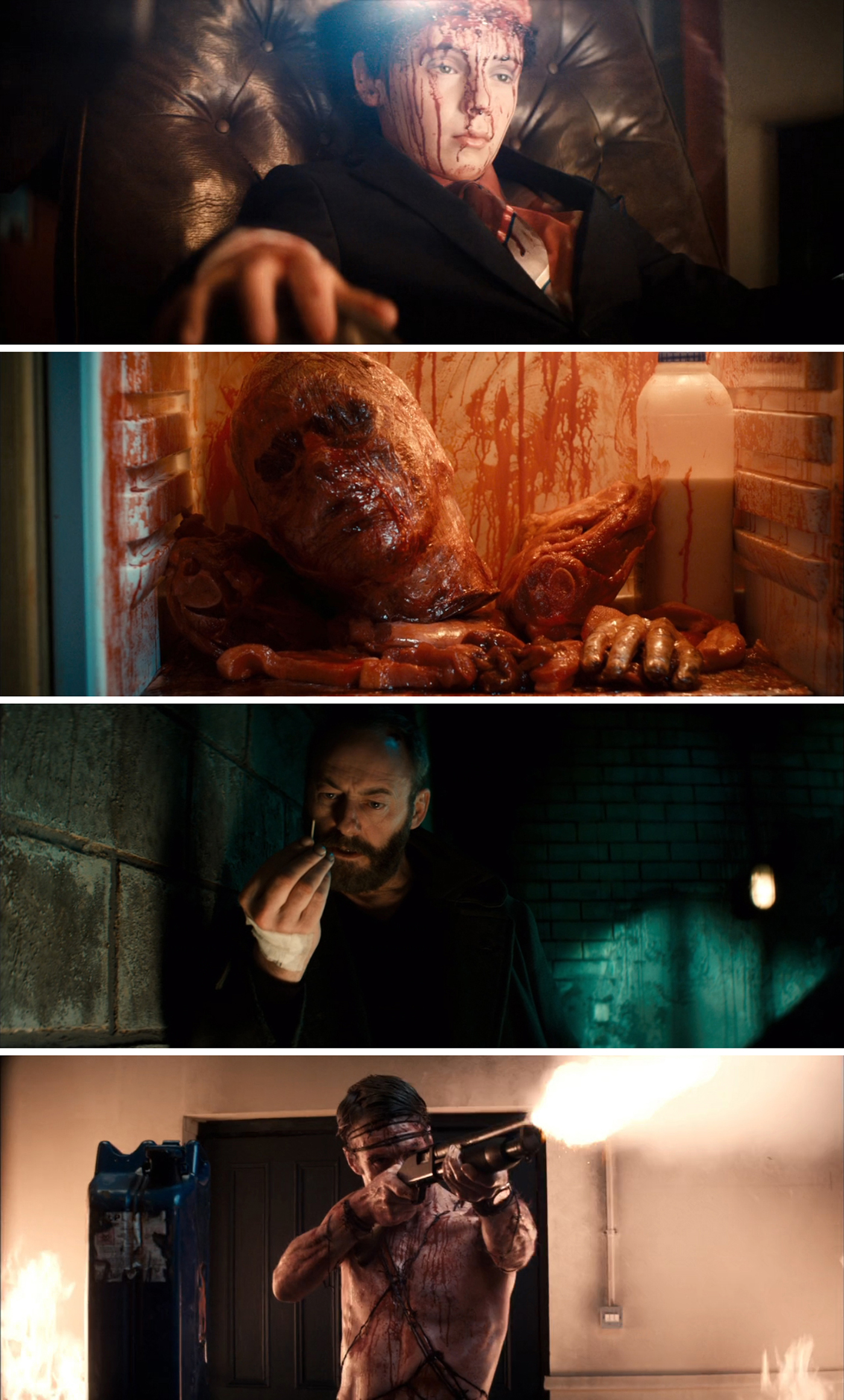
The movie is mostly very fast-paced with few dull moments, with a fitting John Carpenter-esque synth score by Steve Lynch. It also becomes bloody and gory at times, where especially towards the end we get full-on mayhem where one of the bad guys covers himself in barbed wire and tries to become Rambo and blast everything to pieces. Crazy and fun! And since the majority of the characters here are deliberately unlikable, it goes a long way to have a devilish antagonist who isn’t really the bad guy here.


Let Us Prey is one of those popcorn movies that is simply a good time, with lots of violence and fun and a finale that goes wild!


Let Us Prey Let Us Prey


Director: Brian O’Malley
Writers: Fiona Watson, David Cairns, Brian O’Malley
Country & year: UK/Ireland, 2014
Actors: Liam Cunningham, Pollyanna McIntosh, Bryan Larkin, Hanna Stanbridge, Douglas Russell, Niall Greig Fulton, Jonathan Watson, Brian Vernel, James McCreadie, Sophie Stephanie Farmer
IMDb: https://www.imdb.com/title/tt3148348/
 

Vanja Ghoul


Communion (1989)

CommunionI am you. And you are me. And we are here Yo. I am the dreamer and you are the dream. Deez nuts.


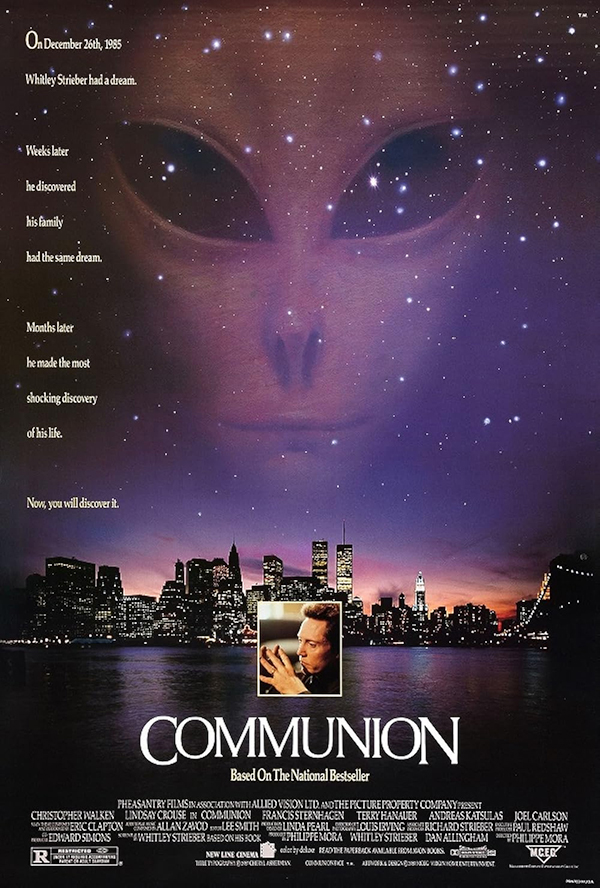
Whitley Strieber woke up on a December night in 1985 in a little room surrounded by what he calls nightmare creatures. A needle was put into the side of his head and he was raped by a machine. He then woke up, again, this time in his bed, as if he just had a wild fewer dream after eating too many mushrooms. Happens to us all. Although Strieber had already, at the time, reached success as a horror writer with The Wolfen and The Hunger (both made into films), his nonfiction Communion: A True Story, based on his bizarre abduction experience, would be the bestseller. The book was released in 1987 and was adapted two years later to the silver screen by schlock filmmaker Philippe Mora from a script by Whitley Strieber himself. Christopher Walken was cast to play Strieber. What could go wrong?


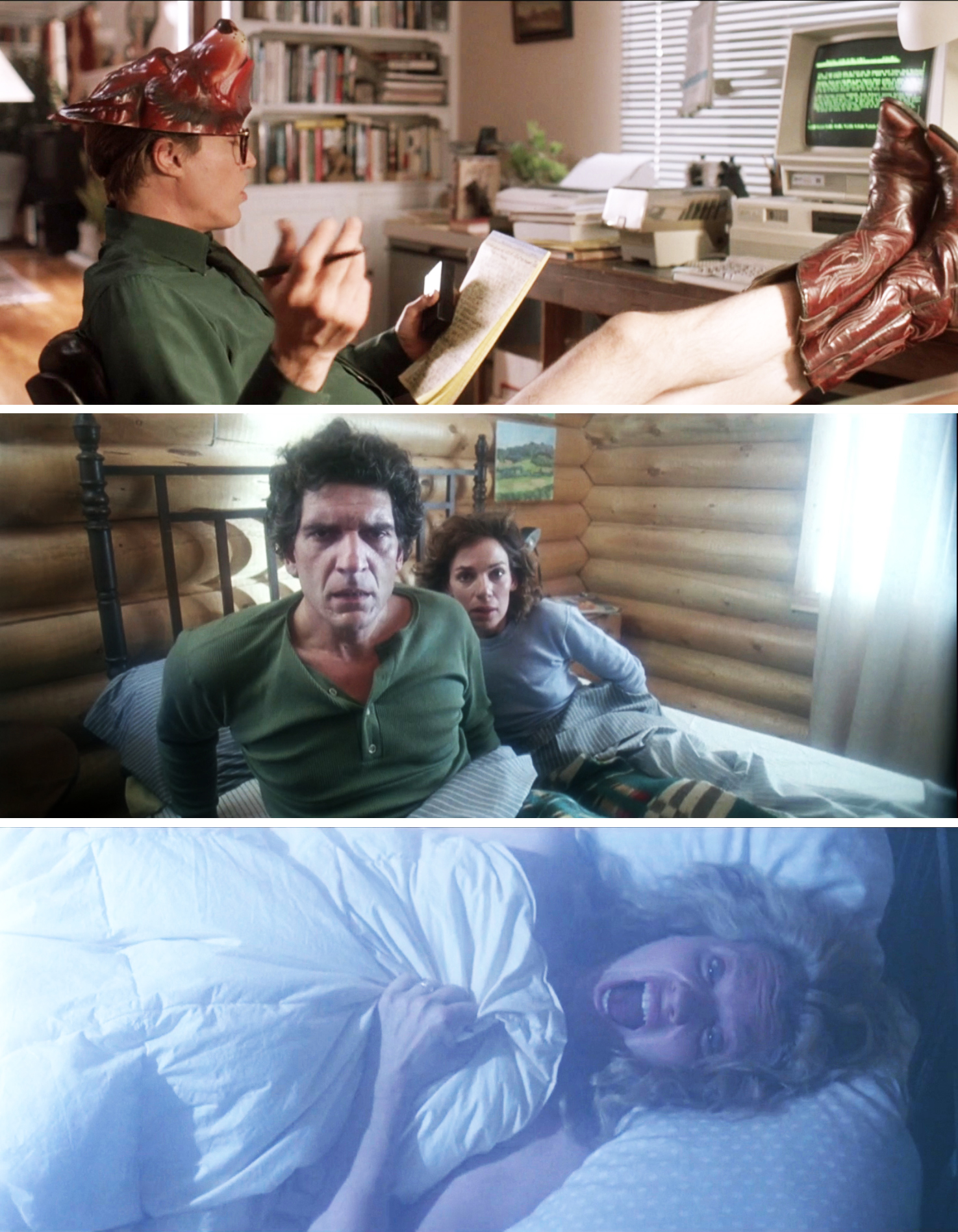
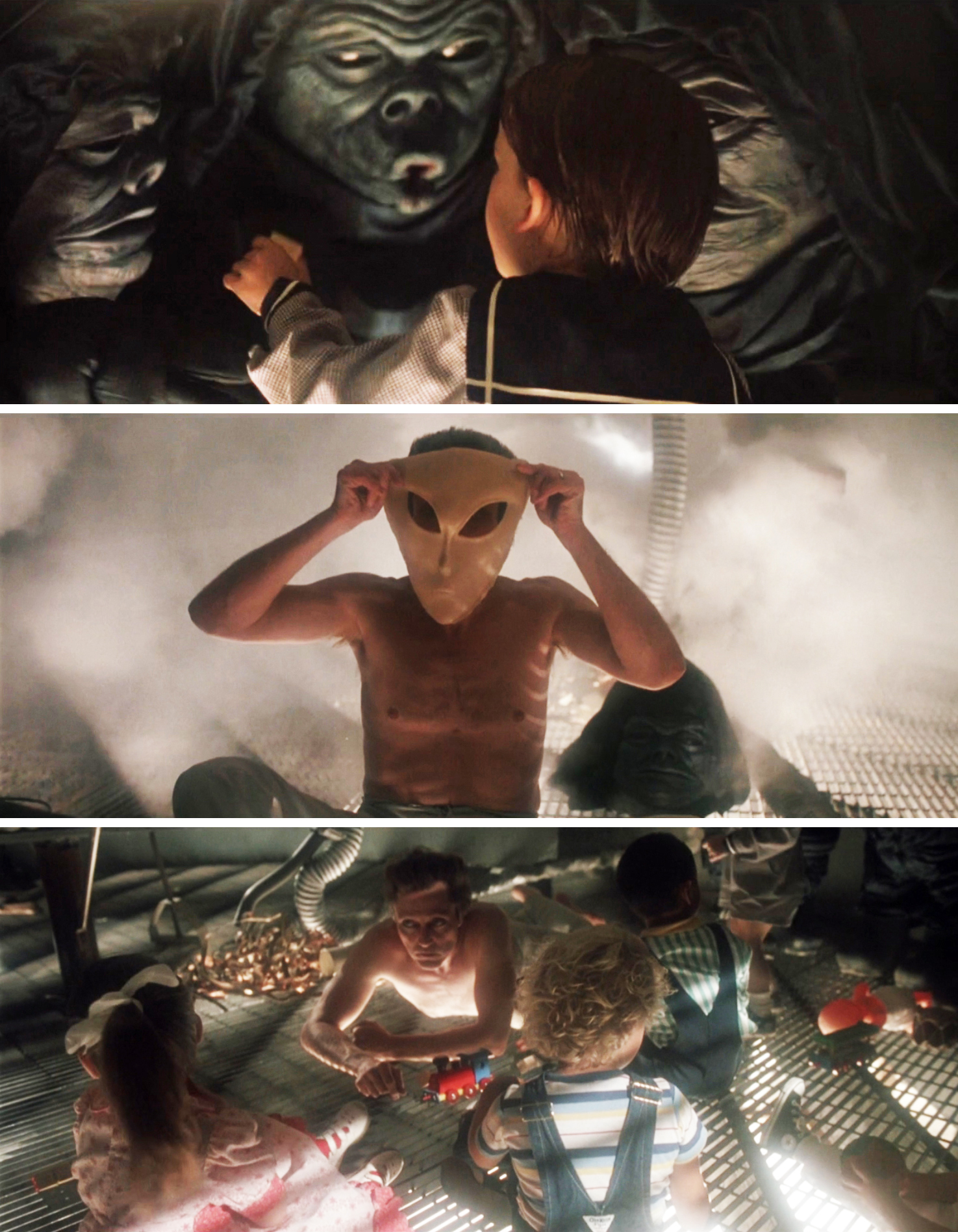
Well, from the get-go, Strieber already acts like an eccentric and unpredictable goofball, and maybe the last person you’d believe was kidnapped by aliens in track pants. No I’m not kidding. Strieber lives in a New York apartment with his wife and son where he writes his books while wearing a wolf mask and cowboy boots with no pants, like the best writers do. Where he hides the cocaine is no one’s business. Whitley’s nightmares starts during a weekend at a remote cabin far in the woods where a bright light shines over the area. No one can explain what happens, and after they head back to New York, Whitley acts more strange and erratic, as if he wasn’t already. After he sees visions and snaps at a Halloween party, Whitley’s wife, Anne, is concerned about his mental state and their marriage, and sends him to a psychiatrist to do some hypnotic regression therapy. And, well, get ready for something really special, where we get to see funny-looking aliens and creatures that could be from the puppet warehouse of Charles Band.


Yes, this is what you could call a weird-ass movie. Whitley Strieber had a friendship with Philippe Mora that went way back to the 1960s, but it would soon be clear that they weren’t much on the same page after all. Mora focused way more on Strieber’s mental collapse, as if he was just gone ko-ko while he tried to balance a normal family life as a frustrated writer. And he didn’t like that, and was not a fan of how Christopher Walken portrayed him. Can’t really blame him, even though Christopher Walken is the highlight here. The film plays more as a humiliation ritual for Strieber, if not a parody of American UFOlogy, where he only comes across like a super pretentious nutcase where even Fox Mulder would roll his eyes. Or maybe that’s just the price for having the director of Howling II: Your Sister Is a Werewolf to make your biopic about getting ass played by aliens.


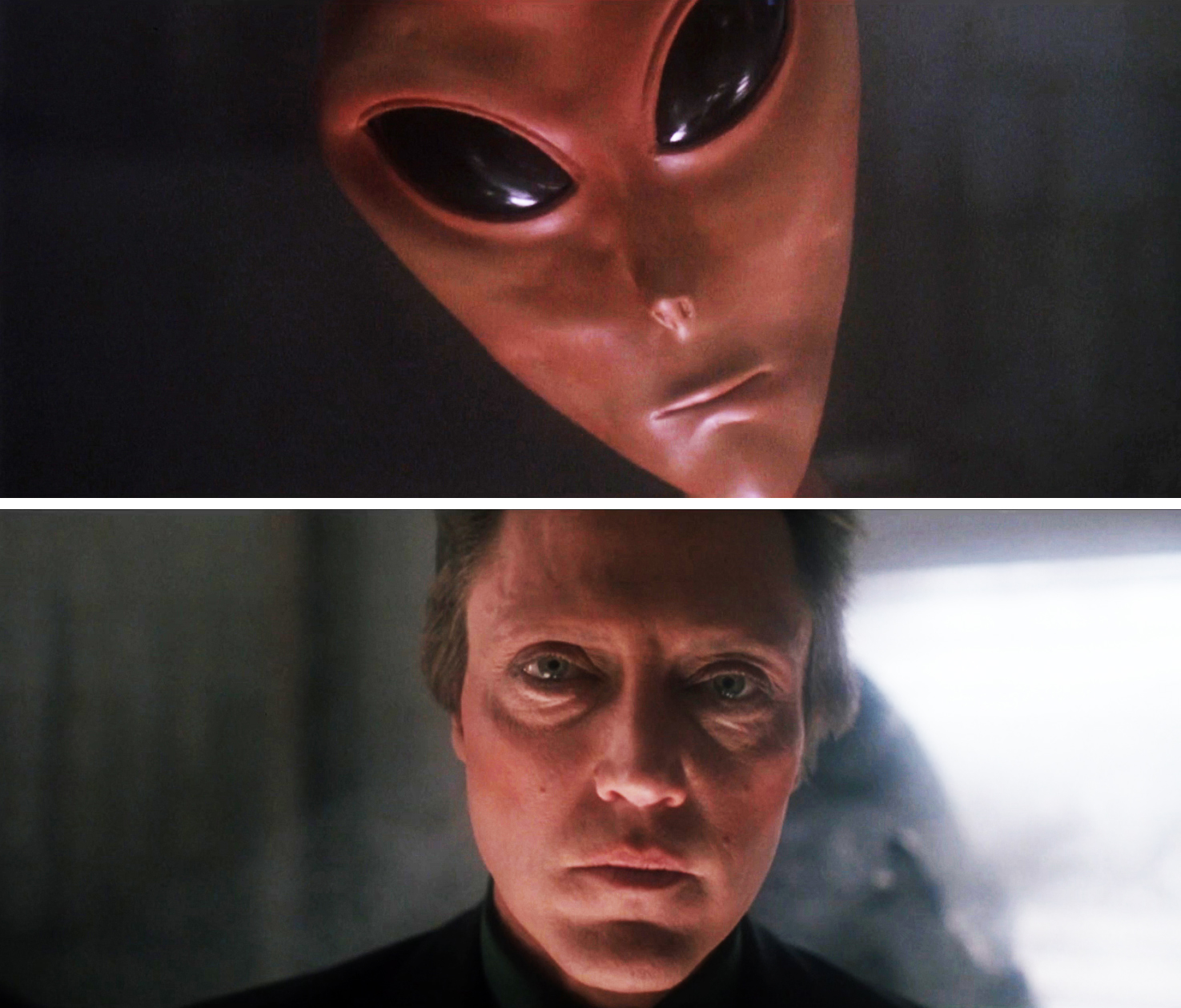
Christopher Walken got complete freedom to do whatever he wanted with the role and improvise whenever he felt like it. And his performance here can be described as schizophrenic at best. He shows his real reaction by laughing because of how funny the aliens looked. Director Mora kept it in the film as he thought it made it more disturbing. And we laugh as much with him as at him. The scenes with the aliens are pure comedy and bizarro hour where you have the classic cinematic moment of close encounters of the fourth kind, which on paper should be terrifying, traumatic and disturbing but, well…not here. Christopher Walken doesn’t even try to look scared, even when he’s about to get analprobed where he randomly says It looks like you’re gonna sing White Christmas. Yeah, sure. Bruh. Whatever. And if dancing with aliens wasn’t enough, he also sees himself cosplaying as Gomez Addams. Weird, Weird, to quote R. Zegler. Communion is open to endless interpretations, if you even manage to take this seriously.


Communion Communion Communion


Director: Philippe Mora
Writer: Whitley Strieber
Country & year: UK/Australia/USA, 1989
Actors: Christopher Walken, Lindsay Crouse, Frances Sternhagen, Andreas Katsulas, Terri Hanauer, Joel Carlson, John Dennis Johnston, DeeDee Rescher, Aileen Fitzpatrick, R.J. Miller
IMDb: https://www.imdb.com/title/tt0097100/


Tom Ghoul


28 Years Later: The Bone Temple (2026)

28 Years Later: The Bone TempleWe’re off to Emerald City, I mean the Bone Temple, to meet the Great Wizard, I mean Old Nick, the Great Satan of Oz, I mean UK. Oh, well …


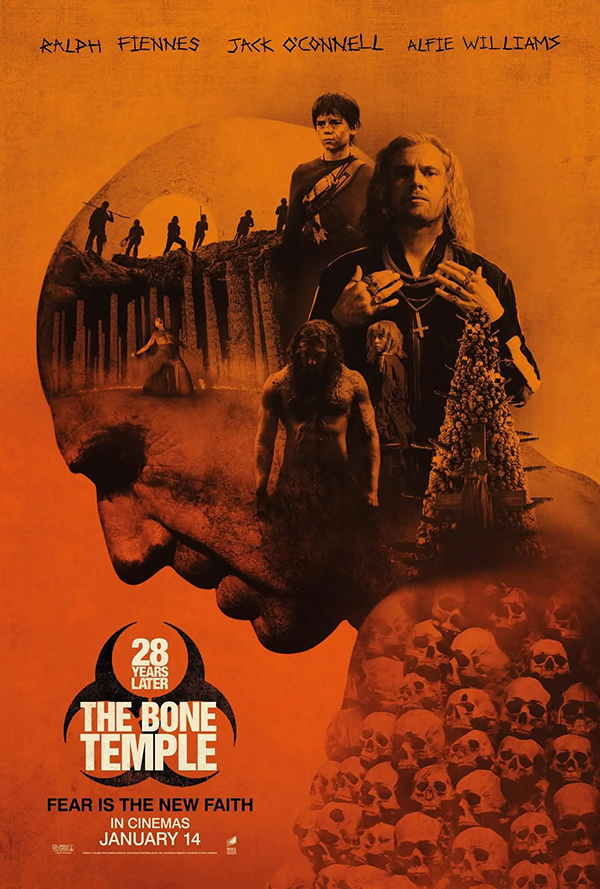
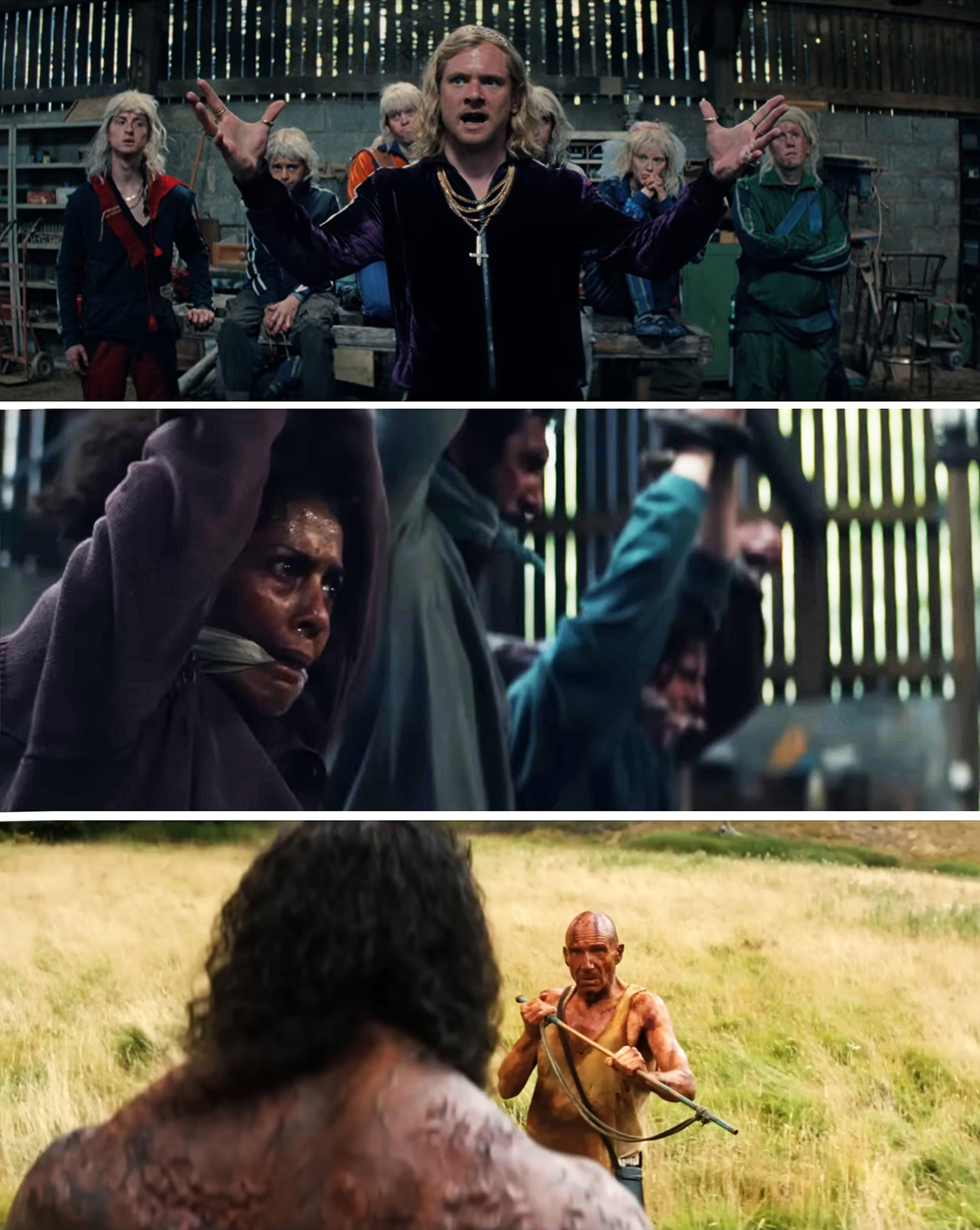
28 Years Later: The Bone Temple is a direct continuation of the previous one, where Spike (Alfie Williams) has now been captured by Sir Lord Jimmy Crystal (Jack O’Connel) and his small cute gang of Teletubbies, or chavs, for a better term. Welcom’ to Brittn, ya fockin’ cont! As we got more of the impression that Spike got saved by these bizarre individuals, in a quick scene that broke the internet six months ago, we learn that this Jimmy lad recruits young stray broken teens to join his cult-mission to torture and kill people in the name of Old Nick (Satan). Because, like Jimmy says:


 Old Nick released his demons onto the world of man.
And the world of man failed before the demons.


Jimmy has created his own demented theology to excuse his extreme sociopathic way of life, but to put it plain and simple: his inverted cross that he got from his crazy-priest/preacher dad right before he was killed 28 years ago is not just an innocent rebellious statement. He’s evil through and through and the classic Charles Manson/dictator-type that gleefully watches his members doing the torture and killing work. The Jimmy Saville-looking wigs they wear as a form of a badge, which also matches the hairstyle of their cult-leader, only puts the rotten cherry on top. Yes, his hair is actually not a wig (!)


Against Spike’s will, he has to prove himself to Lord Jimmy in the old British way by a knife-fighting death-combat, against one of the Jimmys. And watching this scene without context, one would assume that this was just some regular youth activities somewhere in Glasgow on a Tuesday evening. Americans have their guns, but you should never, ever underestimate a chav with a sharp knife. Spike hits an artillery that causes a gory mess. Lord Jimmy laughs and grins ear-to-ear. Spike is now a part of the Jimmys and, of course, very reluctant and terrified joins their murderous coming-of-rage odyssey around rural Britain as they invade homes and skin people alive in barns. How they can just walk and dance around like they owned the world while others still walk on minefields, is a fair question to ask. Alfie bonds with one of the two girls in the gang, Jimmy Ink (Erin Kellyman), the only one who has developed empathy and isn’t completely brainwashed.


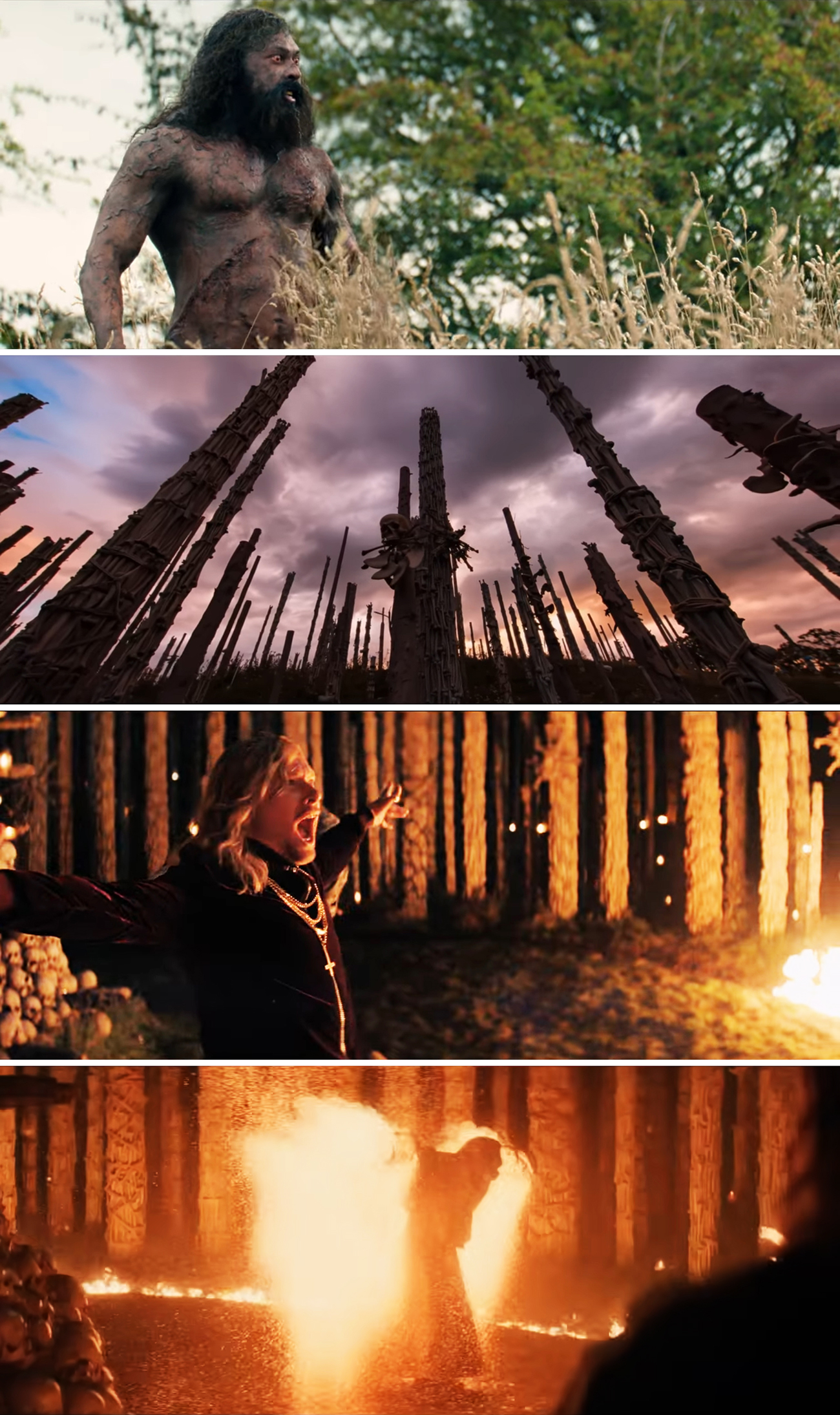
Then we have our mysterious Dr. Kelson (Ralph Fiennes) who lives peacefully alone in his small underground bunker next to his impressive lifeswork, the Bone Temple memorial. Approx 5,500 fake skulls and 150,000 bones were made to construct it. It would be just way too easy to just CGI the whole thing, but big kudos for making it the old school way. Dr. Kelson is still picking up fresh bodies to add to his temple, and has a side-project by observing an alpha zombie which he calls Samson. He’s a giant who rips people’s heads off, Predator-style, and eats brains straight from the skull. Hardcore. Dr. Kelson spits morphine darts to drug him out so he can dig into his subconsciousness and maybe see if there still is any humanity left in him. And good luck with that. Jimmy Crystal spots Kelson at a perfect timing, where he’s all smeared in red’ish lodine as he always is, and having a close interaction with the alpha by the Bone Temple. Because he believes he’s finally found his big idol and his father, Old Nick, and, well…haha, this should be interesting.


I’m not familiar with Nia DaCosta’s directing work prior to this, and I had no idea what to expect from her passing the torch after Danny Boyle. DaCosta does some really heavy lifting here, where it was pretty much already clear by judging the awesome trailers that they didn’t just choose some random work-for-hire director. Her directing approach is more traditional than the experimental style we saw in the previous where we have more dialogue-driven scenes than action. And although I —personally— enjoyed 28 Years Later a bit more, this is a rock-solid entry in the expanding and eccentric world building of the franchise that still keeps its feet on a grounded level. But calling this torture porn is a far stretch. It’s not even close. Yes, there are some gruesome moments here, but the film doesn’t show too much. Thus, I was a little disappointed by the I don’t have a ticket-scene, which felt a bit rushed. The effects are all practical though, as far as I noticed, and it’s nice to see stunt actors in real flames, which is a rare sight nowadays. That said, the action is very minimal. The zombies/infected are barely on screen, where the focus primarily lies on the psychological aspects between Jimmy and Old Nick, I mean Dr. Kelson. It’s still the good vs evil where the humans are the real monsters. This is more of an intense thriller/drama with some exploitation-elements.


What makes this franchise still feel fresh in the year of 2026 is much thanks to the unpredictable writing of Alex Garland, and how he explores our primitive instincts. While the action has taken a morphine pill, the tension is stronger than ever. We have a very simple scene where Jimmy meets Old Nick, I mean Dr. Kelson, for the first time, sits and has a chat about life, death, religion and whatnot. It seems harmonic and peaceful at the surface while the sky is almost blue, yet you can feel the electricity where one never knows when all hell will blow up. And then we have the uncanny parallels to The Wizard of Oz, which turns up the smoke and mirrors all up to eleven in a scene that was certainly not on my bingo card. Pure post-apocalyptic Mad Max-level insanity. It’s pretty amazing how this particular scene just perfectly fits right in when on paper it shouldn’t. But there you have the genius writing of Garland. Ralph Fiennes and Jack O’Connel are the stars here, and they’re both intimidating in their own ways. While Fiennes is the veteran he is, who can just speak with body language and facial expressions, I hope O’Connel gets more great villain roles. We saw him last year as the Irish lead vampire in Sinners, and also as one of the sadistic kids in Eden Lake way back in 2008.


While the film in isolation has been a flop, the previous have earned well over its budget for both. And this being a middle-chapter of a trilogy, I surely hope we get the final piece as we still have the incomplete arc of Spike to fill. What happened to Spike’s dad is also an open question. Is he out in the wild and searching for him? What’s next for Samson? Are 28 Weeks Later (2007) completely retcon? Will Brittan ever be Great again? Who knows.


Until next time: Memento Mori.


28 Years Later: The Bone Temple 28 Years Later: The Bone Temple


Director: Nia DaCosta
Writer: Alex Garland
Country & year: UK/USA/Canada, 2026
Actors: Jack O’Connell, Alfie Williams, Ralph Fiennes Connor Newall, Erin Kellyman, Maura Bird, Ghazi Al Ruffai, Robert Rhodes, Emma Laird, Sam Locke, Gareth Locke, Chi Lewis-Parry
IMDb: https://www.imdb.com/title/tt32141377/


Prequels:
– 28 Years Later (2025)
– 28 Weeks Later (2007)
– 28 Days Later (2002)


Tom Ghoul


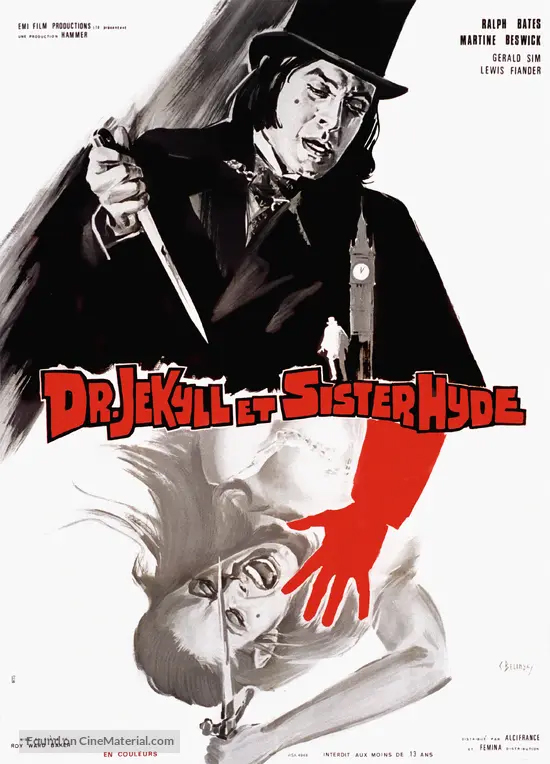
Dr Jekyll & Sister Hyde (1971)

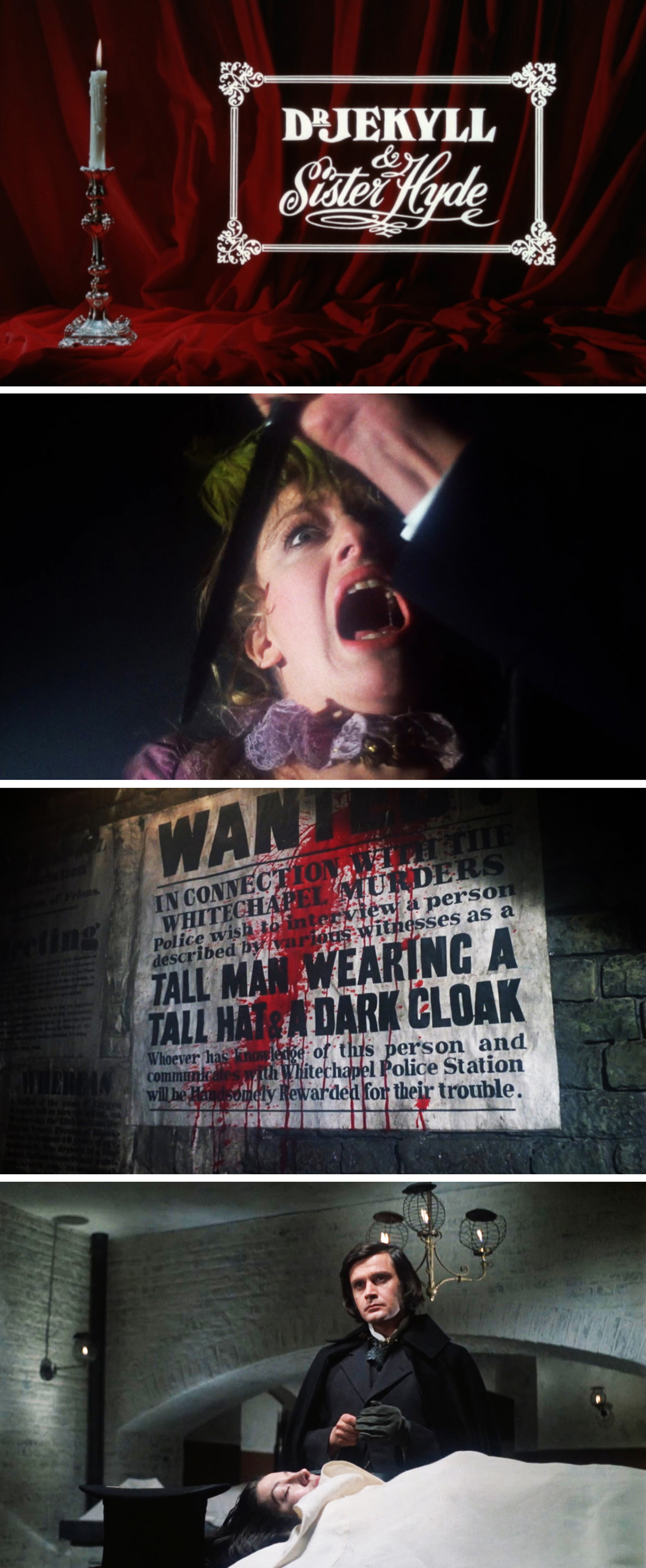
Dr Jekyll & Sister HydeDr. Henry Jekyll is a man who has decided to dedicate his life to curing all illnesses, but he’s about to lose a bit of his determination after his a-hole friend, Professor Robertson, remarks that his experiments are taking such a long time that he will end up dead before he manages to achieve anything of importance. Ouch. Thanks for the encouragement, buddy. Jekyll lets this remark get to his head, and he starts to obsess over the thought of some kind of elixir of life. He ends up using female hormones which he takes from fresh cadavers supplied to him by the duo Burke and Hare (obviously not caring too much about how they got their hands on these corpses in the first place). He reasons that since women, at least traditionally, lives longer than men, this will help him prolong his own life.


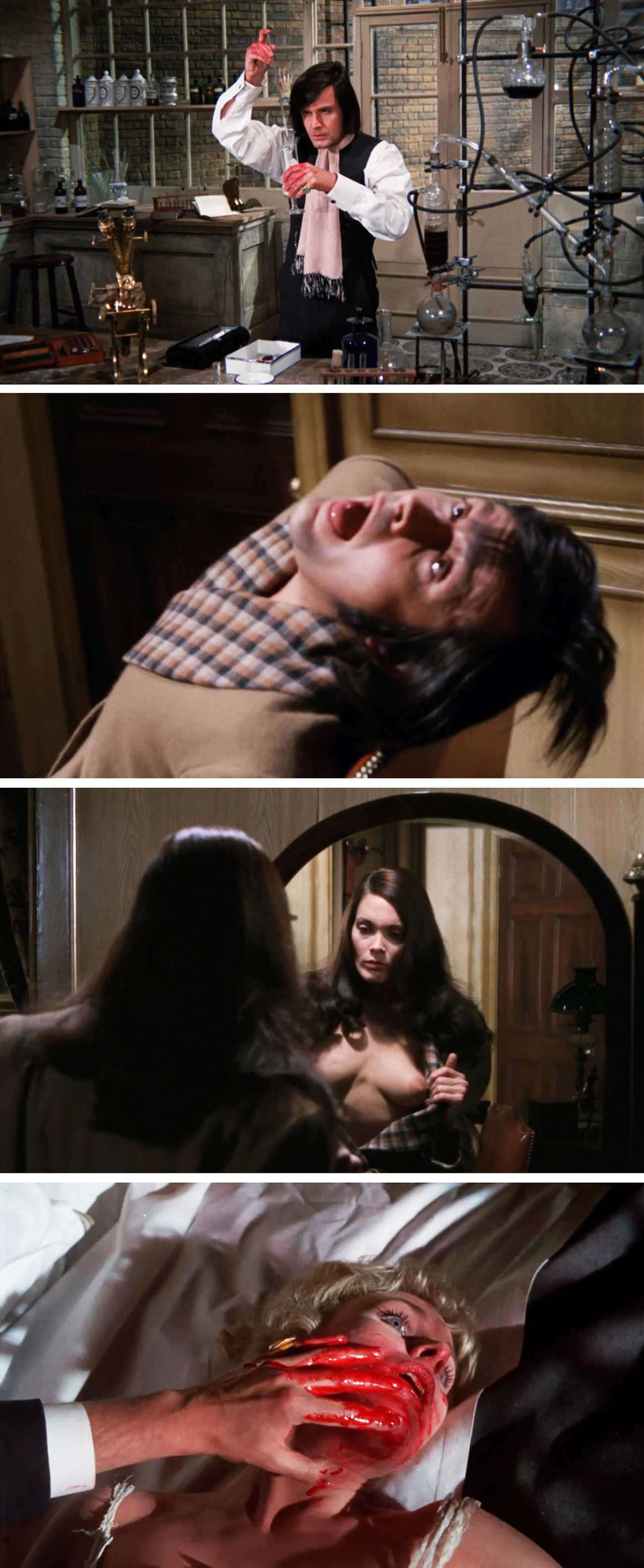
Above his apartment, there lives a family consisting of an elderly mother, her son Howard and daughter Susan. And Susan is head over heels attracted to Jekyll, who returns her affections in somewhat awkward ways. Too bad he’s so obsessed with work that there’s no time for romance…he’s too busy making his life-extending serum, and once he’s ready to take a sip and test it, he finds that it’s got a peculiar side effect: it changes him into a woman. And he seems to become quite fond of his female alter ego, which he calls Mrs. Edwina Hyde and claims she is his sister. While Jekyll is getting more and more in touch with his feminine side (literally), Susan becomes jealous of the mysterious woman in Jekyll’s apartment (at least until learning that she’s his sister), and Howard starts lusting after her. And there’s a big problem for Jekyll: in order to keep making more of the serum, he needs a steady supply of female hormones…and when his suppliers Burke and Hare are lynched by a mob once people find out what they’ve been doing, Jekyll must take matters in his own hands…with the help of Sister Hyde, who is taking over both his body and mind gradually.


Dr. Jekyll and Sister Hyde is a British Hammer horror film from 1971, directed by Roy Ward Baker and based on the 1886 novella Strange Case of Dr Jekyll and Mr Hyde by Robert Louis Stevenson. It’s notable for having a female version of Hyde, and also for implementing several historical incidents like Jack the Ripper and the Burke and Hare cases. There have been numerous adaptions of the well-known novella, including the 1931 film Dr. Jekyll and Mr. Hyde. And while both the original novella and many of its adaptation are often allegories for alcoholism/drug dependency, this is the only one I’ve seen thus far that gives it a gender-bending theme.


Through modern eyes I guess it’s easy to see it as an allegory for being trans. In the first transformation scene, where Jekyll (Ralph Bates) transforms into Hyde (Martine Beswick), the reaction is one of near euphoria where the initial moment of surprise quickly transcends into one of pure joy and relief, where she touches herself and examines her new body. The Hyde persona easily becomes the most dominant, where they both try to fight for control. Just like in the original story, where Dr. Jekyll could have just stopped taking the serum and be rid of Hyde, he becomes dependent on it and just can’t stop. Martine Beswick, who earlier played a role in two James Bond movies (From Russia With Love from 1963 and Thunderball from 1965) first laughed at the premise of the film when being offered the role, but after thinking it over a bit she found the idea of a male/female inside the same person as an interesting theme to explore.


Dr. Jekyll and Sister Hyde is a stylish Hammer horror film, where the scenery and sets create a convincing Victorian London era, with a misty, gloomy and gothic atmosphere. Totally Hammer-style, for sure, with it’s blood and boobs formula which where their forte at the time.


In 1995, a remake of the film was released under the title Dr. Jekyll and Ms. Hyde, which received a Razzie Award for Worst Remake/Rip-Off. And the trailer for that one pretty much speaks for itself.


Dr Jekyll & Sister Hyde Dr Jekyll & Sister Hyde Dr Jekyll & Sister Hyde


Director: Roy Ward Baker
Writer: Brian Clemens
Country & year: UK, 1971
Actors: Ralph Bates, Martine Beswick, Gerald Sim, Lewis Fiander, Dorothy Alison, Neil Wilson, Ivor Dean, Paul Whitsun-Jones, Philip Madoc, Tony Calvin
IMDb: https://www.imdb.com/title/tt0068502/


Vanja Ghoul


The Company of Wolves (1984)

The Company of WolvesIf there is a beast inside every man, he meets his match in the beast inside of every woman.


Rosaleen is a young girl who, in her bed wearing her big sister’s makeup (used without permission, of course) dreams that she lives in an 18th century fairytale world. There, her sister Alice is killed, and while her parents are struggling with their grief, Rosaleen is sent to stay with her grandmother (played by Angela Lansbury). She kits a red shawl for her granddaughter, and tells her a tale in order to warn her to never stray from the path and never trust a man with eyebrows that meet. Can’t have been fun to have a unibrow in that village…oh, and if you haven’t taken the hint already: this is of course a Little Red Riding Hood inspired story. Rosaleen returns to her little village, where one of the boys is constantly trying to get her interest. The village’s cattle have also been attacked by what appears to be a wolf, and the village men set out to hunt it down. They manage to kill it, but right before their eyes the wolf’s corpse transforms into a man. Later, when Rosaleen is going to visit her Grandmother, she encounters a handsome huntsman in the forest…one with eyebrows that meet…


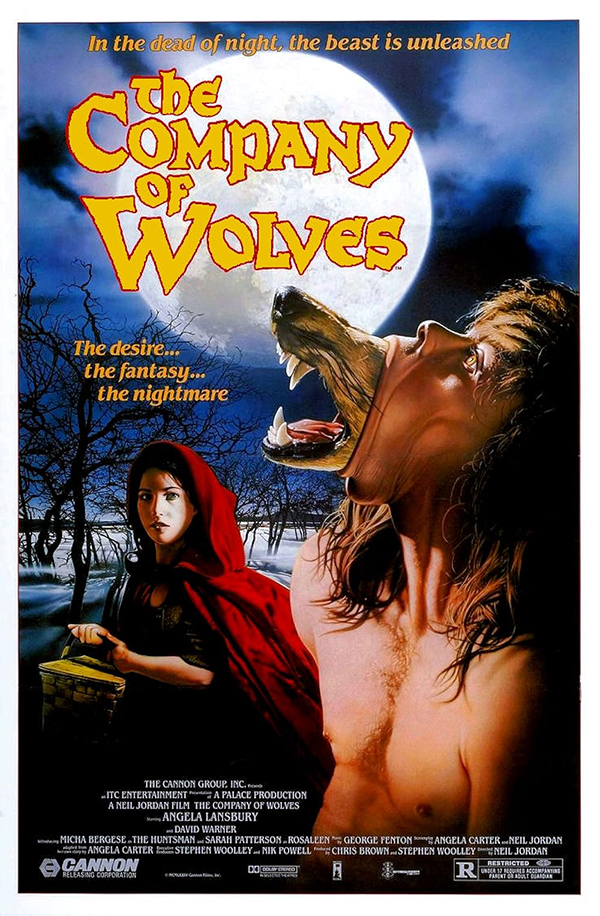
The Company of Wolves is a Gothic fantasy horror film from 1984, directed by Neil Jordan with screenplay by Jordan and Angela Carter, adapted from her short story of the same name from 1979, which had earlier been adapted into a radio dramatization in 1980. It was filmed in Shepperton Studios in England.


Already from the start you know that you’re not in for an ordinary story here. The movie is told in a narrative that consists of one main story, with embedded tales that ties in with the overall plot of the film, which is a coming of age story where female sexuality is the dominant theme, presenting it in an adult Little Red Riding Hood version. The stories blend in with Lil’ Red’s life, or Rosaleen as she’s called here, except granny’s warnings seem to evoke more curiosity in her than scaring her. She’s one of those! A female embracing her own sexuality without shaming herself and everyone else over it! Oh goodness me. Maybe it’s really the wolf who should be afraid.


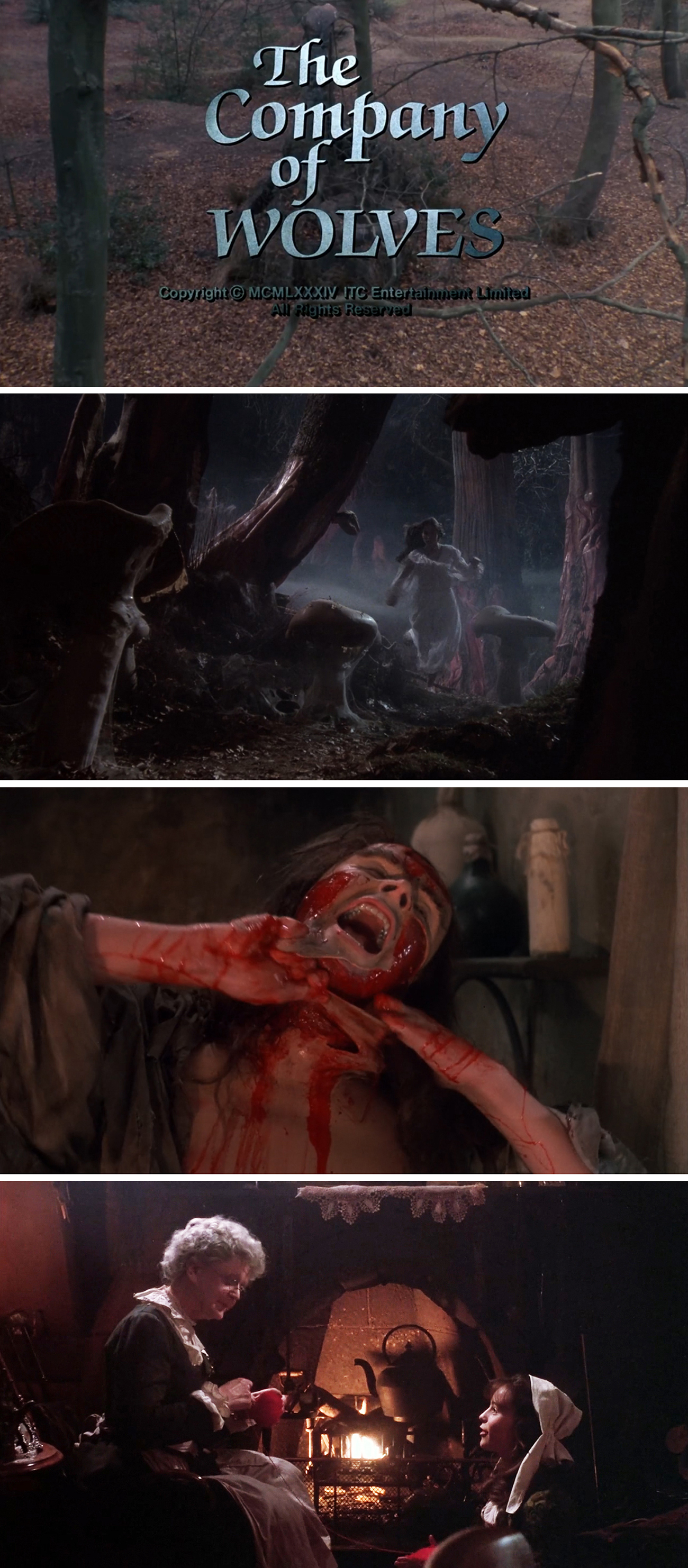
The movie’s strongest asset is how it looks, as it lays it all heavily down on the dreamy visuals and slightly surreal fairytale landscape with its giant mushrooms and crooked trees. The sets are really visually enchanting, perfectly belonging in a dreamy fairytale setting. Jordan said he tried to eroticize the forest, and you won’t really have to put too much effort into seeing some obvious phallus-like symbols in all the mushrooms…


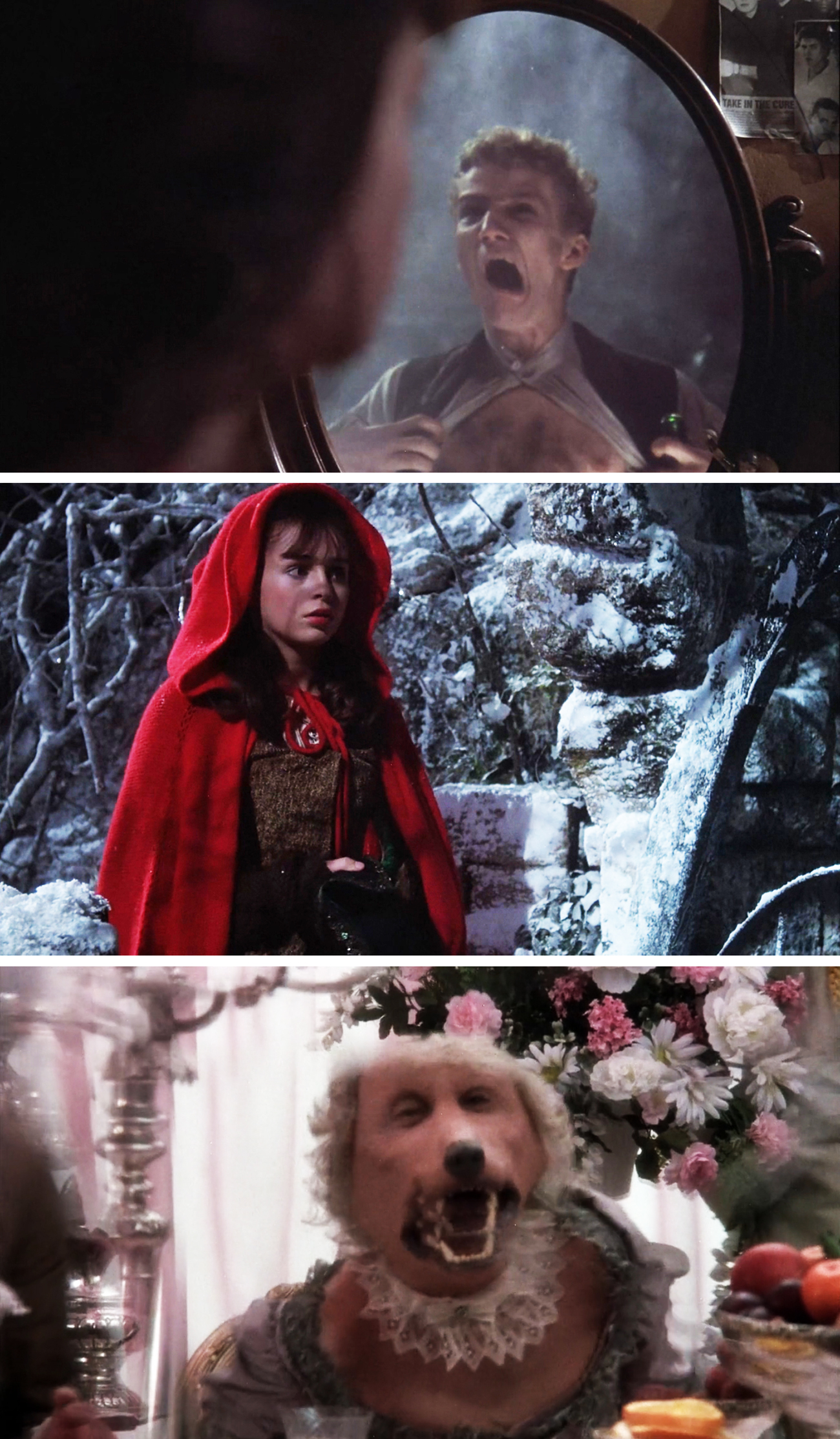
The Company of Wolves is not a gory film, but it does actually have some scenes with true body-horror werewolf transformations, and there’s also a chopped off head and a severed arm. The werewolf effects themselves are actually really good, with transformations shown in full practical glory! Ah, the 80’s. There are also a lot of wolves in the film, so the title surely fits. Most of them are not actually wolves of course, both because of the low budget but also due to cast safety. Most of them are in fact Belgian Sheperd Dogs with dyed fur. Note I said most of them, though…because there were indeed some real wolves here, in which Jordan was impressed over young Sarah Patterson (who plays Rosaleen) when she was acting amongst the genuine ones and didn’t fear them. I guess there really might have been a bit of Lil’ Red in her.


The Company of Wolves is a horror fairytale with very obvious erotic undertones. It’s an adult and dreamlike version of Little Red Riding Hood, playing into the obvious terms of a woman’s sexual awakening, the loss of so-called innocence while embracing one’s true self.


The Company of Wolves The Company of Wolves


Director: Neil Jordan
Writers: Angela Carter, Neil Jordan
Country & year: UK, 1984
Actors: Angela Lansbury, Sarah Patterson, David Warner, Graham Crowden, Brian Glover, Kathryn Pogson, Stephen Rea, Tusse Silberg, Micha Bergese, Georgia Slowe
IMDb: https://www.imdb.com/title/tt0087075/


Vanja Ghoul


The Woman in Black (2012)

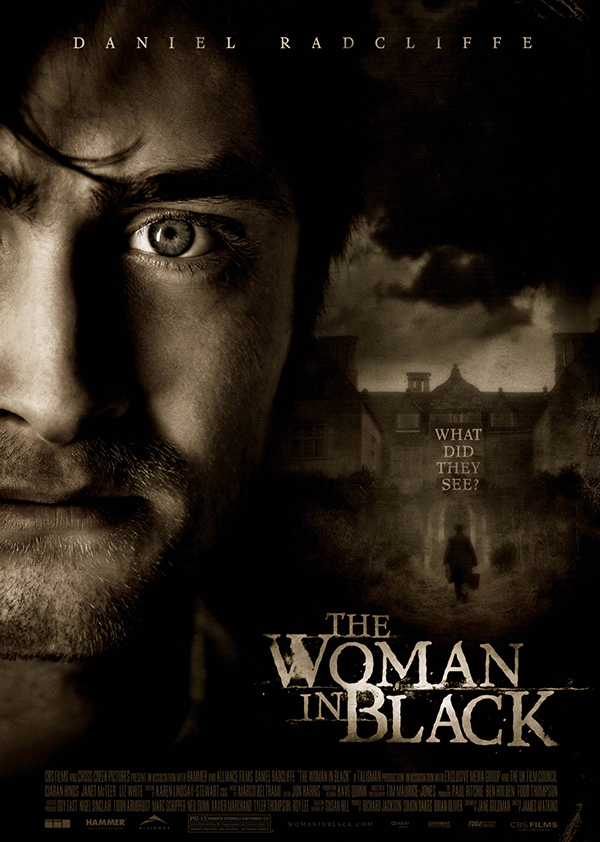
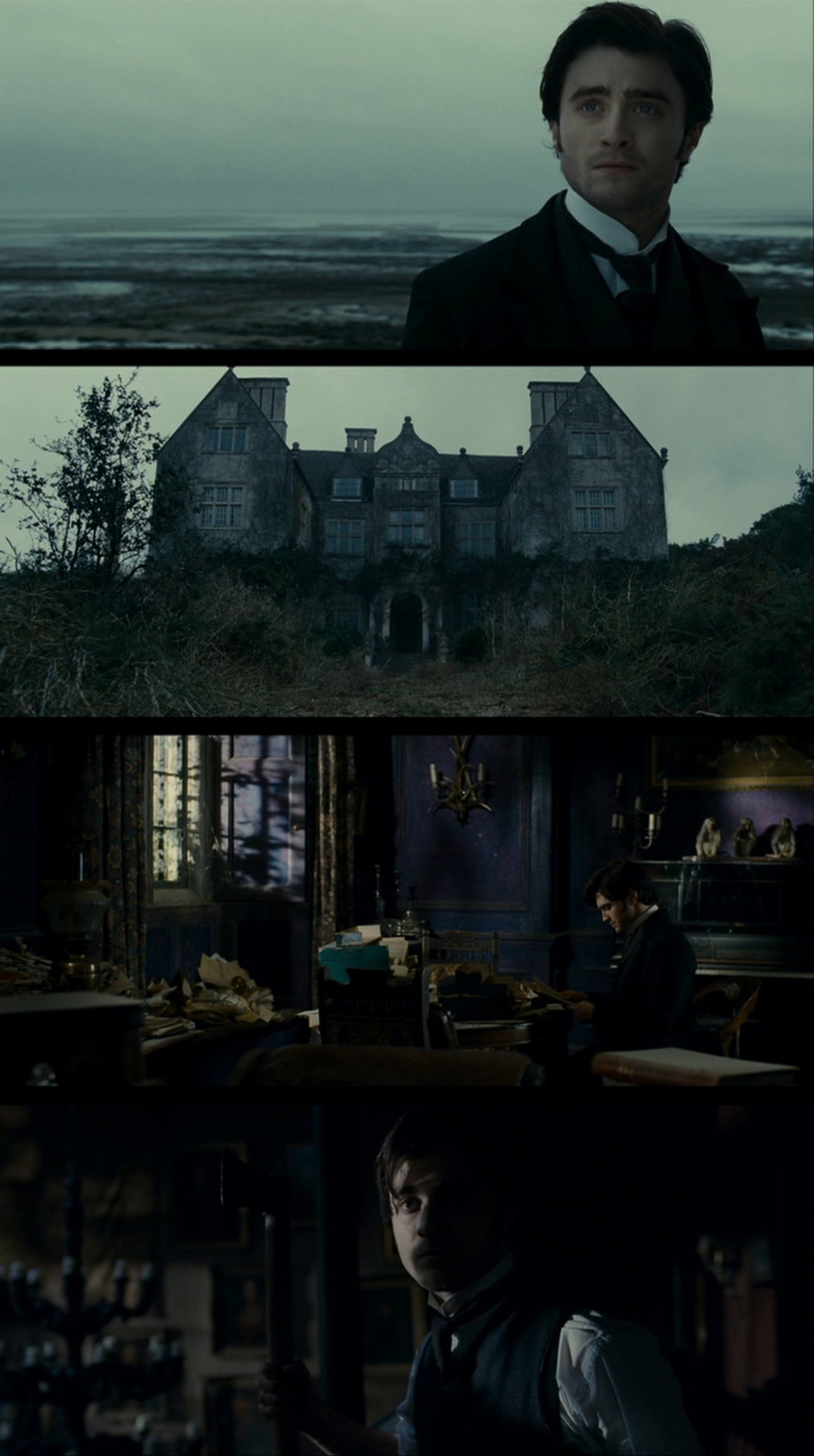
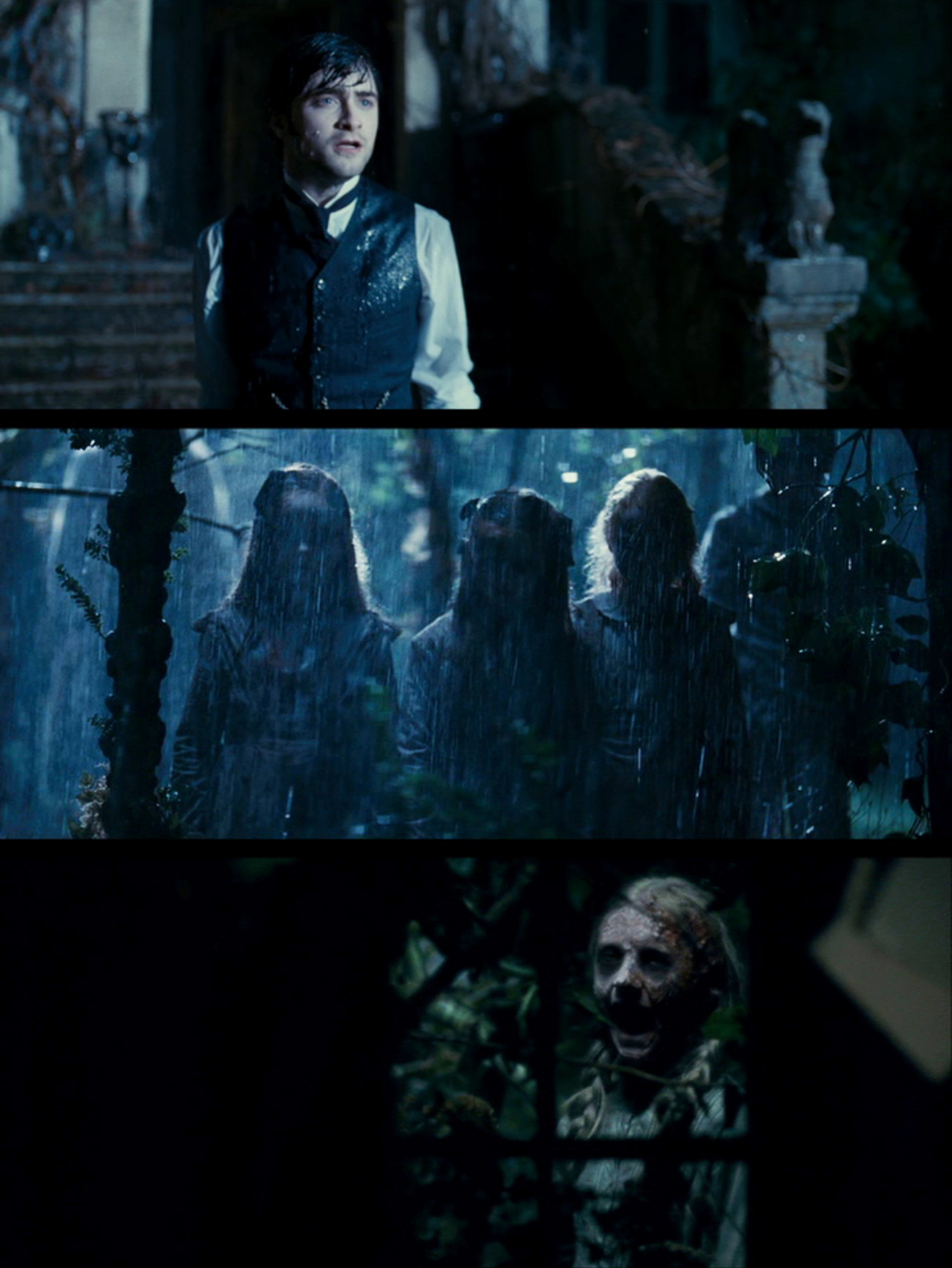
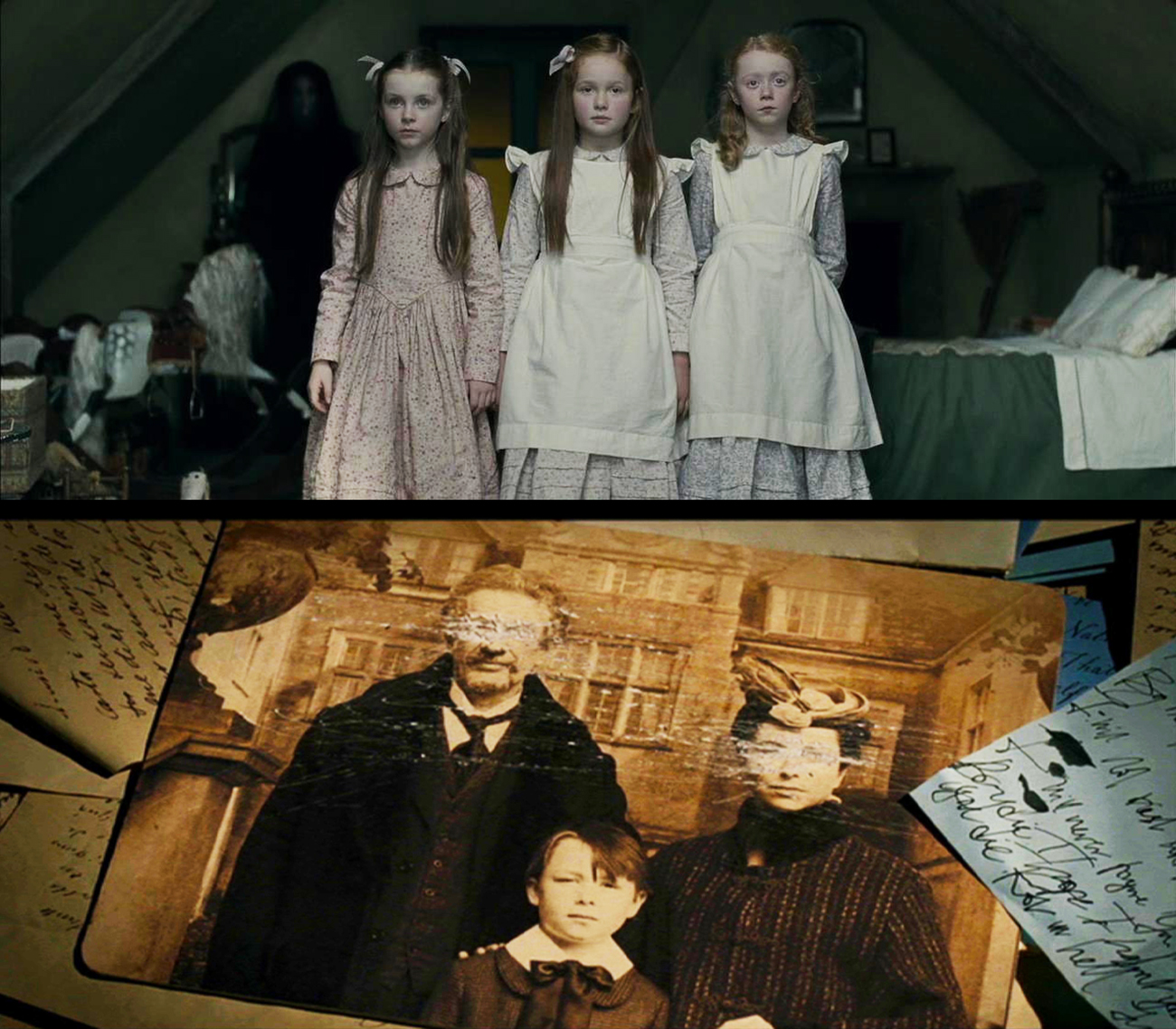
The Woman in BlackThe year is 1889, and we’re in the village of Cryhin Gifford. Three little girls are playing in their nursery at the top floor of the house, when they suddenly notice a sinister presence in the room. Instead of running out in fear while screaming for their parents (as would be a normal reaction), the girls seem to come under the presence’s influence. They get up, walk towards the window, and jump to their deaths. Several years later, in 1906, we’re in London where the lawyer Arthur Kipps is waiting anxiously while his wife is giving labor. His son, Joseph, is born, but his wife Stella dies during childbirth. From one tragedy to another, just to make us aware pretty early on that this is a bleak and depressing story. Four years later, Arthur is still grieving and struggling, where his boss one day instructs him to visit Crythin Gifford in order to retrieve documents from the late Alice Drablow, who owned the infamous Eel Marsh House. Somewhat reluctantly, he travels there to find himself in a village where everyone is unwelcoming and suspicious of him, with the exception of the wealthy landowner Samuel Daily. The Eel Marsh House is located in a desolate marshland, where the pathway up to the place is sometimes inaccessible due to the high tides. Arthur also starts seeing glimpses of a mysterious woman in black, and each time he sees her, something terrible happens to one of the few remaining children in town. The townspeople blame Arthur, while Samuel tries to convince him not to fall into the superstitions of the villagers. But there are secrets at the Eel Marsh House that will reveal what really happened there, long ago…and it’s up to Arthur to make those secrets become unveiled.


The Woman in Black is a supernatural horror film from 2012, directed by James Watkins with screenplay by Jane Goldman. It is the second adaption of the 1983 Susan Hill novel of the same name, where the first adaption was made in 1989. This 2012 version stars the well known Harry Potter actor Daniel Radcliffe in the leading role as Arthur Kipps (which makes for a very special fun fact: in the first adaptation Arthur Kipps is played by Adrian Rawlings, the actor who played Harry Potter’s dad). The movie was produced by Hammer Film Productions, Alliance Films, Cross Creek Pictures and the UK Film Council. It did pretty well at the box office, grossing $129 million worldwide against a budget of $15-$17 million.


While there are tons of movies about haunted houses and vengeful spooks out there, there’s not all too many that really carries that dark, brooding, classic ghost story vibe. You know the type: the ones with large Victorian mansions, dark hallways, sinister secrets, and so on. This, however, is one of those movies. Danielle Radcliffe, most known for his role as Harry Potter of course, is doing a great job playing a tormented and grieving lawyer who gets tangled up in a dark and dangerous mystery. With the perfect brooding locations, using Cotterstock Hall near Oundle in central England for exterior shots of the Eel Marsh House, Osea Island in Essex for the fictional Nine Lives Causeway which leads up to the house, and the village scenes filmed in Halton Gill. It’s a beautiful looking film, drenched in gothic, gloomy atmosphere.


While this one and the first movie adaption from 1989 are very similar, they both have a few changes from each other and also compared to the book. And while this 2012 version has a lot more of the moody, dark and gothic atmosphere lingering throughout the entire movie, there were actually some scenes in the first movie that I honestly found creepier, especially the scene during the fog, which I found to be a lot more effective in its subtleness. Still, this one is focusing a lot more on the goth doom ‘n gloom vibe, which suits the film well being a Hammer production. After all, Hammer were pioneers in the gothic horror department.


The Woman in Black is a creepy, atmospheric and delightful ghost horror movie with a sinister vengeful spirit, an old village with unfriendly inhabitants carrying a secret, an old decrepit Victorian house as isolated as can possibly be, and so many other great ingredients for the perfect spooky haunting.


A sequel called The Woman in Black: Angel of Death was released in 2015.


The Woman in Black The Woman in Black The Woman in Black


Director: James Watkins
Writer: Jane Goldman
Country & year: UK, 2012
Actors: Daniel Radcliffe, Ciarán Hinds, Sophie Stuckey, Misha Handley, Jessica Raine, Roger Allam, Lucy May Barker, Alisa Khazanova, Ashley Foster
IMDb: https://www.imdb.com/title/tt1596365/


Original: The Woman in Black (1989)


Vanja Ghoul


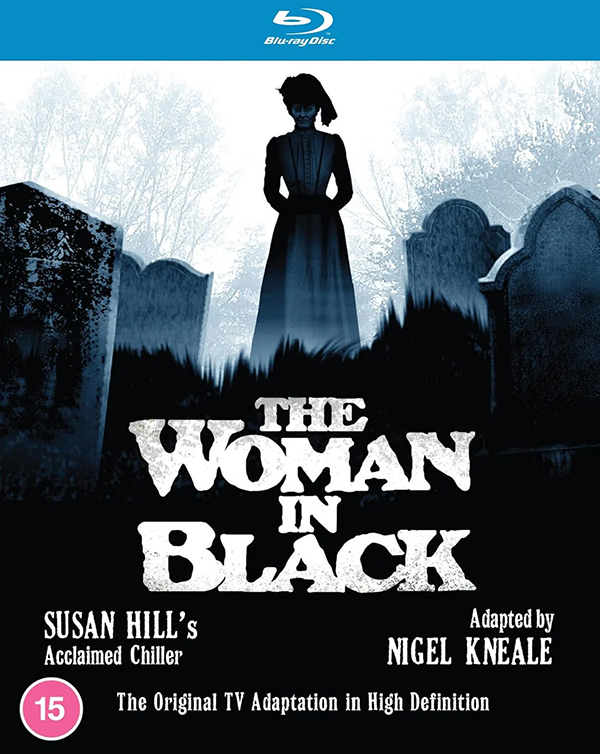
The Woman in Black (1989)

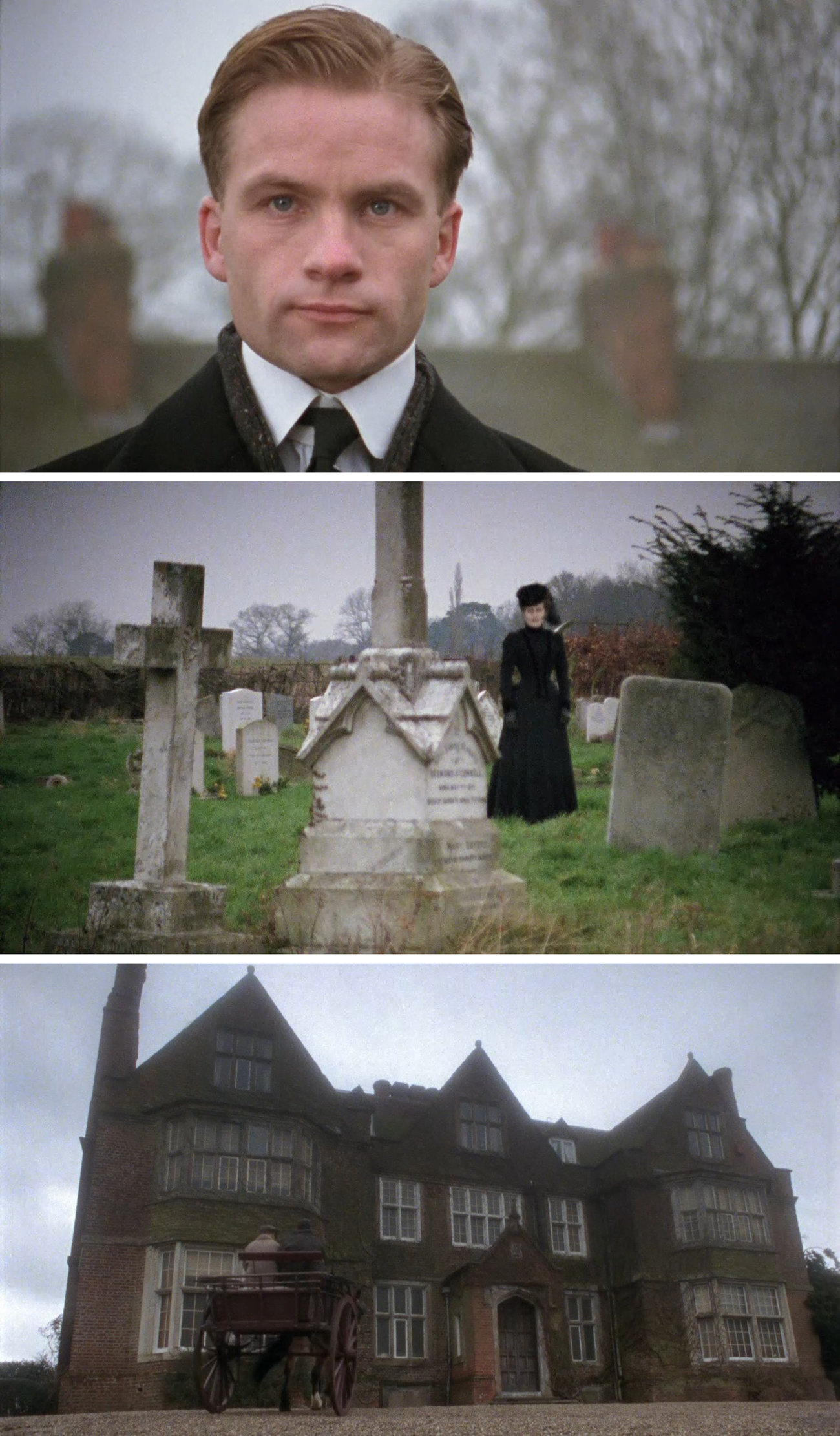
The Woman in BlackIt’s the fine year of 1925 and the place is a chronic depressive England where it’s always gloomy and misty and extra cozy by the fireplace. Arthur Kidd (played by Harry Potter’s dad, Adrian Rawlings) is a young solicitor in his early 30s. He’s married and has two children who he has to kiss goodbye for a while when his boss sends him from London to a small sleepy Greendale’ish coastal town. The first assignment is to attend the funeral of the mysterious upper-class woman Alice Drablow. And she was not the most popular person in town as only three, or so, is taking the last ta-ta before she gets lowered six feet under. RIP. The townsfolk refuse to talk about her as if she was some Voldermort.


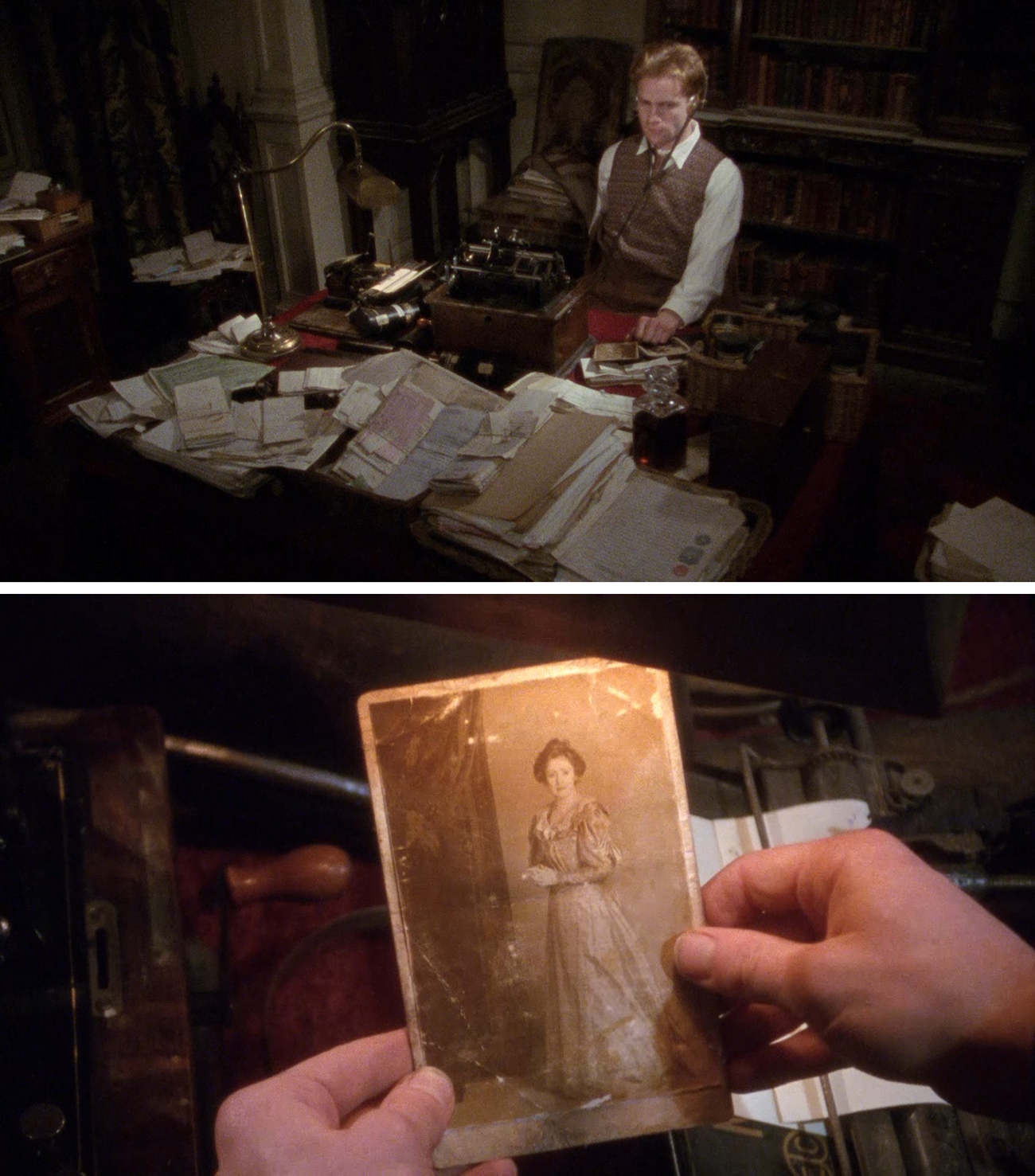
Now the tedious work starts. And that is to visit Drablow’s gothic mansion, called Eel Marsh House, located by itself on an isle with a tidal causeway, and go through a mountain of papers. The old mansion, overgrown with vines and frozen in time, looks more welcoming than it should, but it doesn’t take long before the bad vibes creep in.


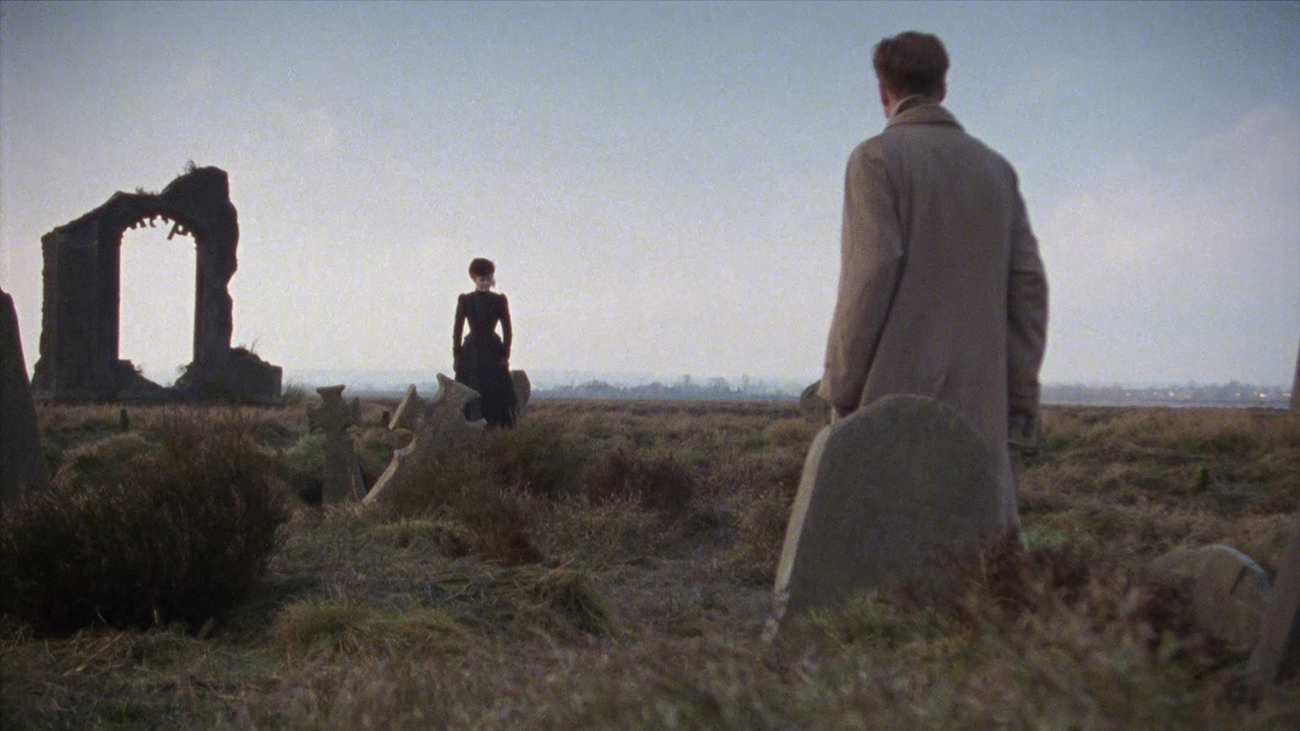
We don’t see much of the woman in black, but we absolutely feel her stone-cold presence, although most of the film happens during the daytime. And it actually works as the surroundings are bleak and ghostly by itself, where it doesn’t matter much if you spot a ghost at night or in broad daylight. That’s England for you.


The woman in black is played by Pauline Moran, who could as well be the sister of Jean Marsh. When we first see her outside the house where she gets the first direct eye contact with Arthur, she eyeballs him right through his sorry soul with sadness and burning radioactive hatred. She has that look as if someone just bent over and gave a big, bubbly, wet bean fart straight at her face. And once you’ve got eye contact with her, you’re, more or less, marked for life and will never be the same again, somewhat similar to a certain cursed Asian VHS tape from the 1990s.


There’s also a family graveyard by the house. Not subtle at all. So, of course, this place is haunted. But there’s work to do. Arthur gets a cute little dog, Spike, to keep him company as he dives more and more into her papers, going through cryptic tape recordings, to finally settle down the Eel Marsh House.


The Woman in Black


Then the good boy gets worried, runs out and disappears in the thick fog. As Arthur runs after him, he only hears screams coming from everywhere and the sounds of horses galloping. So what’s he gonna do? Take the train back to London and tell his cigar-smoking boss with a straight face that he got spooked away by ghosts? Of course not. And when the work is done it will finally be time to go back home to London, and hopefully forget about that creepy woman in black. But she won’t forget about you. Never. And no, nothing bad happens to the dog, so chill down.


The film is directed by Herbert Wise, based on the novel by Susan Hill. The script is written by Nigel Kneale, one of the most prolific screenwriters in the UK at the time. This is not your typical ghost ride with jump scares, loud music and so on, and certainly not for TikTokers with a half-second attention span. The Woman in Black is a classy ghost story, a tragic one as well, told in the old-fashioned style as the mystery of this Alice Drablow is basically told via letters and eerie tape recordings.


The film is very slow-burn’ish at times where we have some slick and elegant long one-shot takes so we can get a real sense of the place. The mood and the somber, gloomy cold atmosphere are the strongest elements here where with clever use of sound design, especially during the thick fog scenes. I also find it more effective that we see most of the woman in black at a distance where her sickly face is more blurred and obscured, which makes her look way more ghostly and mysterious. Makes me think of the cover of the first Black Sabbath record.


The film is also known for that scene which alone was enough to ruin the whole Christmas for the Brits when it aired on the telly. The scene that really got me though, was the ending. So simple yet so damn chilling. As a low-budget movie made for TV, it surely looks impressive, still after 30-plus years, and the performances are solid.


Susan Hill was, of course, not particularly happy with the adaptation for small, eye-rolling nitpick reasons. One of which is that the screenwriter, Nigel Kneale, actually had the nerve to change the gender of Arthur’s dog! Ooof, oh my. Stephen King gives a pat on the shoulder as he relates.


After the film was shown on Christmas Eve in England 1989, followed by a quick VHS release, it disappeared, poof, like a ghost itself. It wasn’t until the 2000s that a DVD was released in Canada, a copy I bought myself before it eventually got out-of-print. The film finally got an official Blu-ray release in 2024 after a long, long, long copyright dispute. The rights were not owned by Susan Hill herself, but by a trinity of holy ghosts technicians: a make-up artist, a costume designer and an assistant director. What a headache.


The Woman in Black is also one of Guillermo Del Toro’s favorite haunted house films, which should be enough of a selling point. So don’t listen to me. The 2012 version, produced by Hammer Films with Daniel Radcliffe in the main role, is also a good one.


The Woman in Black The Woman in Black


Director: Herbert Wise
Writer: Nigel Kneale
Country & year: UK, 1989
Actors: Adrian Rawlins, Bernard Hepton, David Daker, Pauline Moran, David Ryall, Clare Holman, John Cater, John Franklyn-Robbins, Fiona Walker, William Simons
IMDb: https://www.imdb.com/title/tt0098672


Tom Ghoul


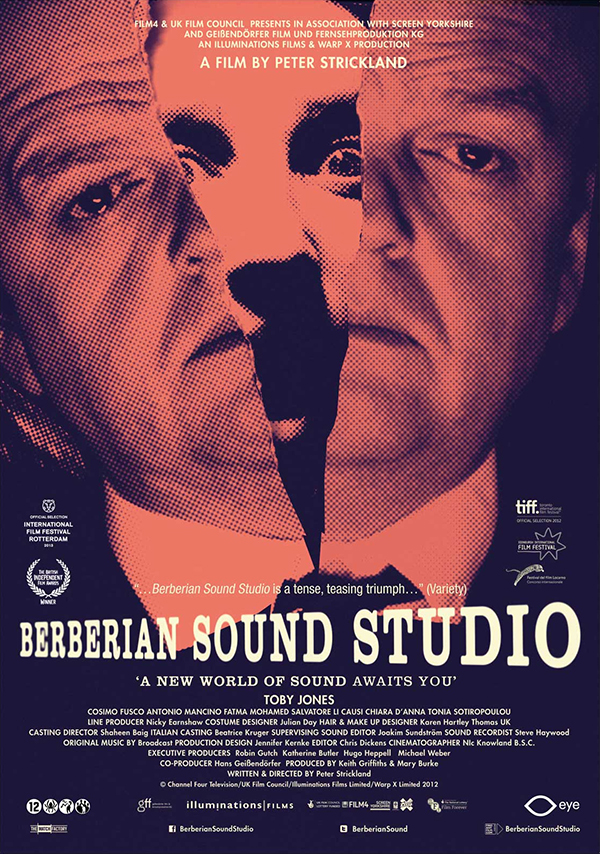
Berberian Sound Studio (2012)

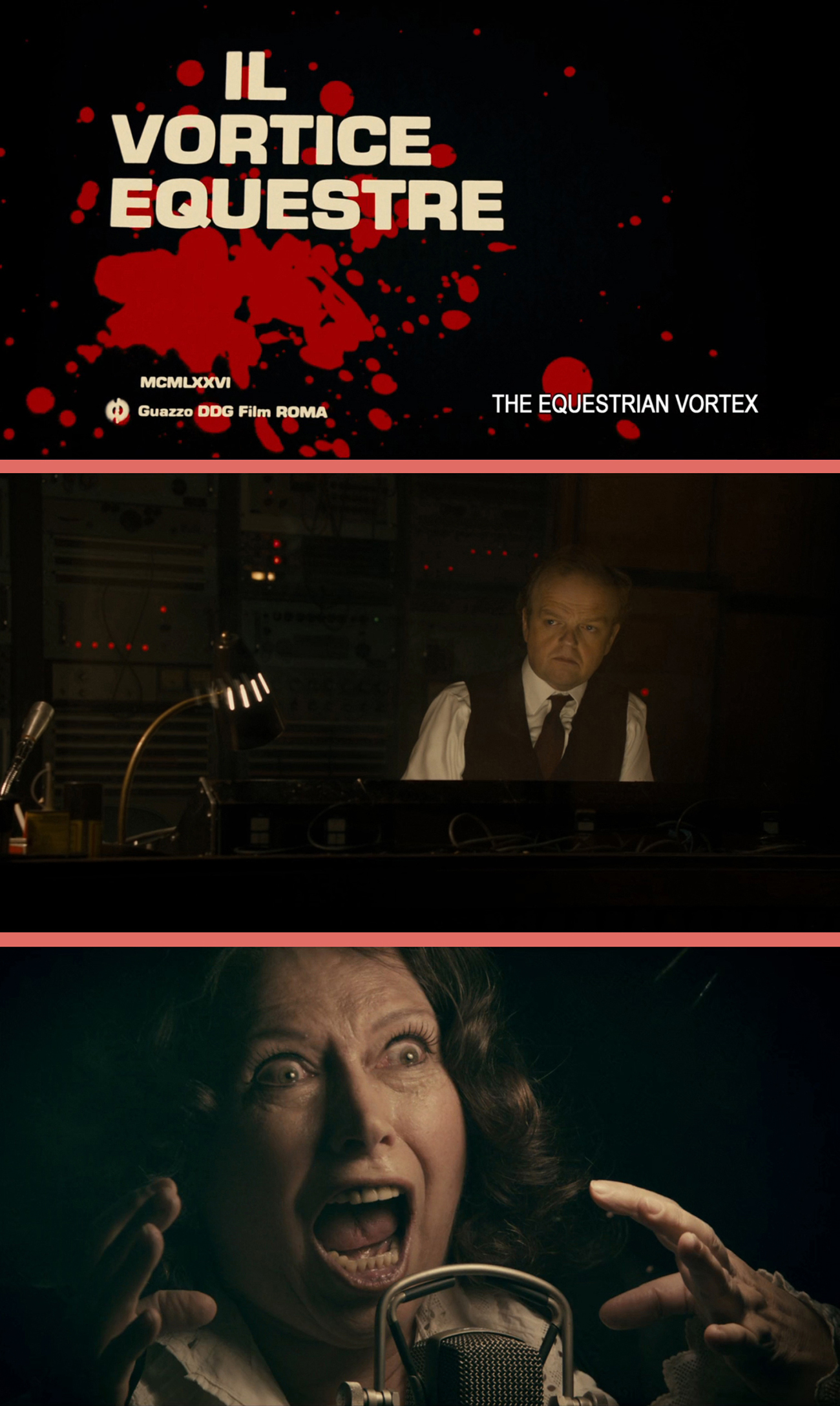
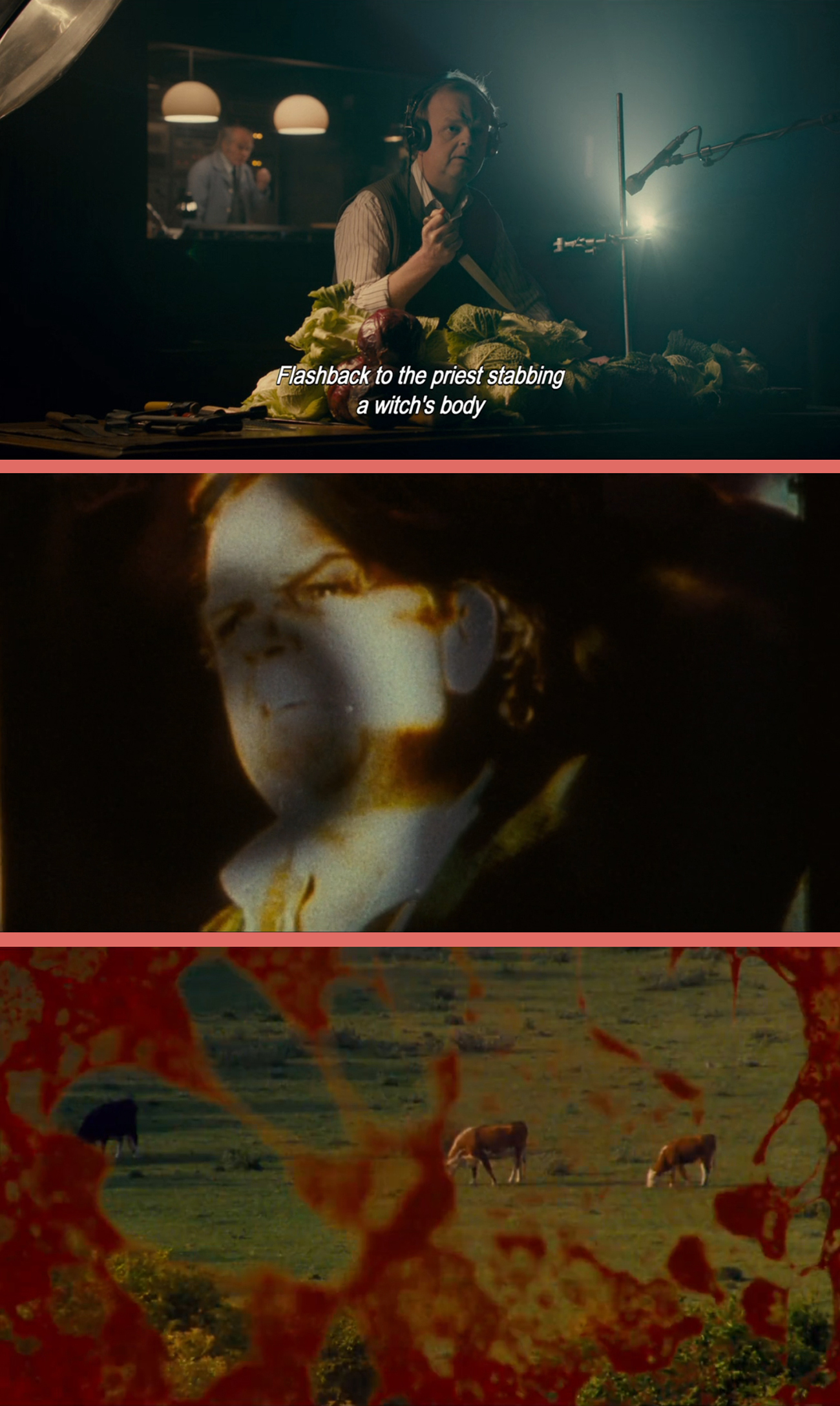
Berberian Sound StudioWe’re in the 70’s, and Gilderoy is a sound engineer traveling all the way from Britain to the Berberian Film Studio in Italy. He’s going to work on a film about horses…or so he thinks. When he arrives, the film producer Francesco tells him that the film is actually an Italian giallo film, called The Equestrian Vortex. Well, this wasn’t what Gilderoy signed up for, but he still decides to work at the studio to add the sound effects, or do Foley work as it’s also called. Using inventive ways to add sounds to the film’s gory scenes (which we actually never see) he uses vegetables and mixes voiceovers from the session artists. At the same time, Gilderoy is struggling with colleagues who pretty much treat him like shit (but then again they also do so to each other), feeling increasingly uncomfortable with the work he’s doing, and he starts to detach from reality.


Berberian Sound Studio is a British psychological horror film from 2012, directed by Peter Strickland and co-written with Jon Croker. Strickland made a short film of it in 2005, where he said that he wanted to make a film where everything that is usually hidden in cinema, the mechanics of film itself, is made visible. Berberian… turns this on its head. Here, the film is out of view, and you only see the mechanics behind it.


This is one of those films where the tired-out phrase isn’t for everyone truly fits. I’d think you’d have to inhabit at least a tiny interest to the art of sound editing, old-school moviemaking and Italian giallo in order to get the most out of a movie like this. It starts off on a somewhat comedic level, where the timid Gilderoy is struggling to set boundaries and voice his opinions, surrounded by the typical 70’s Italian machismo culture. Then it gets increasingly bizarre as Gilderoy’s mental state starts deteriorating.


The sound effect making, where watermelons are smashed and cabbages are split in half, sometimes showing pieces of damaged and rotting vegetables all over the place, made me imagine an alternative universe where this would be a Terrifier-level horror movie for vegetables. There’s something about not seeing the actual scenes Gilderoy is making the sounds for, but just hearing the sounds, seeing the descriptions, and hearing the actresses screaming. It certainly leaves a lot to the imagination! And if The Equestrian Vortex was an actual film, I wouldn’t hesitate giving it a watch.


Eventually, the movie ventures pretty far into cuckoo-land and what really happens and what happens only in Gilderoy’s head isn’t all that clear. The ending is somewhat ambiguous, and if you’d think there would be some kind of Evil Ed development here you’ll be sorely disappointed. It’s more like a surrealistic, dark dream without much of a conclusion.


Berberian Sound Studio is an amusing and strange film, and while the ending didn’t quite land with me I found the overall experience to be enjoyable.


Berberian Sound Studio Berberian Sound Studio


Director: Peter Strickland
Writers: Peter Strickland, Jon Croker
Country & year: UK/Germany, 2012
Actors: Toby Jones, Cosimo Fusco, Antonio Mancino, Fatma Mohamed, Salvatore Li Causi, Chiara D’Anna, Tonia Sotiropoulou, Eugenia Caruso, Susanna Cappellaro, Guido Adorni
IMDb: https://www.imdb.com/title/tt1833844/


Vanja Ghoul


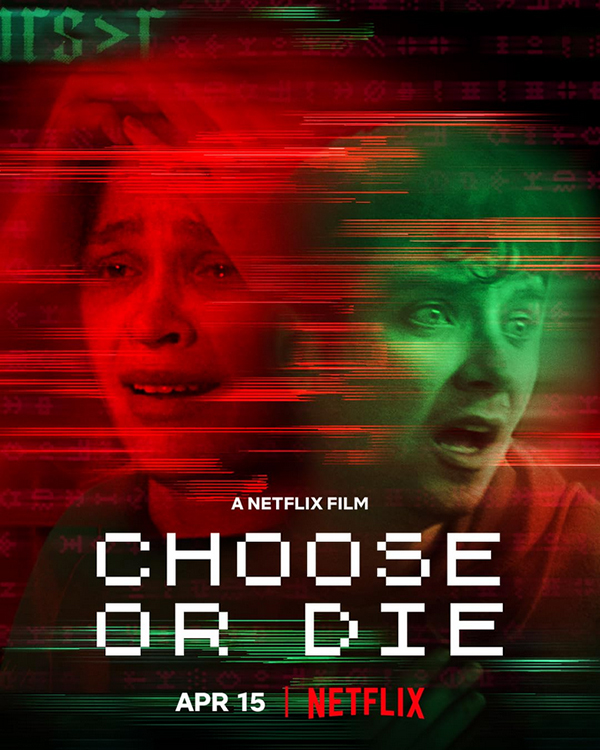
Choose or Die (2022)

Choose or DieWe start off by seeing Hal, a man who is the husband in a dysfunctional family. He’s a retro video game collector, and he receives a copy of a game called CURS>R. It’s supposed to be a classic text-based adventure game from the 80’s, but once Hal starts playing it he realizes that the choices the game gives him have a direct interaction with things in his own life. One of those choices he makes ends with some serious consequences. Then, we fast-forward to three months later, to the college student Kayla and her friend Isaac who is a computer geek. Kayla’s younger brother, Ricky, died a while back which turned her mother into a drug addict. On top of that, the rent collector is her supplier and forces Kayla’s mother into prostitution as an exchange to keep the apartment. So at this point we’ve already established at least one kill count we hope to see coming.


One day, Kayla visits Isaac and discovers the CURS>R game along with a phone number that’s offering a prize of $125,000. Just out of curiosity, she calls the number and then gets a recorded message from The Terror Director (with the voice of none other than Robert Englund himself, and yes, even in the movie he is presented as Robert Englund which doesn’t really make a lick of sense, but whatever). The recording tells her to complete the game, and insert the number code she will get at the end of the game, and she will become the winner of all that money. Kayla starts playing it, and makes a deal with Isaac to share the money. Of course, just like we saw what happened to Hal in the beginning, Kayla soon finds out that the game intervenes with what happens in her real life, and the choices she must make often have deadly consequences.


Choose or Die (formerly titled CURS>R) is a Netflix horror film from 2022, directed by Toby Meakins as his feature directorial debut. It was originally planned to be a short form series for the Quibi streaming service, which didn’t even last a year. So, over to Netflix as one of their originals then.


The premise itself, being a cursed video game from the 80s, sure does sound like some easily consumed fun. And it is. It is also very generic, and despite having the opportunity to set up a lot of very nasty situations, it has decided to play (no pun intended) everything pretty safe. There’s a scene where Kayla only sees how something is unfolding in her mother’s apartment through the game’s simple pixel graphics and MIDI music, and that’s the most exciting scene of them all as it leaves a lot to the imagination and also makes it slightly hilarious. I realize that what I just wrote there isn’t necessarily a good thing in a movie like this, though, but I actually enjoyed the setup for that scene. Now, regarding the Robert Englund cameo with the recording, it really didn’t make any sense, because he’s got fuck-all to do with the rest of movie. I was actually expecting him to show up for some kind of surprise role at the end but nah.


Despite its obvious flaws, though, I won’t lie: I found the movie to be fairly entertaining. It’s one of those simple dime-a-dozen curse horror movies we’ve already seen so many variants of, but just like a cheap fast-food meal, it’s sometimes all you need. The performances are fine, and there’s a few moments that are effectively atmospheric and tense. Choose or Die, while suffering from being very generic and not going far enough with the kills, is still an okay movie to watch on a lazy day. Just turn down your expectations, and you might simply have a fun time!


Choose or Die


Director: Toby Meakins
Writer: Simon Allen
Country & year: UK, 2022
Actors: Iola Evans, Asa Butterfield, Angela Griffin, Ryan Gage, Eddie Marsan, Kate Fleetwood, Pete MacHale, Kayleen Aires Fonseca, Caroline Loncq, Robert Englund
IMDb: https://www.imdb.com/title/tt11514780/


Vanja Ghoul