






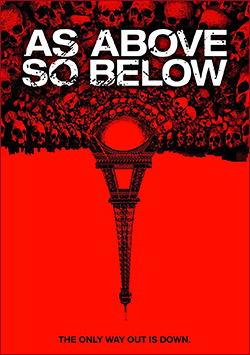
 Scarlett is a young scholar who continues her dead father’s search for the philosopher’s stone (a legendary alchemical substance discovered by Nicolas Flamel, which supposedly has the powers to turn metals into gold or silver, and granting eternal life). She travels to Paris, and together with her ex boyfriend George and Benji, the cameraman, they go to the Catacombs of Paris. Scarlett had earlier found the “Rose Key”: an artifact that has some codes which, upon using them to solve a riddle on Flame’s headstone, gives them some coordinates that points to an area inside the Catacombs. But of course, this specific area proves to be off-limits. With the help of a stranger, they get in contact with a guide, Papillon, who will take them to an off-limits entrance. Crawling through a narrow tunnel, they are pushed forward as it collapses, and they end up in an area with a blocked tunnel. Finding no other way to leave, they decide to break through the tunnel…and what they find further inside is more hellish than they could have imagined.
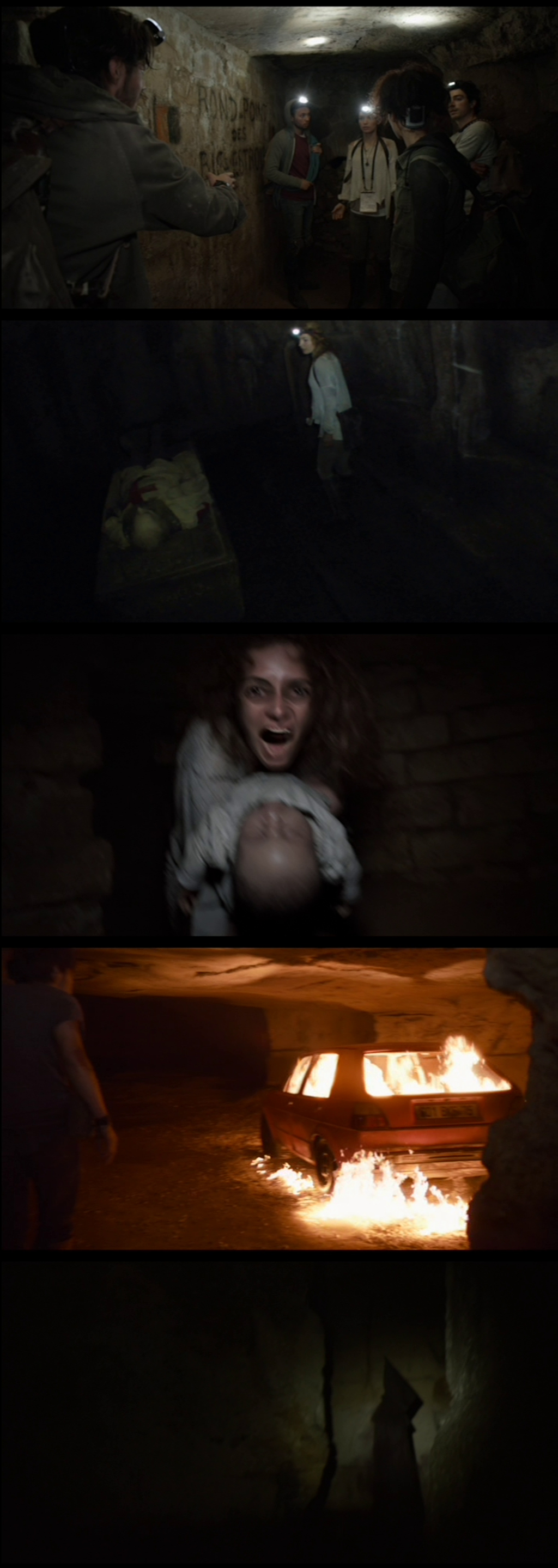
As Above, So Below is a found footage horror film from 2014, which was actually the first production ever that secured permission from the French government to film in the catacombs (a place we actually visited some years back, a delightful experience). As part of the promotion for the film, Felix Kjellberg (AKA PewDiePie) traveled through the Paris Catacombs. The film is directed by John Eric Dowdle, who previously directed The Poughkeepsie Tapes, Quarantine, and Devil.
The film incorporates several things, including a little bit of Egyptian history, Knights of Templar, mythology, religion, and of course it draws some obvious inspiration from Dante’s Inferno. Trapped inside some really claustrophobic areas, where the characters are pushed further and further into the complexity of Hell itself, makes for a suspenseful viewing. There’s a lot of atmosphere here and scenes that are both creepy an sometimes even outright scary, with madness and paranoia taking over their resolve. The claustrophobic feeling is genuine and really creepy.
As Above, So Below is a pretty decent found footage horror film with a little bit of an adventurous side to it, which makes it feel like a “National Treasure meets Blair Witch” kind of thing, with a reminiscence of The Descent and The Tunnel. It blends several pieces of mythology with well-executed symbolism, and of course excellent use of scenery as it was filmed in the real Catacombs of Paris with little use of props. Due to its heavy symbolism and use of mythological aspects it may not cater to everyone, of course, but we found it to be a thrilling little ride.
Director: John Erick Dowdle
Writer: John Erick Dowdle, Drew Dowdle
Country & year: France, USA, 2014
Actors: Perdita Weeks, Ben Feldman, Edwin Hodge, François Civil, Marion Lambert, Ali Marhyar, Cosme Castro, Hamid Djavadan, Théo Cholbi, Emy Lévy, Roger Van Hool, Olivia Csiky Trnka, Hellyette Bess
IMDb: www.imdb.com/title/tt2870612/


 A group of confederate deserters during the American Civil War robs a bank for gold, an event that doesn’t go as smoothly as they planned. Trying to find a place to rest for the night, they come upon an old abandoned mansion located by a corn field. Entering the field they see a strange-looking scarecrow which they believe to be the corpse of a real person…and as if that wasn’t enough to realize this place is no good and should be avoided at all cost, they also come upon a hideous-looking deformed creature, which they shoot upon sight. But oh well, they still have to spend the night somewhere, so they enter the old mansion anyway, and soon find out that awful things have happened here which will also impact everyone who sets foot at the place.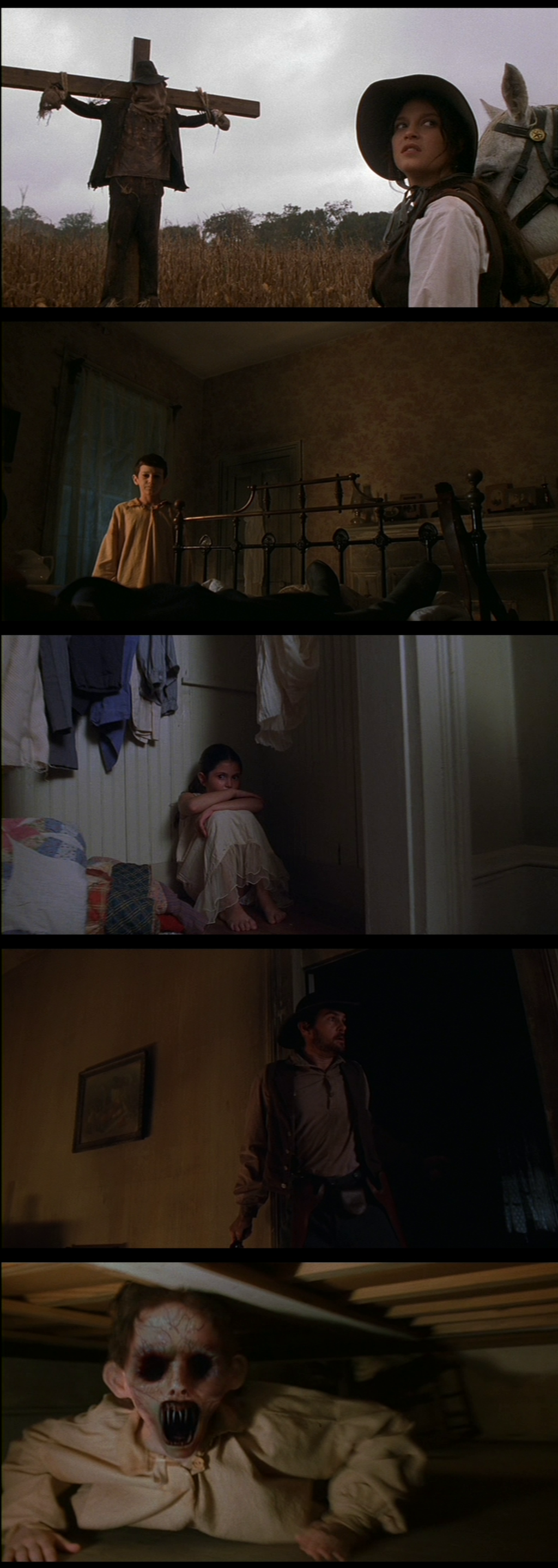
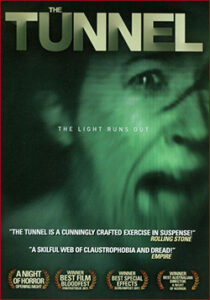 The New South Wales State government plans to recycle the huge amounts of trapped water in a network of abandoned train tunnels. However, these plans suddenly come to a halt, and publicly no one is ever told why. Rumors are spreading, like how homeless people using the tunnels end up going missing. This brings a young journalist, Natasha, to start an investigation into what she thinks is some kind of government cover-up. She and her crew decide to enter the tunnels and look for answers, but after being refused entry by a security guard, they do of course find an alternative entrance into the place. While exploring the tunnels, they start hearing strange noises through the audio headphones, and when one of the crew members go missing they eventually realize that they might not be alone in these deep, dark tunnels.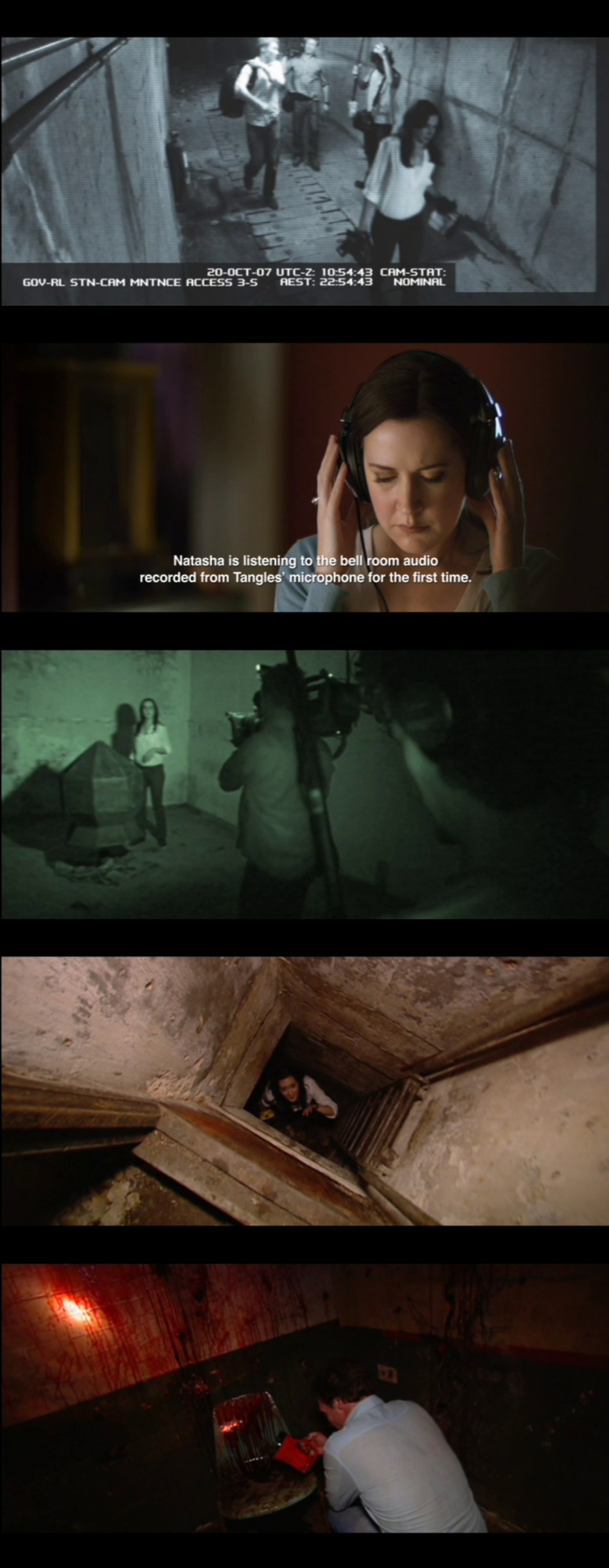
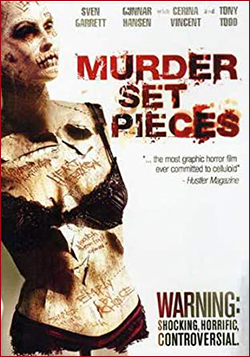 The film starts off with a quote from Jack the Ripper that says “The Jews are not the men to be blamed for nothing.” Then we see some silent and grainy black and white documentary footage of the September 11 attacks, as we hear a little girl’s voice saying “Just you wait a little while, the nasty man in black will come. With his little chopper, he will chop you up!“
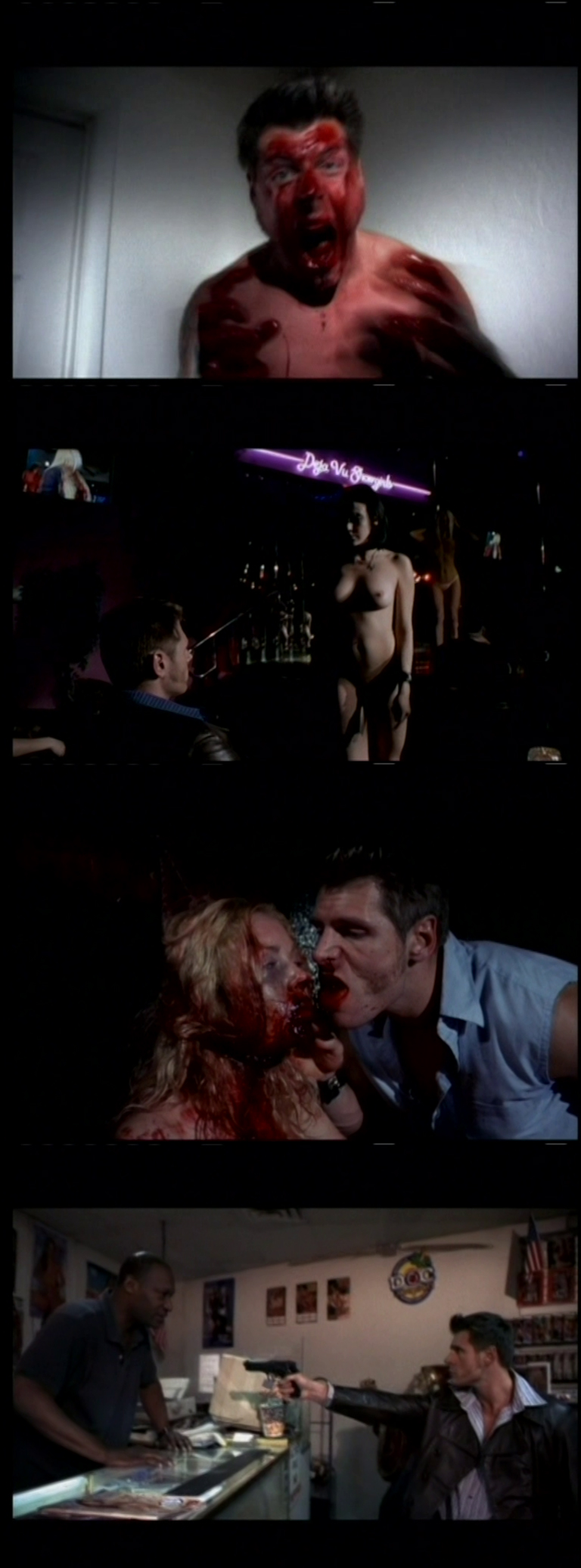
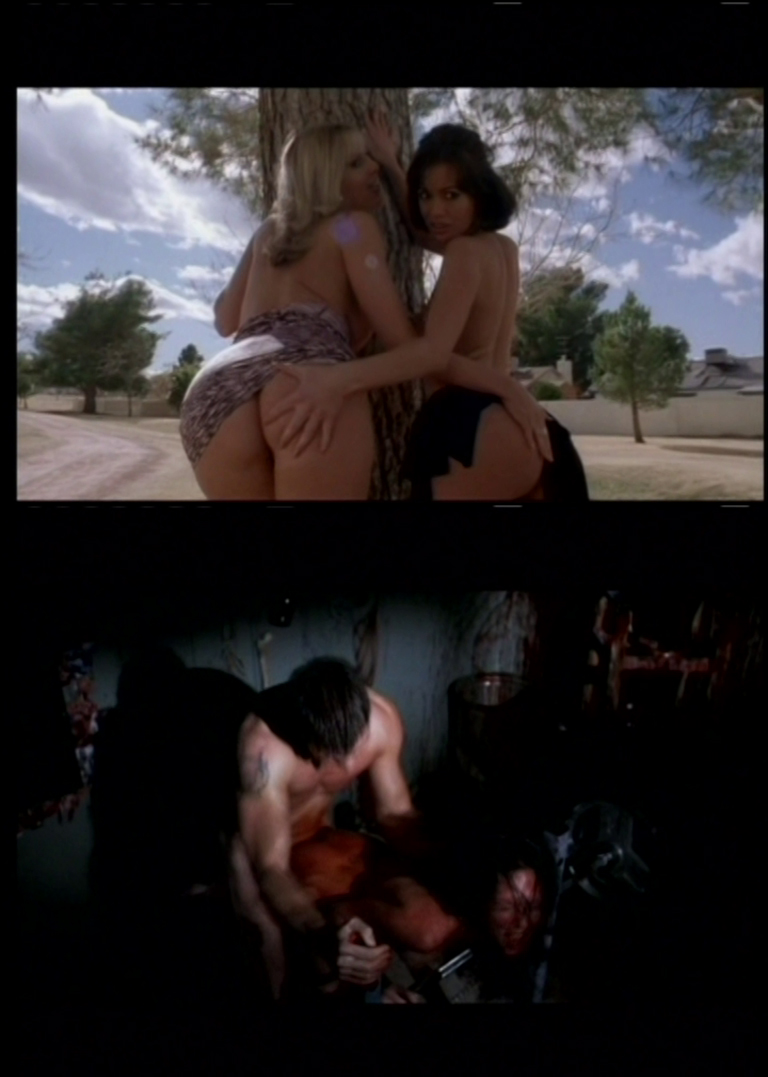


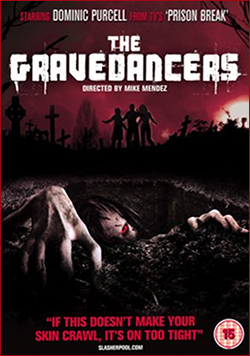 The movie starts off showing a scene with a woman alone in a room, who is attacked by something neither she nor we can see. She gets hanged in the stairways, and a black envelope drops to the floor. We then fast forward to a year later, when a group of friends (Sid, Kira, and Harris) have attended a funeral and decides to go drinking afterwards. Drunk and stupid, they decide to do something silly that can only be brought on by drunken stupidity: they first break into the Crescent View Cemetery. Their original plan was to just say their final goodbyes to the recently departed, but Sid finds a black envelope amongst some of the flowers on the grave. Inside is a poem which urges them to be joyful and to dance upon the graves. And of course, since they’ve already gotten quite sloshed by now, they think this sounds like an excellent idea in order to celebrate life. And so….they start dancing on graves…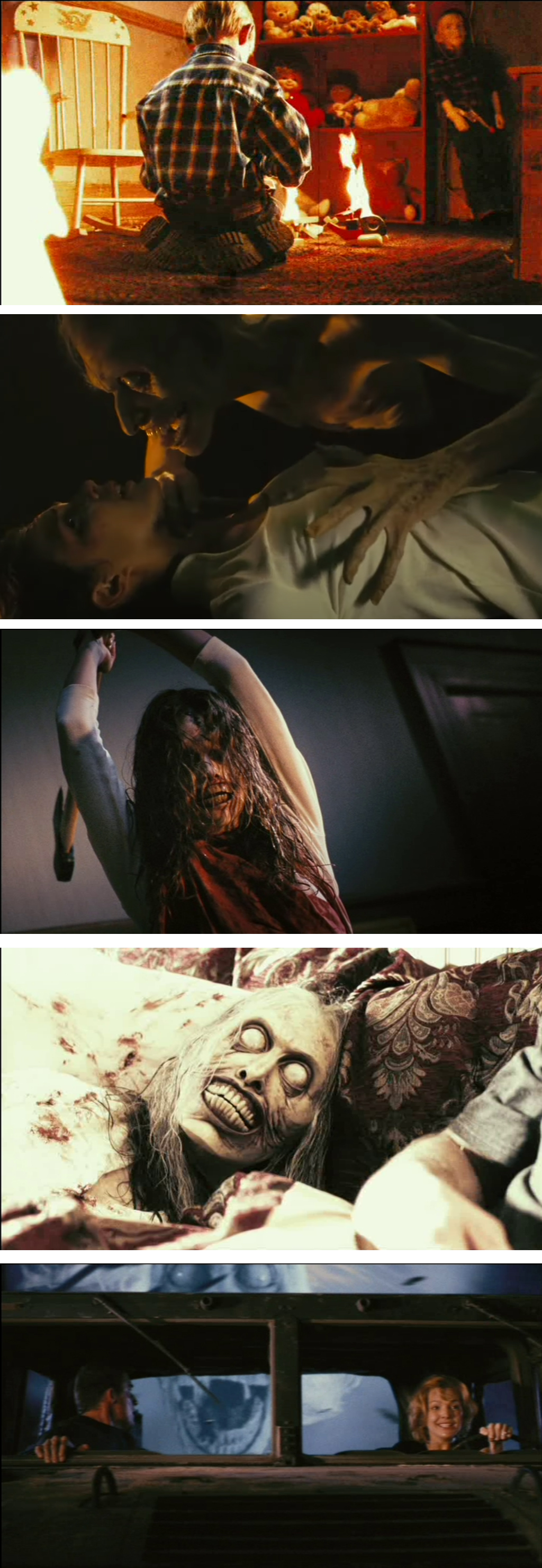

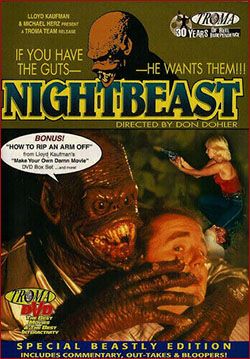 Welcome to Z movie hour. Today we take a look at a micro-budget and campy sci-fi schlockfest with an evil alien and his lazer gun, made by amateur filmmaker Don Dohler, starring his neighbours, brother-in-laws, himself, and his two sons.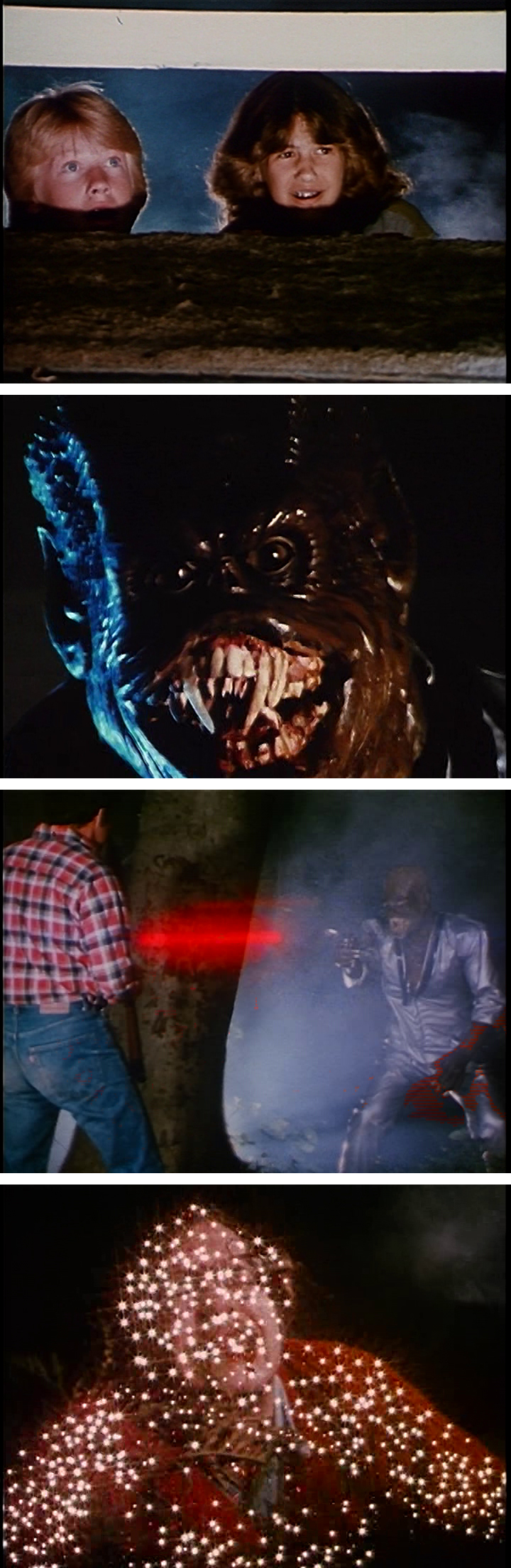
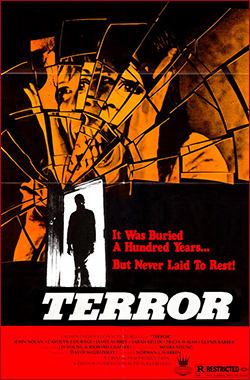 A lady called Mad Dolly is being chased by some mob in a forest who believe she is a witch. She gets captured and about to get burned at the stake, on order by Lord Garrick. Before they get the chance to lit her on fire, she gives her final speech with silly facial expressions, and summons some demonic forces that causes one of the executioners to catch fire, and then all hell breaks loose. Lord Garrick runs back to his mansion where an arm bursts through the wall and strangles him. Lady Garrick, who wanted to see Mad Dolly dead more than anyone else, finds her Lord dangling from the ceiling. The Lady is then confronted by a resurrected and vengeful Mad Dolly, who chops her head off and gives the most cheesy, evil laugh ever. And only eight minutes in it’s fairly okay to ask what the hell this is.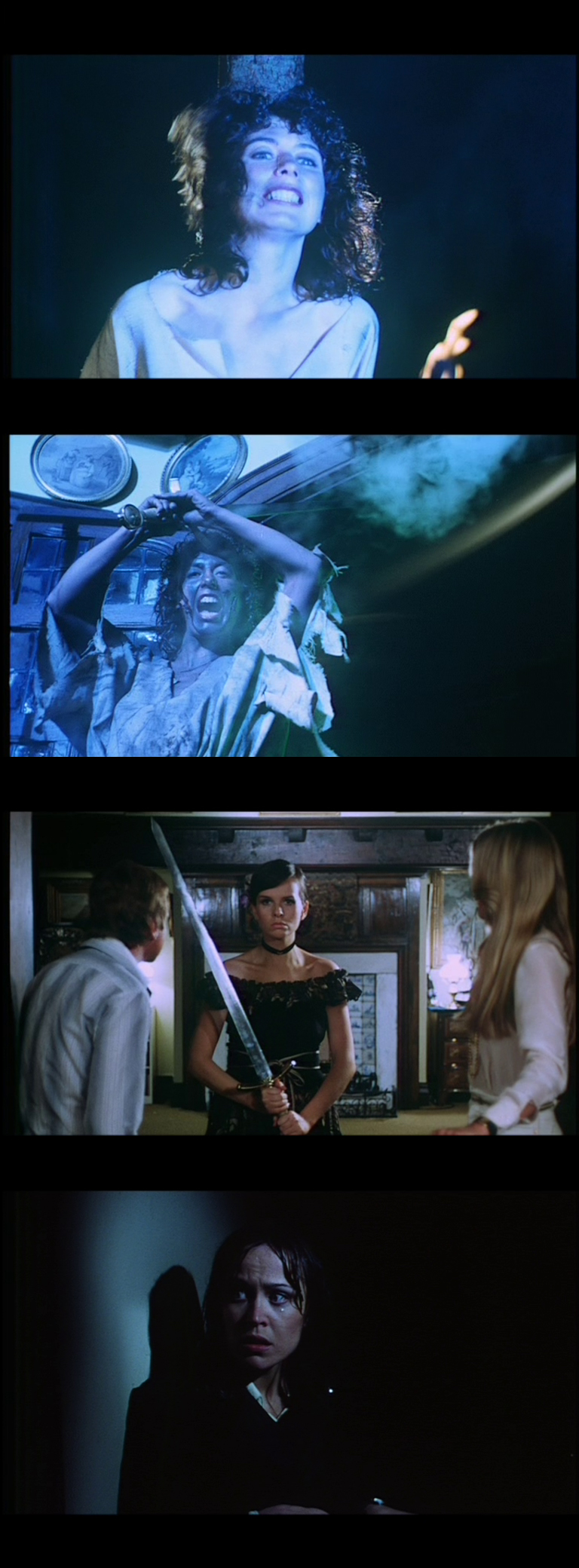
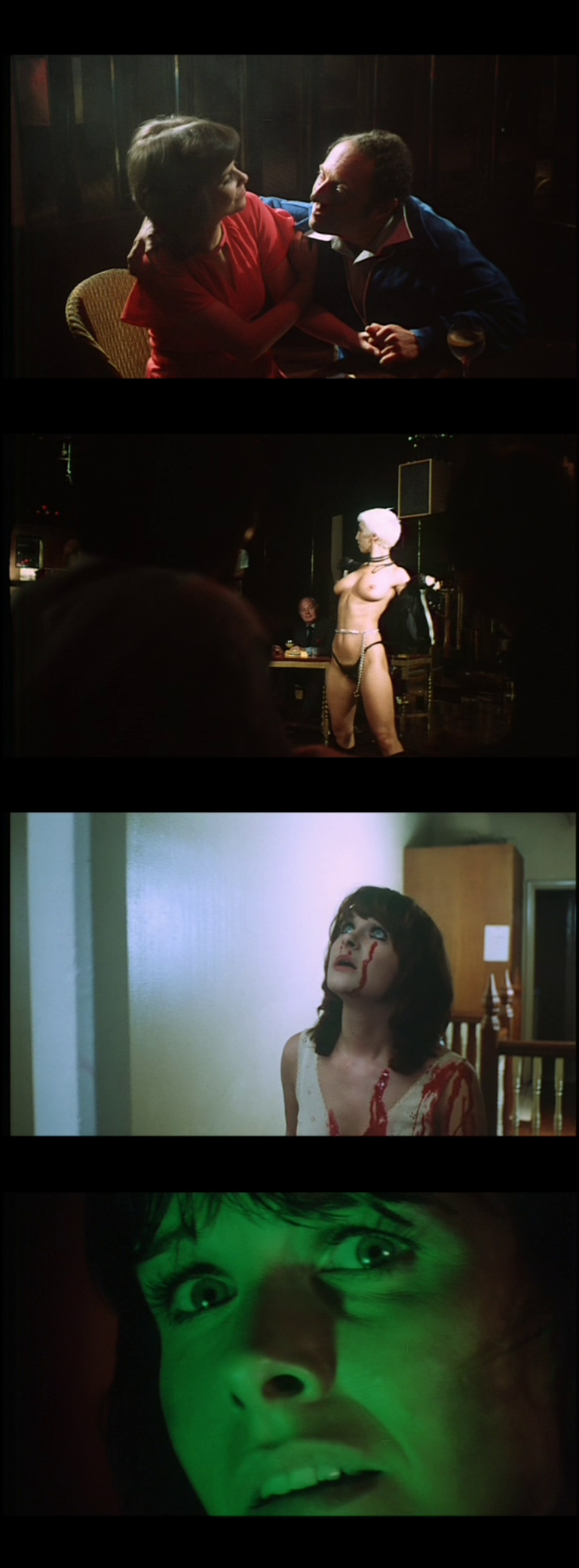
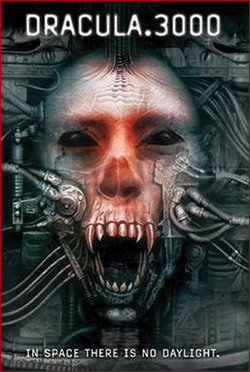 What does Jason, Pinhead, Leprechaun and Dracula have in common? They’ve been into space. And this has to be the worst of them all. Good grief.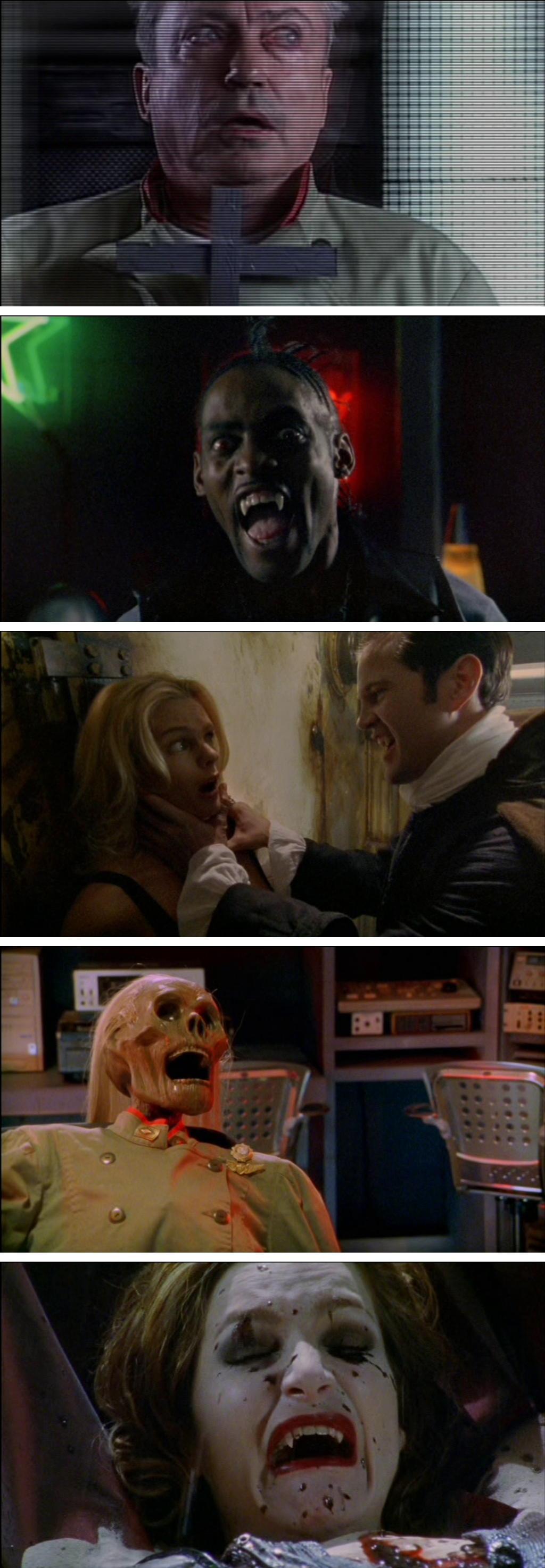
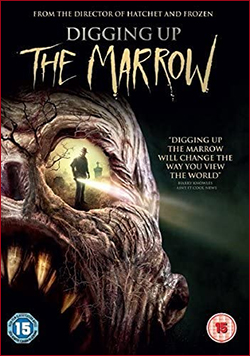 Adam Green starts working on a documentary about monster/creature artwork. Out of the blue, a man suddenly contacts him and claims he has proof of the existence of monsters. This man’s name is William Dekker, and he is a retired detective who is convinced that there’s underground monsters in a place he calls “The Marrow”. Green sees this as an opportunity to refocus his documentary into the story of Dekker and his efforts to expose these so-called underground monsters. They set up cameras in the woods nearby the hole where Dekker claims the monsters sometimes come out from, but Green and his crew are not sure whether this man is just setting up an elaborate hoax, or if he is just batshit crazy…or, maybe, if he’s actually telling the truth.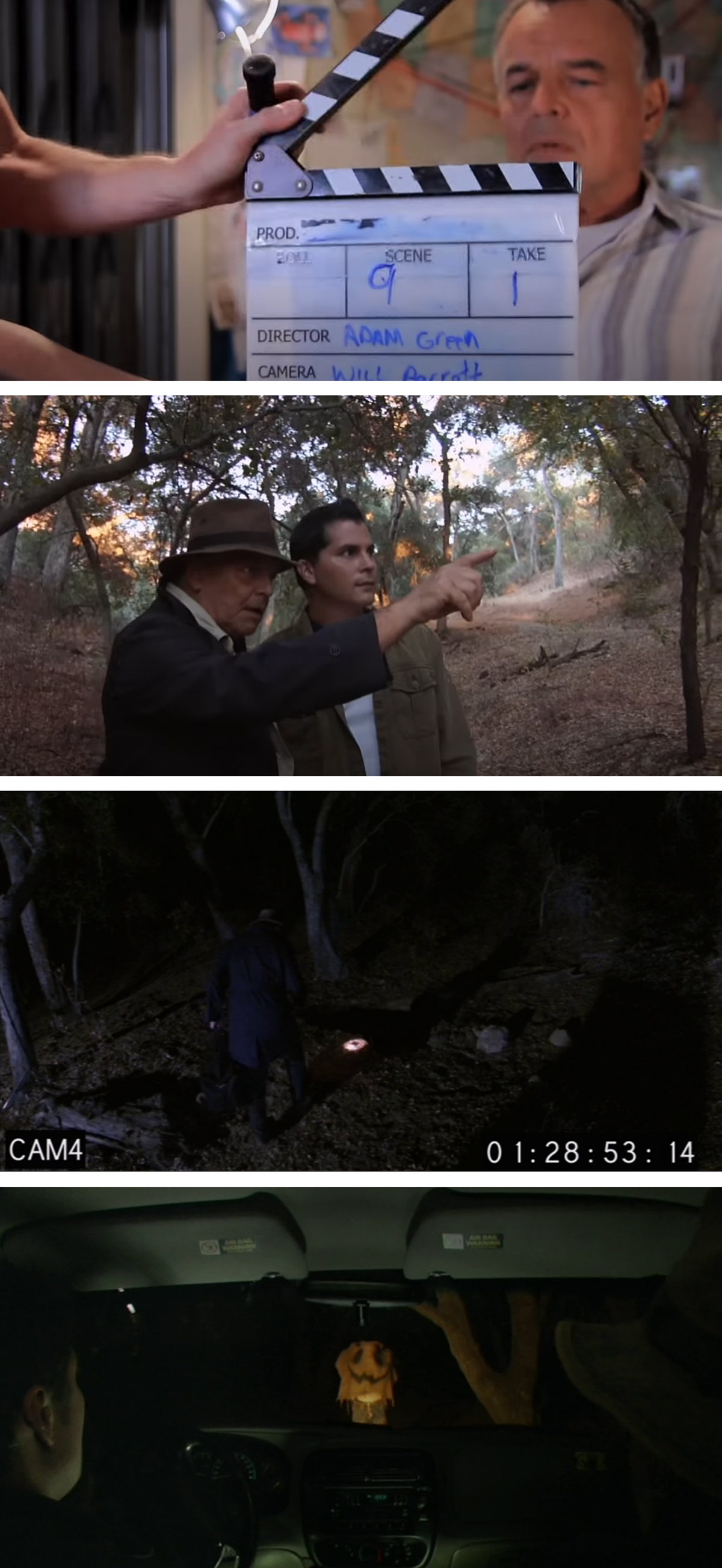
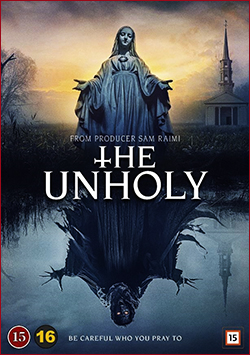 Mary Elnor is a young woman being accused of Witchcraft in Banfield, Massachusetts, in 1845. She is being hanged from a tree, and then lit on fire by an angry mob, who also bounds her spirit to the body of a doll before she takes her final breath.