Hiruko the Goblin (1991)

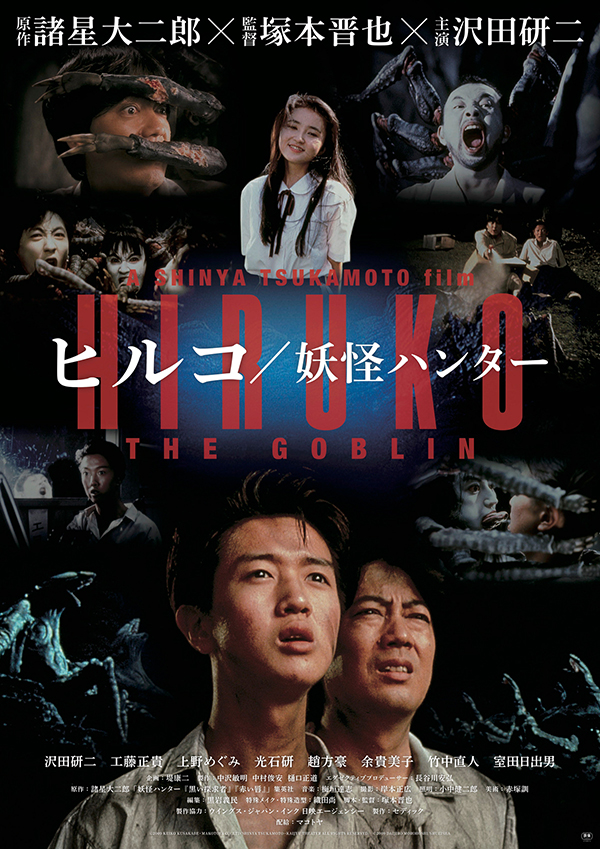
Hiruko the GoblinReijiro Hieda is a young archeologist who is very interested in the supernatural. No one takes him seriously, though, and he is discredited for advocating his “wild“ theories. One day, he receives a letter from his brother-in-law, Takashi Yabe. Yabe is a high school teacher, and he and his student Reiko Tsukishima investigated a burial mound where they discovered an ancient tomb, built to seal an evil spirit (a yōkai). Reiko mysteriously disappears, and Yabe has no idea what happened to her.


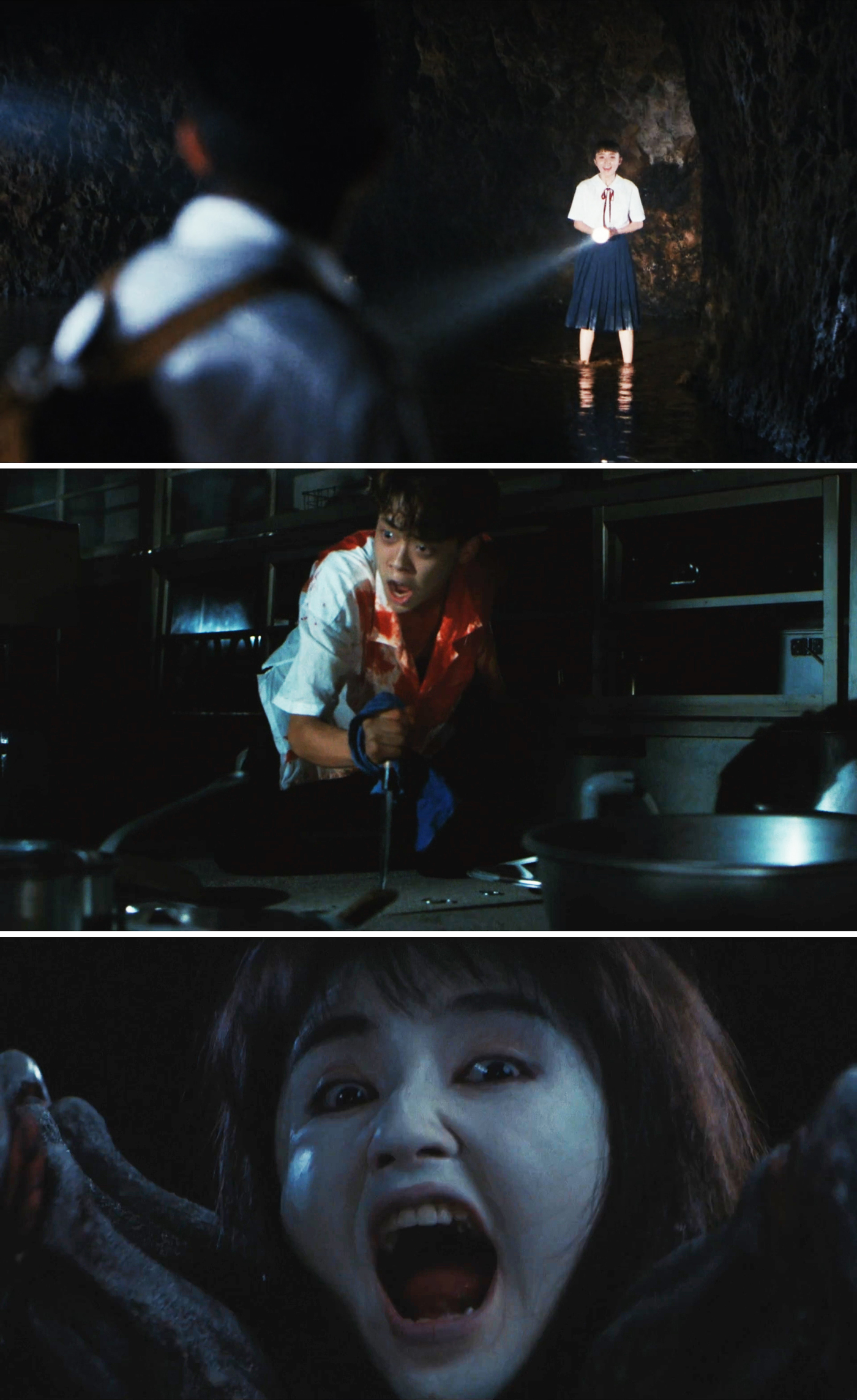
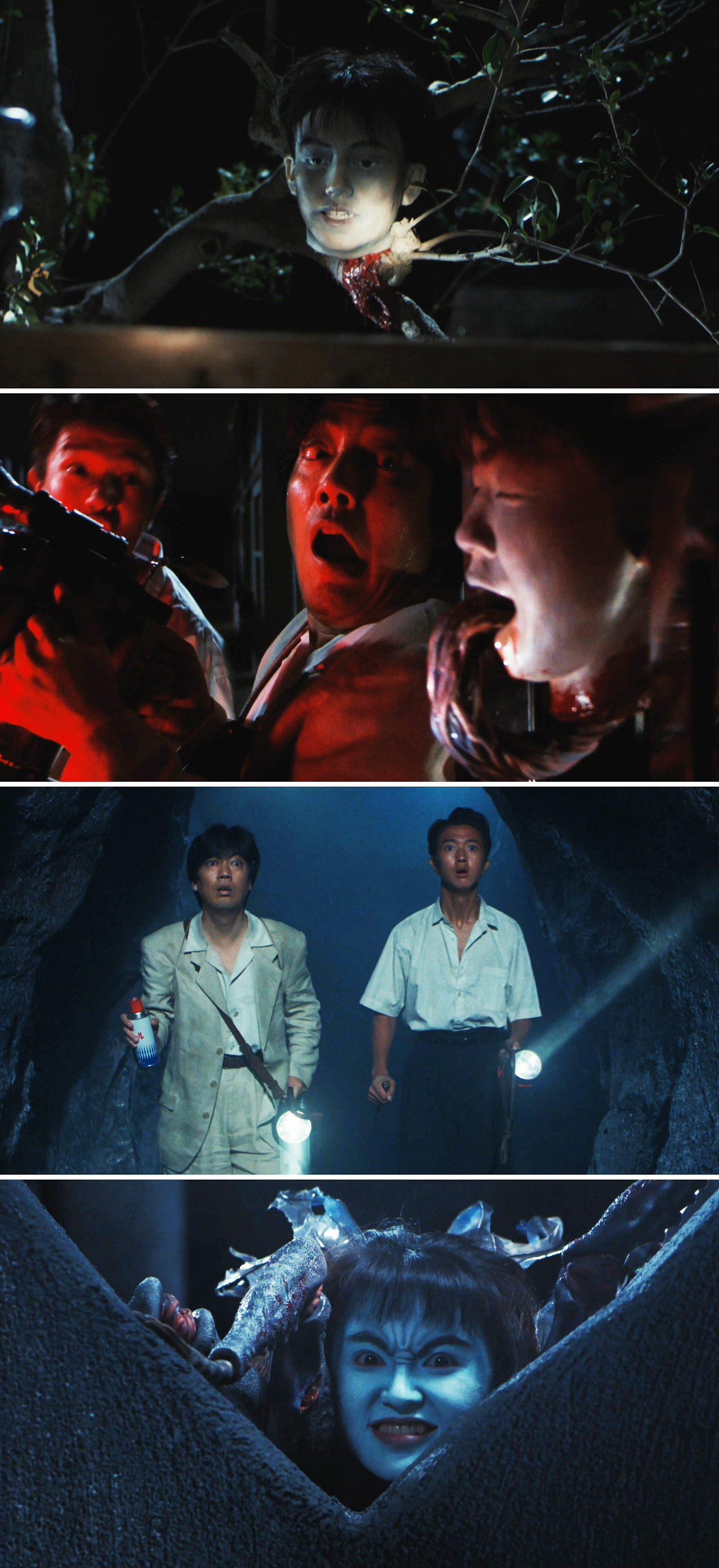
Hieda travels to the town where Yabe lives so he can investigate the incident, and he meets Masao, Yabe’s son. Masao tells him that Reiko has in fact returned, and he noticed that she tried to oddly seduce one of his classmates. Soon, they find that both this classmate and several others have been murdered with a switchblade. They first suspect the creepy janitor, but when they find Reiko’s singing, disembodied head…well, then there’s no doubt who’s the culprit and that the threat is entirely supernatural!


Hiruko the Goblin, also known as Yōkai Hunter: Hiruko, is a Japanese horror film from 1991, directed by Shinya Tsukamoto. Yes, that’s the guy who made the infamous Tetsuo: The Iron Man from 1989. Hiruko the Goblin is based on a manga by Daijiro Morohoshi, called Yokai Hunter. The movie was filmed in the town of Asahi, Toyama and Toho sound stage. For some reason, the production of the film was strained because some crew members complained about having to work under “a younger director“. Seriously…the guy was 30 at the time. What the hell. I guess these guys would’ve suffered a collective aneurysm if they had to work on Backrooms. The director even got into a physical altercation with veteran cast member Hideo Murota who refused to follow his directions. The film also went over budget near the end of the production, so the requiring crew members had to finish it for free.


With just reading the title, you’ll be quick to expect something zany and totally bonkers. And it sure is! While it doesn’t have the deepest story, it really doesn’t need it. There’s a Gate to Hell that must be prevented from opening, and our protagonist and friends must prevent this from happening while being killed off by an evil spirit. The evil spirit chasing them is using people’s disembodied heads as a vessel, crawling after them on spider legs. And through the school hallways, we see some fast-moving POV shots when the creature is coming for them. Hmm…these things probably ring a few bells, don’t they? Tsukamoto was paying some obvious homages to several classic western horror films, like John Carpenter’s The Thing and Sam Raimi’s The Evil Dead. You can also find some nods to Ghostbusters (their goblin-hunting devices) and Alien (that face-hugging thing). As much as the film obviously gives references and pays homage to several western horror films, it’s doing its own thing with Japanese folklore and the Shinto mythology. Hiruko aka “Leech Child“ was the deformed firstborn son of the Shinto creator deities Izanagi and Izanami, born without bones and unable to walk or stand properly.


Performances are as expected, often energetic and hyper. The guy in the leading role as Hieda (Kenji Sawada) is the same guy who played the family father in The Happiness of the Katakuris. The effects here are of course practical and even some stop motion, and the creature designs are really cool. There’s the usual blood spray now and then, plenty decapitations and some decent gore and, of course, body horror elements. We’re talking about the creator of Tetsuo: The Iron Man after all! And while this movie is nowhere near as insane as that one, it’s still a lot of fun and with that old-school charm that older movies often manage to deliver.


If you want to see a fun, goofy low-budget J-Horror film about a severed head on spider legs killing and terrorizing students, with some awesome creatures and body horror effects, then Hiruko the Goblin is a film for you to check out!
 

Hiruko the Goblin Hiruko the Goblin


Director: Shinya Tsukamoto
Writers: Koji Tsutsumi, Shinya Tsukamoto
Original title: Yôkai hantâ: Hiruko
Country & year: Japan, 1991
Actors: Kenji Sawada, Masaki Kudou, Hideo Murota, Naoto Takenaka, Megumi Ueno
IMDb: https://www.imdb.com/title/tt0100991/


 

Vanja Ghoul


Tetsuo (1989)

Hellraiser III: Hell on EarthHow to even start with this movie…Uhm, well…


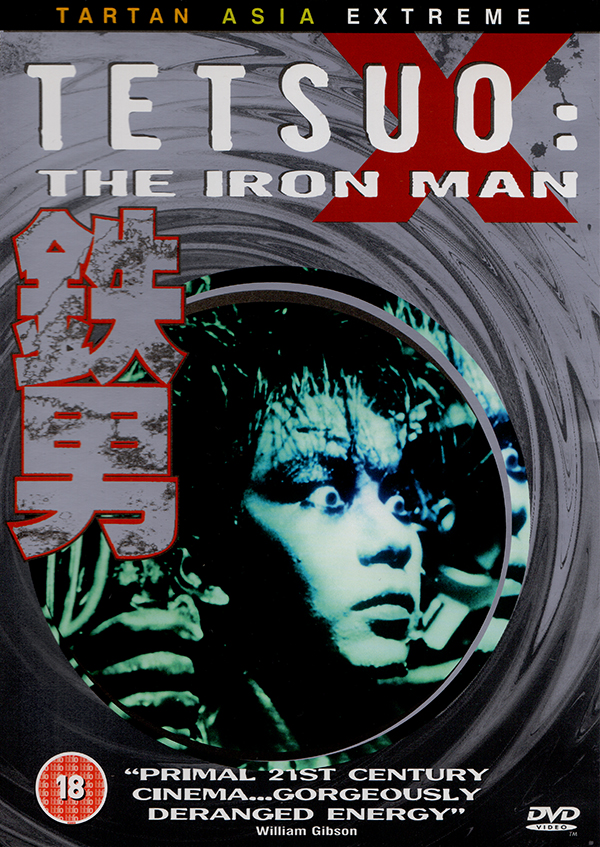
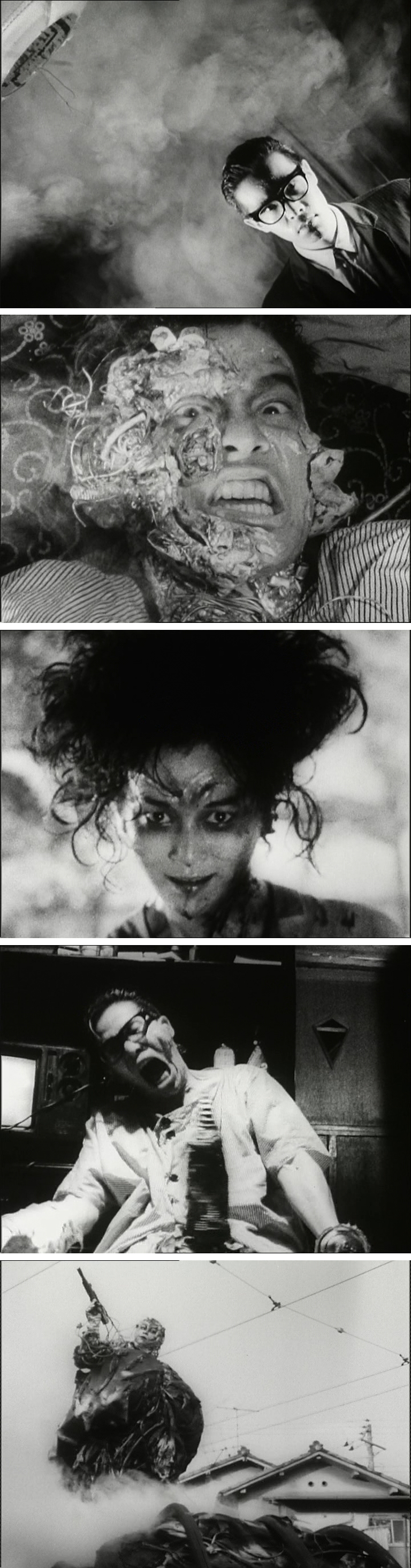
It starts with a random, disturbed guy called “The Metal Fetishist” (played by the director himself) who’s wandering in some decayed urban area, barefoot. He enters a shack hoarded full of metal junk where he stabs himself in the foot, and injects himself with an iron pipe and goes through some kind of a metamorphosis. A glimpse of an everyday life of an extreme metal fetishist where it just went a little too far, I guess. He then screams and runs like a lunatic and gets hit by a car driven by a typical Japanese salaryman who then gets infected by a biomechanical virus. As the title screen rolls, he gives us the “Tetsuo Dance” before he wakes up in his apartment and gets ready for work. As he shaves, he notices a small metal point on his cheek, which pops out and starts shooting blood over his face as he touches it. Sounds weird, you say? You’ve seen nothing yet. I won’t spoil much more than this, other than our salaryman slowly transforms into a grotesque hybrid monster of flesh and metal with the desire to destroy the whole planet. And yeah, his penis also transforms into a big metal drill that no one would want to mess around with.


Tetsuo, aka The Iron man, is an explosive result of an inner frustration that the young director Shinya Tsukamoto had built up after an unstable relationship to his dad, growing up in heavily industrial surroundings, and the extreme pressure of the Japanese working culture. The environment is what makes a human, as they say, and Tetsuo is a prime example of that, and could be seen as a pretty alternative artistic view of the breaking point of the human mind, if you will – even though the film is open for countless interpretations. This is Tsukamoto’s fifth film, at the age of 29, after making some shorts and other projects he would never be satisfied with, and at the top of this his father kicked him out of the house right before the filming. Fortunately, due to the success and the cult-following of Tetsuo, he quickly became a prominent filmmaker in Japan with titles such as Bullet Ballet, A Snake in June, Nightmare Detective and also made two sequels to Tetsuo, called Tetsuo: Body Hammer and Tetsuo: Bullet Man, the last one with a soundtrack by Trent Reznor . He’s also known for his acting roles in Takashi Miike’s Ichi the Killer, Takashi Shimizu’s Marebito, and Martin Scorcese’s Silence. His dad should be proud by now.


Tetsuo is shot on 16 mm, in black and white, with a budget of his day job at that time. Mostly filmed in one of his co-workers cramped apartment over 18 months with hard and difficult conditions (which is not hard to imagine at all), where the cast and crew also lived during the production. The conditions came to a point where the actor who plays the salaryman got the urges to escape the set several times because of shooting days that never seemed to end, while crew-members just came and left. The whole production was such a nightmare, according to Tsukamoto, that he considered to burn all the negatives. And we should just be glad he didn’t, because Tetsuo is a truly insane, hyperactive, nightmarish cyber-punk/art-house/body-horror masterpiece that easily could be described as Eraserhead on crack cocaine. Very aggressive, graphic, experimental and completely bizarre and truly one of a kind. It’s one of those “what the hell did I just watch-films“, and it’s clearly not for anyone, especially for those who’s epileptic. The technical aspects is from another planet (Planet Japan that is) with some really impressive stop-motion effects, camera work and costume designs. It has a great and sharp sound design and a really heavy, industrial soundtrack by Chu Ishikawa that fits the intense imagery perfectly.


So, what else is there to really say about this movie, other than: just watch it! Watch it on a big screen in a dark room with loud sound.


Tetsuo


Director: Shinya Tsukamoto
Country & year: Japan, 1989
Actors:Tomorô Taguchi, Kei Fujiwara, Nobu Kanaoka, Shinya Tsukamoto, Naomasa Musaka, Renji Ishibashi
IMDb: www.imdb.com/title/tt0096251/


Tom Ghoul