






 We start off with a prologue in the form of a typical Nazi propaganda film, showing what is apparently an idyllic community in Chile where everyone is happy while working, singing and helping each other. And the farm animals, the flowers and the bees are happy too! This colony also has a motto: “Helping makes Happiness“ (yeah at this point you’re probably already thinking about that “Arbeit macht Frei“ slogan on the Nazi concentration camps). The narrator of this film calls himself the “shepherd“ of the colony, and vaguely refers to how this place has gotten horrible rumors about what is going on there, and how that’s of course not true. Well…we’ll see about that.
After this somewhat unsettling intro, we go straight over to an animated stop-motion (mixed with a lot of other techniques) narrative. It’s about María Wehrle, a girl who escapes from the Colony. While fleeing through the woods she barely escapes the “Wolf“, and she hides inside an abandoned house. Inside she’s accompanied by two pigs, and the place starts shaping itself into her dream home. Even the pigs slowly transforms into real people, a little boy and an older girl, whom she names Pedro and Ana. While all three of them are living in isolation inside the house since they can’t leave because of the Wolf outside, things eventually go bad once they start running out of food. And yeah…that’s more or less the gist of the story….but believe me when I say that no matter what descriptions you will read of this film, there’s just no way anything can properly prepare you for the experience of watching it!
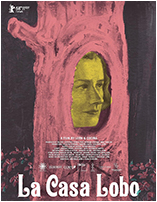
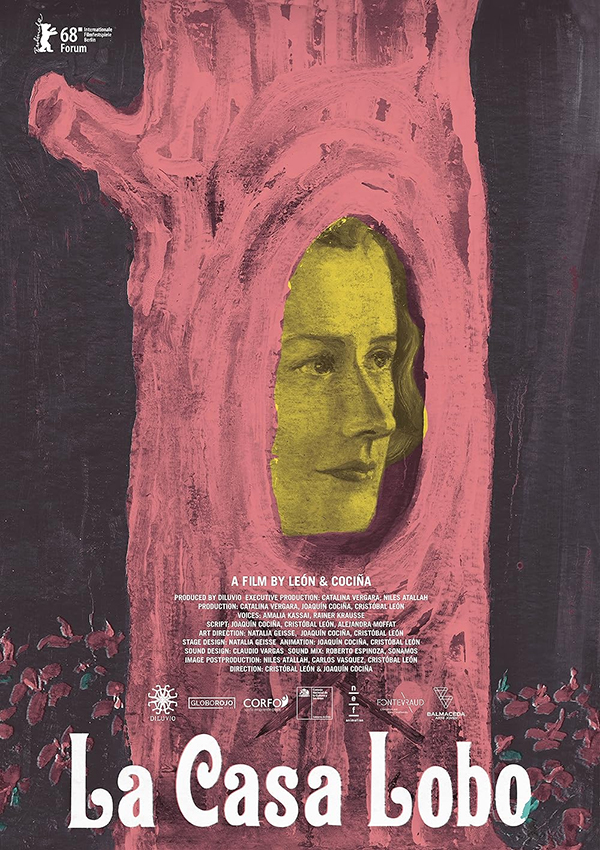
The Wolf House (Spanish: La Casa Lobo) is a Chilean adult animated film from 2018, created by Cristobal León and Joaquín Cociña, with a screenplay co-written with Alejandra Moffat. It is inspired by an actual post-World War II Chilean colony, called Colonia Dignidad (Dignity Colony). The colony’s longest continuous leader was a man named Paul Schãfer (whose last name translates to “shepherd“ in German, which puts it all into context with the propaganda video we saw in the beginning), who arrived there in 1961. Both he and other members of the colony were deeply religious, and his place did indeed become notorious for all the fascist and sect-like shit that went on there: torture, murder, internment, child abuse and more. And it wasn’t until around 2005-2007 that the sect’s control over the place was ended. Today, it is open for tourism. The creators of this film decided to use a story based on this and present it in a fairytale-like setting, filled with arthouse and avant-garde elements, and it took five years to develop the film.
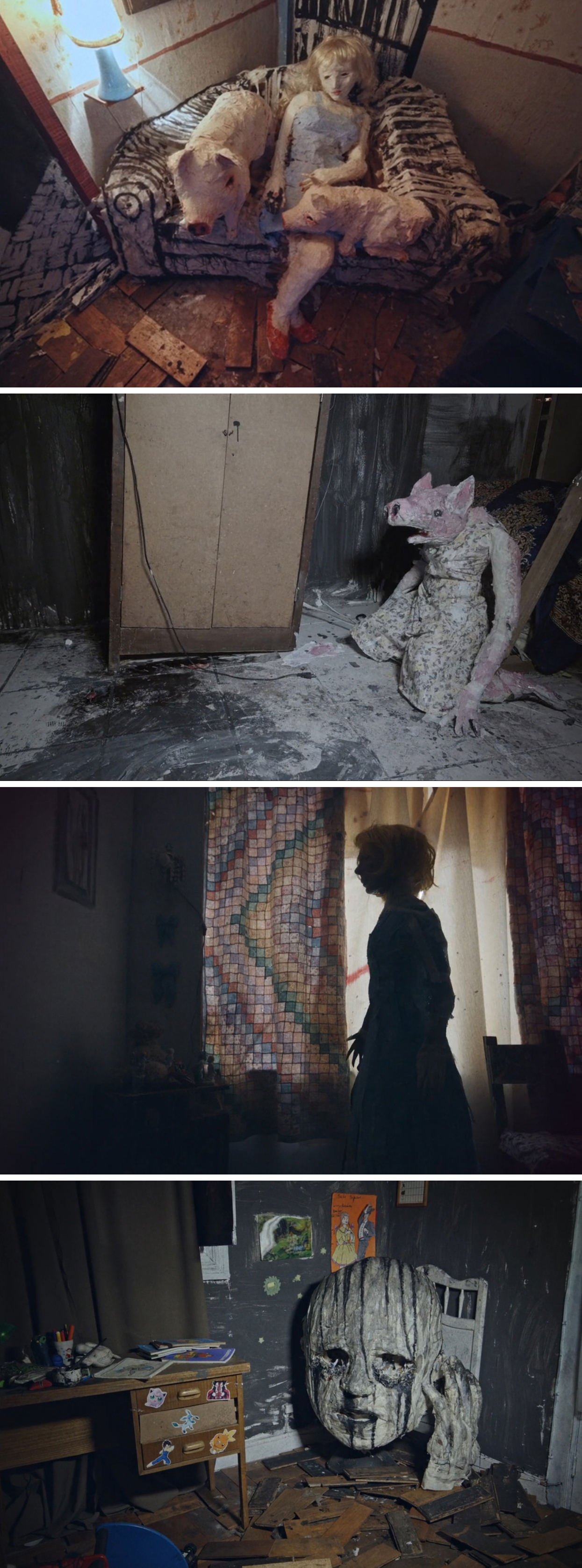
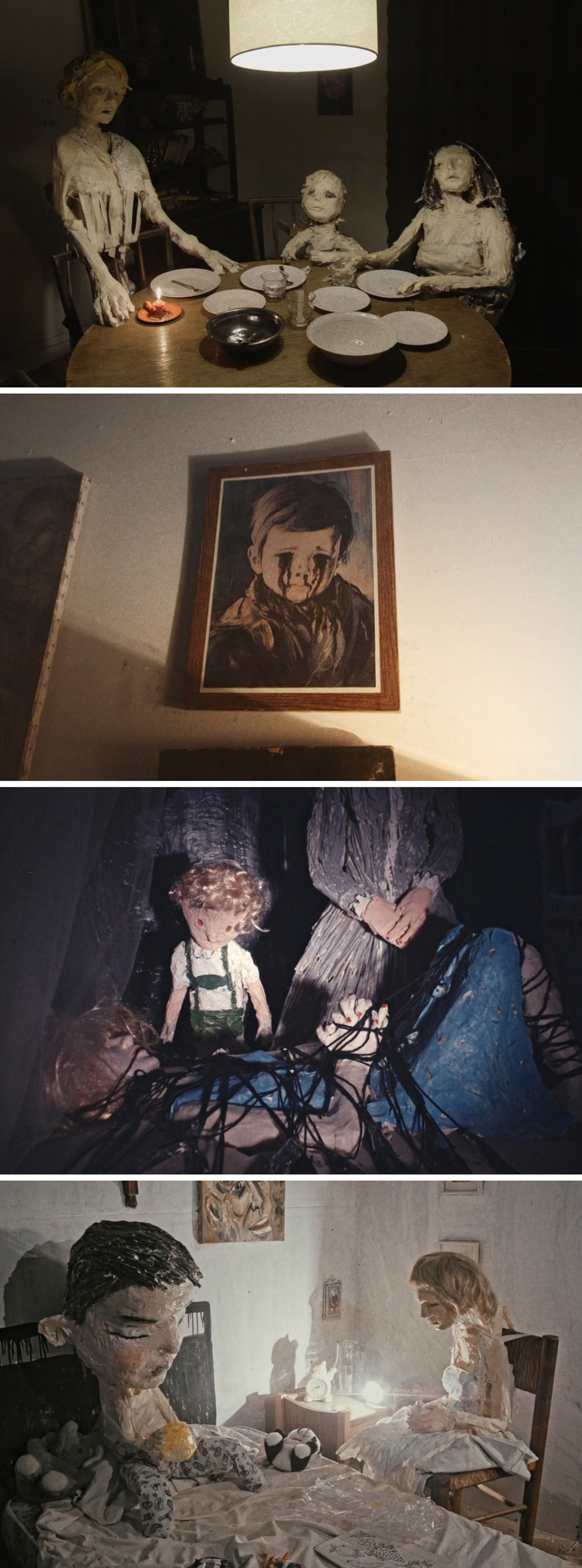
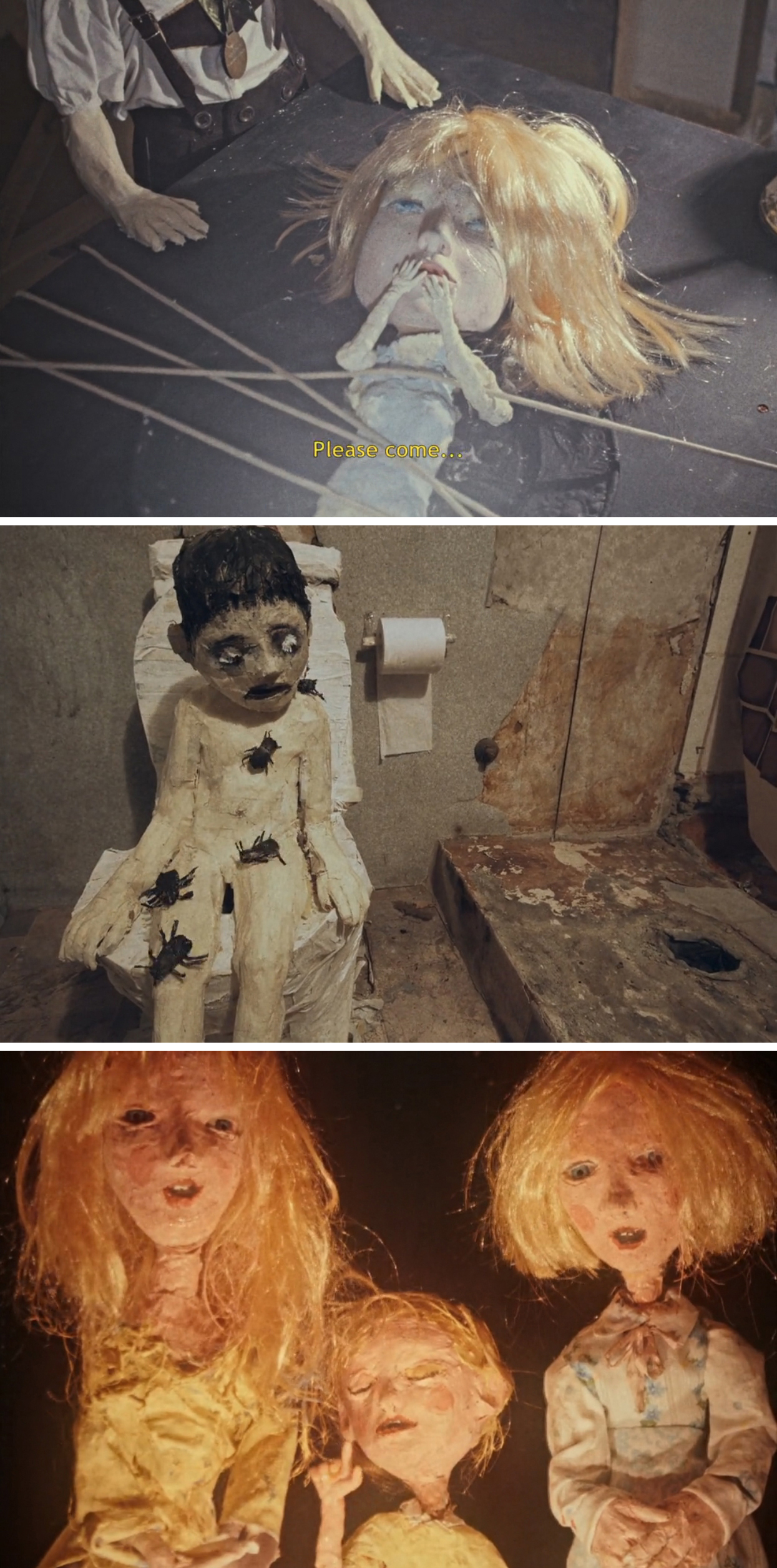
Visually, there are few things I can really compare this to. There’s so many techniques used here: stop-motion animation, paintings, papier-mâché, puppets, and the workshop and set pieces must have been messy as hell. It was shot in several studios and exhibitions at museums of different cities from Latin America and Europe. The sets were also built in real human size, which differs a lot from most stop motion movies that mostly use miniature set pieces…and I mean, holy shit, this must’ve been absolutely painstaking to pull off! The dedication, artistry and patience here is beyond impressive.
The movie also feels like one shot (with the exception of the propaganda film at the start), and it’s like everything is just breathing, dying, disintegrating and coming to life over and over again in the most hypnotic way. Visually, it is very atmospheric and haunting in the most bizarre ways possible, where the tone is always having the kind of faux safety vibe to it and you just keep expecting something really bad to happen. And mostly it doesn’t…for the most part it’s the underlying tension and how you know everything is just totally messed up. While always having a certain ominous and unsettling atmosphere, it also has this simultaneously strange ASMR-vibe to it, like some kind of bizarre, hypnotic lullaby. It’s uncanny in the same way a dream starts to slowly morph into a nightmare.
While the story underneath isn’t that complex, it takes a while to digest all the hidden meanings and metaphors shown throughout the film. Like for example the “pigs“ in the house, which have obviously been human from the start. María, despite escaping from the colony, is still having much of a fascist mindset and looks upon the Chilean children as uncultured natives no different than animals, which is why we first see them as pigs. It’s only when she starts caring for them that they “transform“ into humans, and she inserts herself as the mother figure in their lives. All the while still seeing them as ugly and inferior to her, until they eventually reach the Aryan ideal with the blonde hair and blue eyes and all. And the Wolf, which I take is pretty much an allegory for the colony itself and the fascist mindset, often tries to tempt María into returning to the colony. Overall there’s a lot to interpret here, and you’d probably notice new things each time you watch it.
Trying to describe The Wolf House with words borders on being impossible. It’s like describing the strangest and most surreal dream you’ve had, there’s no way anyone can properly relate to how it felt. This isn’t just a movie you simply watch, it’s a movie you experience. It is simply very extraordinary, and a smorgasbord for anyone who loves to watch something really strange and creative. Whenever someone say they feel like they just watched a “cursed“ movie, this one certainly belongs on that list!
Directors: Joaquín Cociña, Cristóbal León
Writers: Alejandra Moffat, Joaquín Cociña, Cristóbal León
Original title: La casa lobo
Country & year: Chile/Germany, 2018
Voice actors: Amalia Kassai, Rainer Krause
IMDb: www.imdb.com/title/tt8173728/










 Related posts:
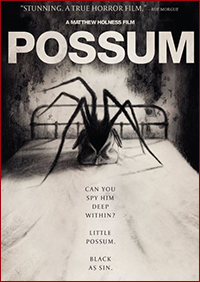 Philip (Sean Harris) is a middle-aged man returning to his hometown in Norfolk with a population of probably ten people, which looks like a depressing place to live in. With him he’s got a brown bag containing a puppet called Possum. A terrifying thing with a human head made of rubber, and with spider feet. Philip turns out to be a totally fragile, traumatized man, trapped in a severe life crisis, who constantly seems be on the verge of blowing out in full panic attack at any moment. And the nightmare fuel provided by Possum clearly doesn’t makes it any better. Time to watch some cat videos on YouTube, I would say. Anyway, he goes to his decayed, filthy childhood home where he meets his stepfather Maurice (Alun Armstrong), a greasy old man who probably hasn’t taken a shower in years, and likes to preach stuff that doesn’t make much sense. They turn out to have as much of a resentful relationship with each other as Philip has with Possum, which he repeatedly tries to get rid of by dumping it in the river, burying, burning, and beat the shit out of it to a point where you almost feel more sorry for the puppet than for Philip. But just like a cursed Ouija board, Possum always reappears.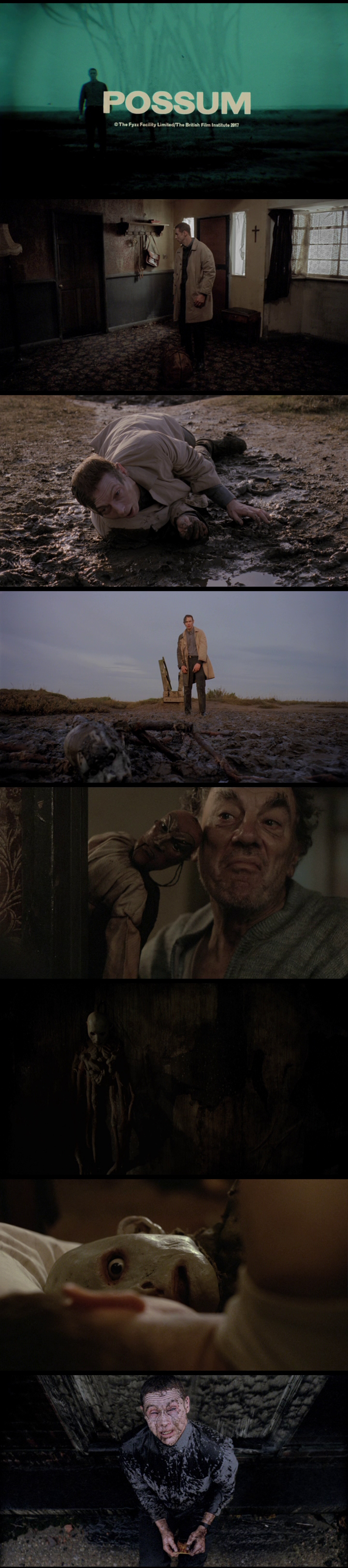
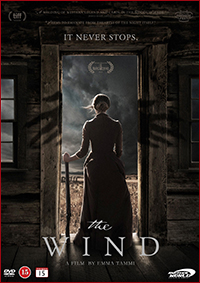 Lizzy Macklin and her husband Isaac lives isolated on a harsh and untamed land in the Western frontier in the late 1800s. Soon, a newlywed couple (Emma and Gideon) moves into a house close by. The isolation starts cracking Emma’s psyche, causing her to suffer from Prairie Madness (an affliction that causes a mental breakdown due to the isolation and harsh living conditions, something that would happen to European settlers who were not used to living like this). Emma is clearly not able to get used the the isolation, and starts raving about “demons of the prairie”. Emma’s madness soon starts affecting Lizzy as well, and she starts wondering if there really is an evil demonic presence out to destroy them.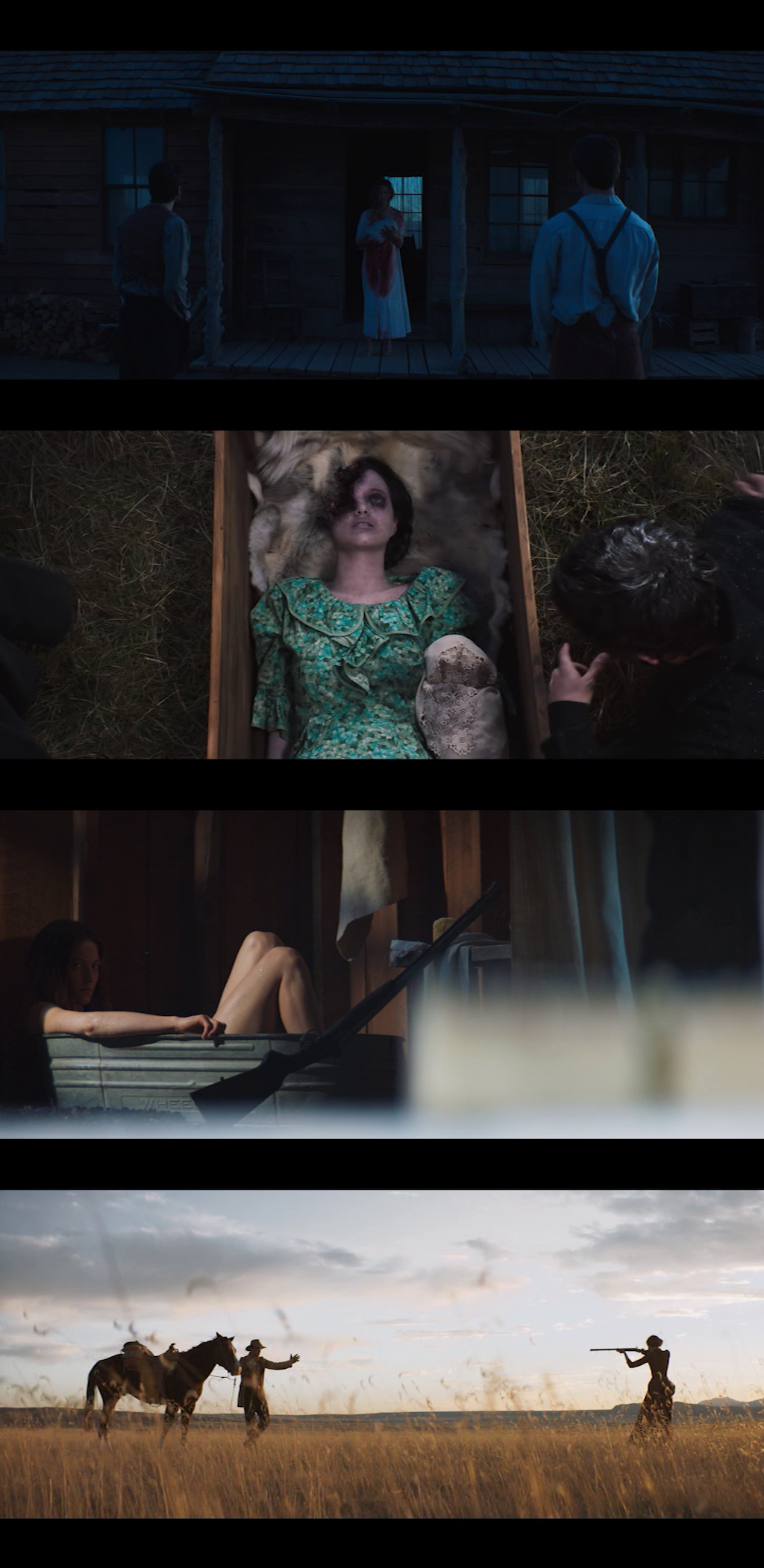
 Megan is an ex-cop that’s just gotten out of rehab, and struggles to get back on her feet again. She applies for a job working the graveyard shift at the morgue (yeah…not exactly the best place to be if you’re a previous drug addict and struggling with trauma). She gets the job, and soon thereafter the disfigured corpse of a girl arrives. It doesn’t take long until weird things start happening at the morgue, but Megan tries to convince herself it’s her frazzled mind that makes her see things. Until things become too real for her and she realizes there’s something very wrong with that corpse.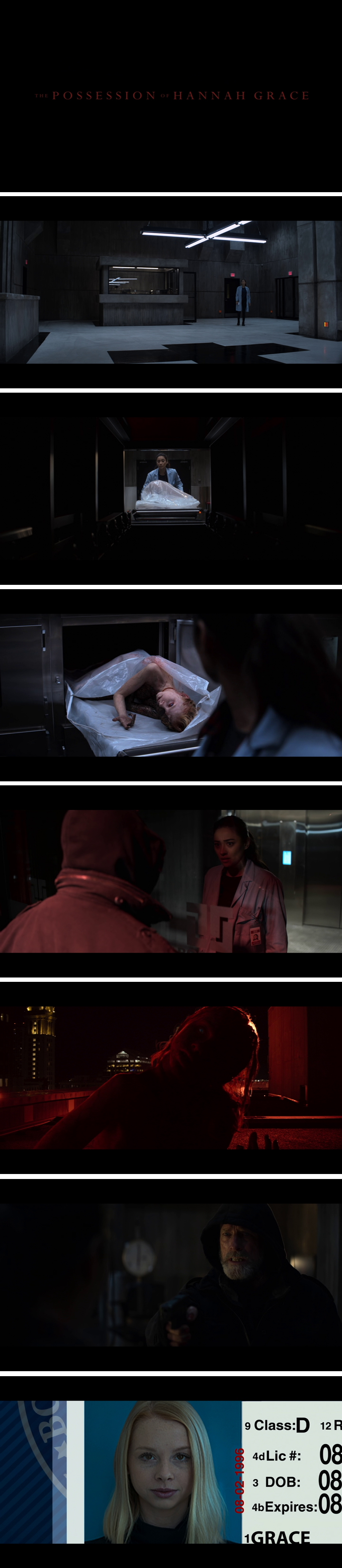
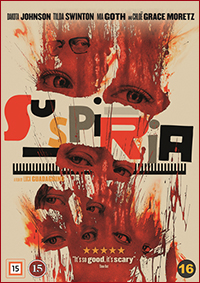 Berlin, 1977. A shitty place to be. A young, disturbed girl named Patricia (Chloë Grace Moretz) is on the run and seeking the doctor/prof/psychiatrist Klemperer. She’s in a state of psychosis and mumbles incoherent lines while she waves with her arms and then says in German “I was right. They are witches”. She then talks about the ballerina school she attended where she was a victim of abuse, and end the therapy session by saying (in German) “they will slaughter me and eat my cunt from the plate”. Yikes… We then get introduced to Susie (Dakota Fanning), a young, shy and naive American lady, who traveled to Berlin to attend this ballerina academy where she meets the strict dance instructor Madame Blanc (Tilda Swinton). She settles in and has no idea what rabbithole she has gotten herself into. In the meantime Dr. Klemperer starts an investigation to take a closer look at what shady business is really going on in this academy.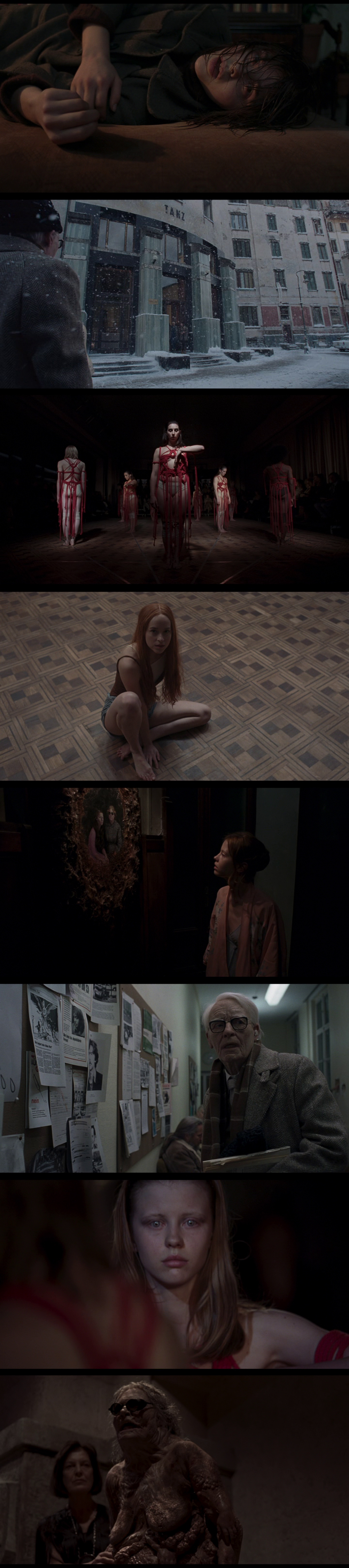
 While on a partying trip to Mexico, a group of young friends meet a guy who wants them to join him for a game of “Truth or Dare” in an old abandoned church. What starts out as an innocent game, soon turns deadly when they realize they’ve been tricked into an evil demon’s version of the game. If you fail to answer truthfully on the demon’s “truth” questions, or refuse to commit its “dares”, the consequence is a quick and painful death.