
The House by the Cemetery (1981)

The House by the Cemetery

We’re in New England where Dr. Norman, Lucy and their son Bob moves to a big old victorian house, which by a coincidence lies right by a cemetery. How cozy. One of the former residents was a surgeon in the Victorian era, who did some really shady experiments in the house’s basement. And on top of that, his last name was Freudstein. Nothing bad could ever happen here, right?


Bob starts seeing visions of a mysterious girl with a doll, who says it was a stupid idea to come here, which has to be one of the first The Shining references. His parents do not believe in him (of course they don’t) and his mother is already struggling with her emotional problems while she refuses to take any medicine. After they have entered the house and started unpacking, the babysitter, Ann, comes in, straight from nowhere. A young lady with a menacing stare, ready to trigger Lucio Fulci’s eye fetish to its full maximum. And as soon the door to the basement is open, so is the can of worms.


House by the Cemetery is Fulci’s last part of the “Gates of Hell” trilogy, where he mixes zombies with the supernatural. This has a more of a cohesive narrative compared to The Beyond and City of the Living Dead, but is really slow at times with scenes that just seem to drag on forever. We get a long scene with a bat that could have been cut down to ten seconds, where it cuts straight to a guy who starts the scene with a yawn. Talk about timing. The kid who plays Bob has one of the most ridiculously out of place dubbing ever, that unfortunately ruins every scene he’s in, which just adds far more chuckles and eye-rolling than tension. It’s not the actors fault, but the movie would gain a lot just to remove the dub with a better one.


It’s not my favorite Fulci film, but far from the worst, and it has some great qualities. The soundtrack is good, in which the intro tunes give some serious Castlevania vibes. The technical aspects are pretty solid, with its thick, moody and sometimes gothic atmosphere, just as the predecessors. And several messy gory scenes, filled with maggots, of course.


The House by the Cemetery


Director: Lucio Fulci
Original title: Quella villa accanto al cimitero
Country & year: Italy, 1981
Actors: Catriona MacColl, Paolo Malco, Ania Pieroni, Giovanni Frezza, Silvia Collatina, Dagmar Lassander, Dagmar Lassander, Daniela Doria, Giampaolo Saccarola, Carlo De Mejo, Kenneth A. Olsen, Elmer Johnsson, Ranieri Ferrara
IMDb: www.imdb.com/title/tt0082966/


Related reviews:
– City of the Living Dead (1980)
– The Beyond (1981)

 

Tom Ghoul


Wither (2012)

Wither (2012)

When one would think that Evil Ed was the only splatter film Sweden had to offer, we came, by a coincidence, across this title called Wither – a  homage to The Evil Dead, spiced with its own Swedish folklore called Vittre (Wither) to add some of its own personality to it. It was promoted as the first Swedish zombie movie when it came out in 2012, and the film received a very polarized reception in its home country, everything from praise to pure panning. One of the biggest newspapers in Sweden was obviously so offended by the film that the reviewer spent a full five sentences commenting on the film while the rest was spent on personal attacks against directors Sonny Laguna and Tommy Wiklund. Classy. But someone who clearly liked the movie must be producer Dallas Sonnier, who hired the duo to direct the twelfth Puppet Master movie a few years later. Cheers for that! Now, back to Wither:


A group of young party-ready people go to an abandoned house for a weekend far in the woods to get loose. They have no idea who owned it, except that the previous occupants left the house rotting like a sinking ship with all the belongings inside. At the same time, an elderly man with a rifle is lurking in the area, looking for his missing daughter. Maybe not the best place to spend the weekend. After a quick exploration in the immediate area, two of the kids find another abandoned house where one of them sneaks inside through the window where she comes across a cellar trapdoor. And what do we say then? Don’t go in the basement! Yeah, right. She returns to the gang that is well underway with the party. Traumatized by what she saw downstairs in the basement, she locks herself in the bathroom and suffers panic attacks. It goes from bad to worse when she starts pissing blood, her eyes have become bloodshot, and she collapses. Then she resurrects like a demonic zombie, hungry for human flesh. And there’s full blood-splattering carnage from here on.


One can also draw more comparisons to the 2012 remake of The Evil Dead (which is awesome, by the way) with its gritty, serious tone. There is no over-the-top gallows humor here, and while one may not care much about the characters and who’s what, the acting is pretty decent. Technically, the film looks good with some great effects, good make-up, and probably a usage of several gallons of fake blood that the actors had to slip through. A strong and crisp soundtrack also helps, but the film has its obvious weaknesses. The script halts in which several scenes become too tedious, and the last 30 minutes could honestly have been trimmed down a bit or two. A main protagonist to root for, an Ash if you will, is also missed here. However, I still enjoyed the film as a whole, and it probably helped with some low expectations. But one thing is certain: if you want blood, you got it!


Wither


Directors: Sonny Laguna, Tommy Wiklund
Original title: Vittra
Country & year: Sweden, 2012
Actors: Patrik Berg-Almkvisth, Lisa Henni, Patrick Saxe, Johannes Brost, Amanda Renberg, Jessica Blomkvist, Max Wallmo, Anna Henriksson, Ingar Sigvardsdotter, Ralf Beck, Sanna Ekman, Julia Knutson, Jessica Darberg
IMDb: www.imdb.com/title/tt2140671/


Tom Ghoul


The Beyond (1981)

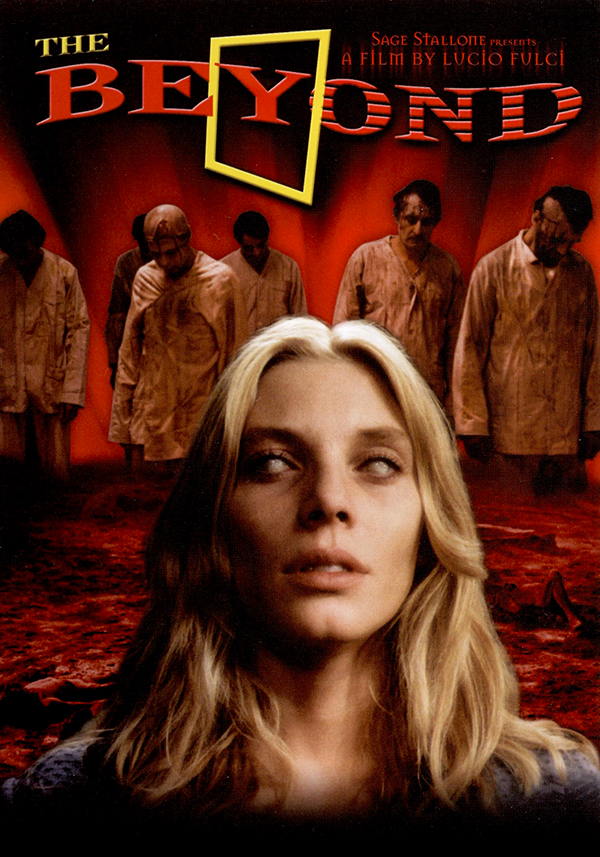
The BeyondWe’re in a hotel room in Louisiana, and the year is 1927. A thunderous evening is setting in as the artist Schweick (Antoine Saint-John) is brushing his last strokes on his latest grotesque painting, which is also to be his final. The painting is apparently representing Hell, and the locals believe that Schweick is an evil, ungodly warlock that uses the painting to open one of the Seven Gates of Hell. The hotel is said to be built upon one of the gates, and a group of men in full mob-mode storms the hotel and into Schweick’s room to stop him. They drag him down to the basement to cut him up with a chain before bolting him to the wall and torturing him to death. But what they didn’t know is that the sacrifice of the artist just opened the gate, and the dead from beyond are now free to enter the world of the living.


Then we jump forward to the year 1981, where Liza Merill (Catriona MacColl) has inherited the hotel and is in the process of a renovation, after the building has been empty and collecting dust and cobwebs for the last six decades . Shit already starts to happen when one of the workers see a female figure with big, scary, glossy eyes through one of the windows. In shock, he stumbles off the scaffold and almost crushes his skull. The alarm from room 36 suddenly starts to ring, even though the hotel has no costumers. This happens to be the same room where the artist we saw in the beginning was working on his painting. It goes from bad to worse when plumber Joe is brutally killed by demonic forces in the water damaged basement as he finds a secret room behind some worn stone walls. Liza bumps into a mysterious blind lady, Emily (Cinzia Monreale), who advises her to give up the hotel and go back where she came from, without being able to explain exactly why. And more questions than answers arise when Liza learns from Dr. John McCabe (David Warbeck) that he has never heard of this blind woman Emily, and that her house has been empty for decades.


The Beyond is the second film in Lucio Fulci’s Gates of Hell trilogy. And although the plot may be somewhat diffuse, The Beyond works on more levels than the previous and rather clunky City of the Living Dead. More steadier and focused direction and not least, the acting is significantly better. And The Beyond works perfectly for what it is: an atmospheric, nightmarish fever dream with some really intense and morbidly gory moments. Faces are being melted with acid and eaten by spiders. A girl with pigtails gets her head blown away, eyes being plucked out and so on. Juicy stuff by the great makeup artist Giannetto De Rossi, who’s also worked on Zombie Flesh-Eaters, and a mountain of other films. Also, great and fitting soundtrack by Fabio Frizzi, I must add.


The Beyond is also known for its highly visual ending sequence, which was actually planned to be filmed somewhere in an amusement park. But due to logistical restrictions, Fulci had to find an other way to end it and had to quickly improvise. And with reduced budget and resources comes more creative thinking. And I must say that the plan B-ending was a pretty simple, but genius move that sets a unique and satisfying climax.


For a completely uncut version, look for a DVD/Blu-ray from Grindhouse Releasing.


The Beyond


Director: Lucio Fulci
Original title: …E tu vivrai nel terrore! L’aldilà
Country & year: Italy, 1981
Actors: Catriona MacColl, David Warbeck, Cinzia Monreale, Antoine Saint-John, Veronica Lazar, Larry Ray, Giovanni De Nava, Al Cliver, Michele Mirabella, Giampaolo Saccarola, Maria Pia Marsala, Laura De Marchi
IMDb: www.imdb.com/title/tt0082307/


Related reviews:
– City of the Living Dead (1980)
– The House by the Cemetery (1981)


Tom Ghoul


City of the Living Dead (1980)

City of the Living Dead (1980)City of the Living Dead is the first part of the Lucio Fulci Gates of Hell trilogy, which followed up with The Beyond and House By the Cemetery. But apart from sharing the theme of the dead being brought to life, with some small doses of inspiration from H.P Lovecraft and with actress Catriona MacColl starring in all three, they work well as separate films.


The film starts at a cemetery in the small town of Dunwich where a priest hangs himself, and reappears as an evil deathstaring zombie. At the same time, Mary Woodhouse (Catriona MacColl) witnesses a New York apartment suicide during a vision under a seance, which scares her to death. Yes, literally to death. And why, you might ask? Well, because his act of sin causes all the dead in the cemetery of Dunwich to rise from the dead as zombies. And these are not the traditional carnivorous zombies…here, they have the ability to teleport themselves and use telekinesis to make people bleed tears and spew up their own inner organs. Miss Woodhouse’s death is seen as a mysterious case, which captures the curiosity of newspaper journalist Peter Bell (Christopher George). The day she is to be buried, he sneaks around the cemetery when she suddenly comes alive in the coffin and screams. Peter hacks up the coffin to save her, but unlike the ordinary dead who resurrects as zombies, Mary wakes up like from a normal night’s sleep and is straight back into her old self again. Well, good for her. After they learn that the gates of hell must be closed and this evil priest must be stopped, they take a roadtrip to Dunwich. And this must happen before All Saint’s Day. If not, the dead will take over the world.


Meanwhile, the evil priest has already started terrorizing Dunwich, while rubbing mud filled with worms in peoples faces as he teleports around the city. While strange and macabre things continue to happen in the city, a group of men sit in the local pub, suspecting Bob, the city’s outcast who has a taste for inflatable sex dolls, to be behind all of this. And this side plot with Bob (Giovanni Lombardo Radice) is completely useless which is nothing but filler scenes that could easily have been cut out. Even though City of the Living Dead doesn’t work all that well with its serious pacing issues, the film has some great ghoulish atmosphere with a fitting soundtrack by Fabio Frizzi, who’s scored several of Fulci’s films. There’s also several memorable gory scenes to enjoy, and some of the actors were dedicated enough to get isolated in a room to be attacked by ten kilos of maggots via two wind machines. Trivia: one of the crew members decided to pull a prank on Mr. Fulci by stuffing some of the maggots in his pipe tobacco. Everyone but Fulci found it funny and he blamed the incident on the heart surgery he had years later with health problems that escalated to ventricular aneurysm, contracted viral hepatitis and liver cirrhosis. No more maggots on set, I guess. And of course don’t forget the drinking game: take a shot every time there’s a close-up of the actors eyes, and you’ll surely die of alcohol poisoning before the first twenty minutes. In advance, rest in peace.


City of the Living Dead


Director: Lucio Fulci
Original title: Paura nella città dei morti viventi
Country & year: Italy, 1980
Actors: Christopher George, Catriona MacColl, Carlo De Mejo, Antonella Interlenghi, Giovanni Lombardo Radice, Daniela Doria, Fabrizio Jovine, Luca Venantini, Michele Soavi, Venantino Venantini, Enzo D’Ausilio, Adelaide Aste, Luciano Rossi, Robert Sampson, Janet Agren
IMDb: www.imdb.com/title/tt0081318/


Related reviews:
– The Beyond (1981)
– The House by the Cemetery (1981)


Tom Ghoul


Mørke Sjeler (2010)

Mørke Sjeler (2008)During a morning jog through the woods, the teenager Johanna is attacked by a guy in an orange dress, who is wearing goggles and a mask. After a quick chase with some running and stumbling, he drills a hole in her head, and then places some black goo in her brain. Despite having been pronounced dead, the murder victim suddenly wakes up in the morgue and goes back home to her father: the music teacher Morten Ravn. But Johanna is not at all the same girl, but has been reduced to a disoriented, apathetic lifeless shell with a blank stare. In the meantime, more and more victims are being reported, all of whom come to life again with the same symptoms. Since the police are just a bunch of incompetent fools, Morten decides to investigate the mystery himself, uncovering an apocalyptic conspiracy that revolves around a large oil company.


Mørke Sjeler (Dark Souls) was the passion project of two French guys, César Ducasse and Mathieu Peteul, with the intention of creating a Norwegian satirical zombie-comedy. And the result was a stumbling, amateurish, hopeless little trainwreck that looks more like a cheap student film. The acting is goofy, bad and just absurd. Karl Sundby (rest in peace), who was a profiled, seasoned and professional actor in little Norway, is surprisingly giving us the most memorable scene in this movie as a homeless hobo.


The directors promoted this as a comedy, as mentioned. And yes, it’s a comedy for sure, and has some entertainment value, but not in the intentional way in the slightest. The weird tone is all over the place, which makes it impossible to separate the “satire” elements from the seriousness. Sloppy camera work, with lazy, uninspired killing scenes that happens mostly off-screen, which makes it look like there was not enough budget to hire a single competent makeup artist on set. In other words: this doesn’t impress much. The zombie growls sound like pigs squealing. I’m sorry, but that’s just pathetic. It took three years to shoot this film, but it feels far more like something done in a short week, all in one, quick take, Ed Wood-style.


Mørke Sjeler is distributed in the US by Lions Gate, and in Germany under the titles Dark Souls and Zombie Driller Killer. It also found its way to France and Japan.


Mørke Sjeler


Director: César Ducasse, Mathieu Peteul
Country & year: Norway | France, 2010
Actors: Johanna Gustavsson, Kristian Holter, Ida Elise Broch, Morten Rudå, Kyrre Haugen Sydness, Lise Froyland, David Hernandez, Christopher Angus Campbell, Bård Eirk Nilsson, Trine Dürbeck, Eirik Halvorsen, Kristine Braaten, Marianne Rødje, Jan Hårstad, Henrik Scheele
IMDb: www.imdb.com/title/tt1617145/


Tom Ghoul


Bread and Circus (2003)

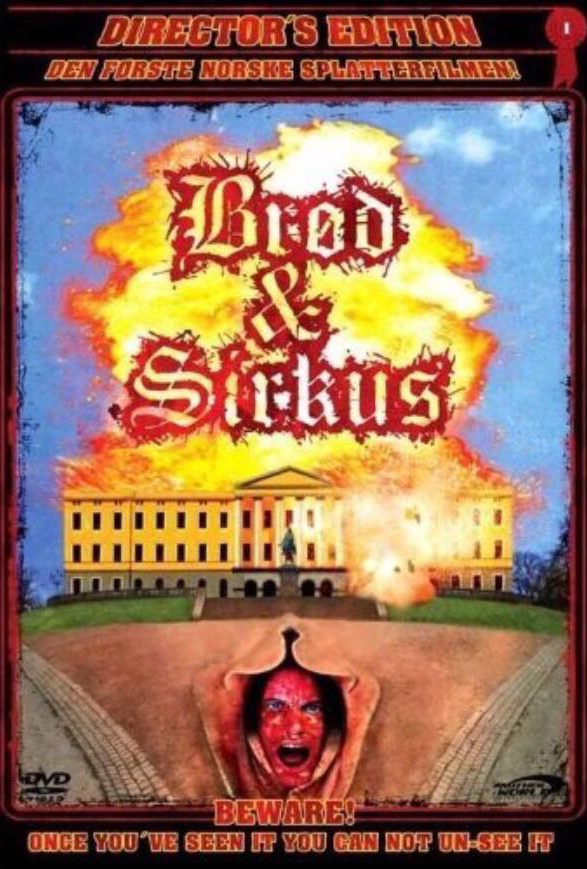
Bread and CircusHere we have the film that was heavily promoted as “Norway’s first splatter film ever”, which is not really true. But I can at least agree that this is the first Norwegian splatter film that got a wide DVD distribution, which was quite a unique thing in a small, tiny country like Norway. This is almost twenty years ago. Time flies.


The film starts with Mother Earth having sex, and a young man in his twenties (Martin Loke) then pops out from a vagina located at the earth’s grassy surface, while the sun shines on a hot, ordinary summer day. A monk-like creature comes along and cuts the umbilical cord as the new-born screams like a schizophrenic mental patient. He then suddenly wears a suit, and has a suitcase handcuffed to his arm as he gets thrown into the society. He follows a pathway and meets a random guy. While they have a beer, he tells our new-born a life lesson-story about how evil society is if you don’t kneel to the authority, and conform to the social norm in a perfect sheep mentality. All forms of outcasts and those who dear to think freely are seen as serious threat to the society, and they get hunted down and killed by the military under orders of The King himself. As the story goes on with a tirade of amateurish, messy, incoherent scenes, including a scene with a guy getting a bottle stuffed in his butthole, you start to wonder what the hell you’re really watching.


The acting is unbelievably, ridiculously, bafflingly bad, and is the funniest thing about the movie. And the dialogue was sloppily dubbed in post-production, which doesn’t synchronize at all. It’s reeks of amateur-hour all the way, and the “humour” is on the cringiest middle school level. Director and screenwriter Martin Loke is a huge fan of Peter Jackson’s Bad Taste which reflects in the effects and some of the camera work. But when Bad Taste had  its own style and energy to it, this comes across as the drunken poor man’s version. With a budget of 600,000 Norwegian kroner (approx. $ 68,3348), the film should at least look better. I suspect that most of the budget went to  municipal goods like military stuff and access to certain restricted locations. And almost like there wasn’t any budget for a half-decent soundtrack, the score is primarily filled with classical music from Beethoven, which just feels completely out of place and makes the movie even weirder. The “Actors” are mainly friends and family of Martin Loke, who mostly give the impression of standing in front of the camera as a big favor they would never do again. The political and social statements Martin Loke is trying to make us reflect on is for sure more relevant today than it was twenty years ago. But aside from that, this is nothing but a demented, bizarre and messy oddball of a movie which will guarantee some great laughs for sure. Some of them unintentionally, of course.


The most impressive thing about Bread and Circus is that Martin Loke showed it at the Cannes Film Festival of all places, and sold it to seven countries. How he actually managed to do that with a film like this, God knows. But, okay, I give him my respect for that.  The film was later given a 10-year anniversary edition from the Nordic Another World Entertainment with some extras. A U.S. release is also available at Amazon.com.


Bread and Circus


Director: Martin Loke
Original title: Brød & Sirkus
Country & year: Norway, 2003
Actors: Oliver Boullet, Miriam Johansson, Martin Loke, Magne Jahrestein, Silje Andresen, Benjamin Rørstad, Lars Torp, Lars Erik Ringstad Nordrum, Lise Løke, Hilde Løke, Fredrik Løke, Frank Løke, Eivind Pedersen, Andre Iversen, Vegar Bakke
IMDb: www.imdb.com/title/tt0377543/


Tom Ghoul